Bluthe
It all started with dreams of a flying griffin.
Wings from Fred Mannby on Vimeo.
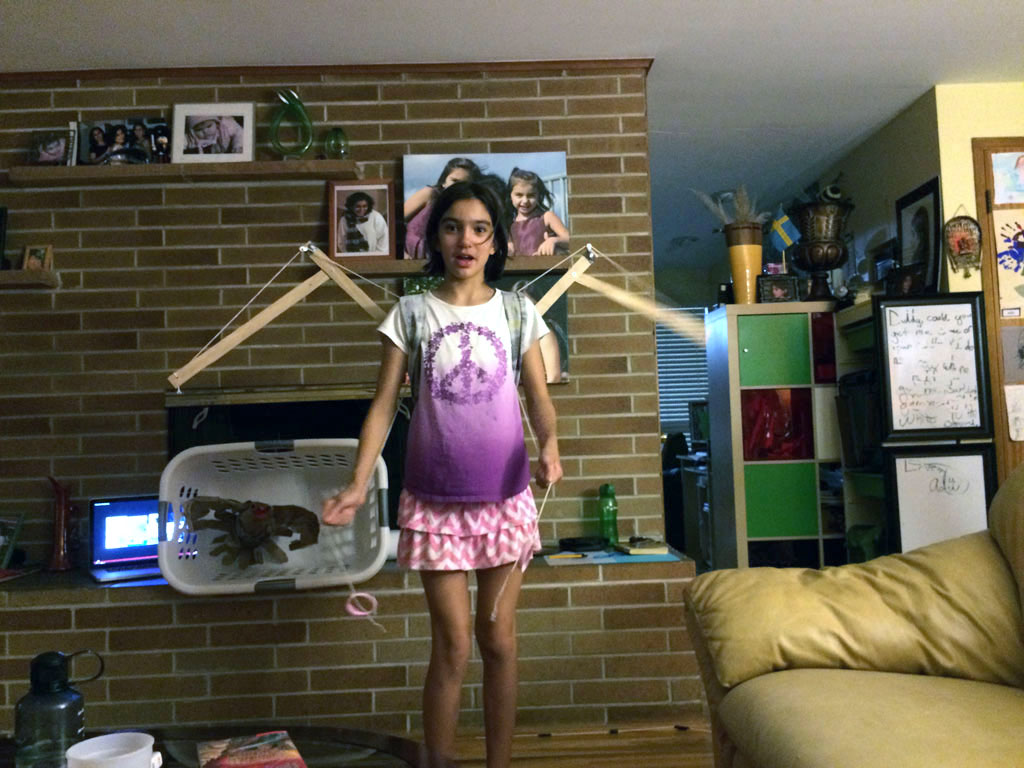
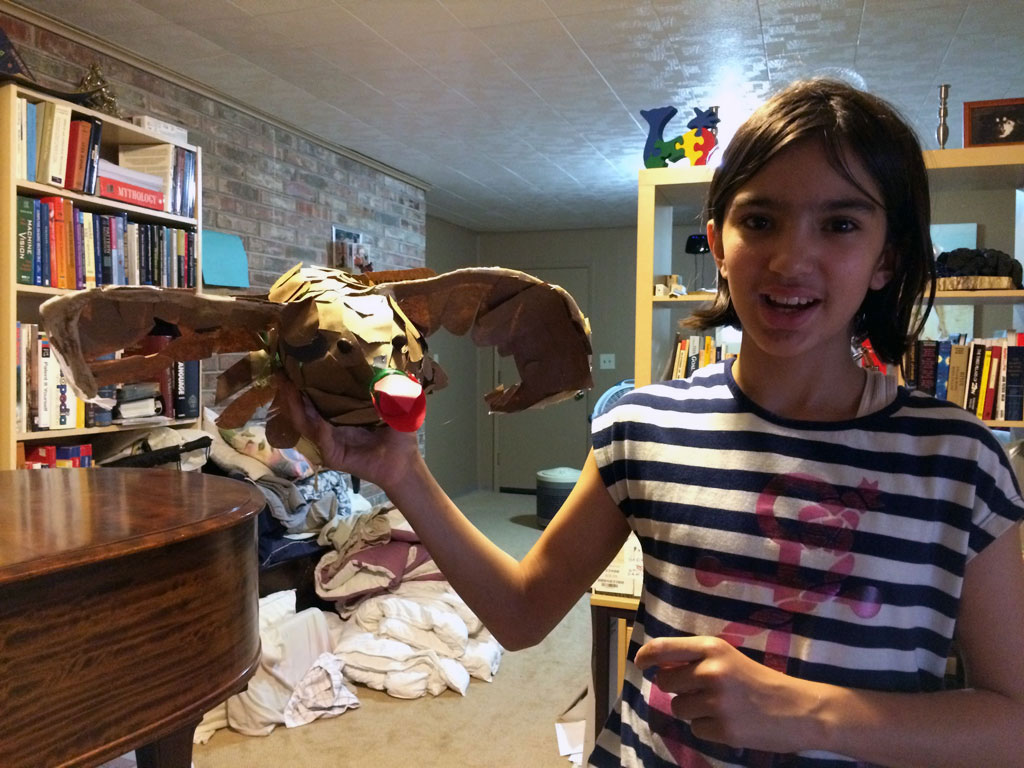
I made some wing projects over the summer, and each one in my family made their own presentation about flight-related topics. I made wings and a bottle-bird.
These were my first wings:
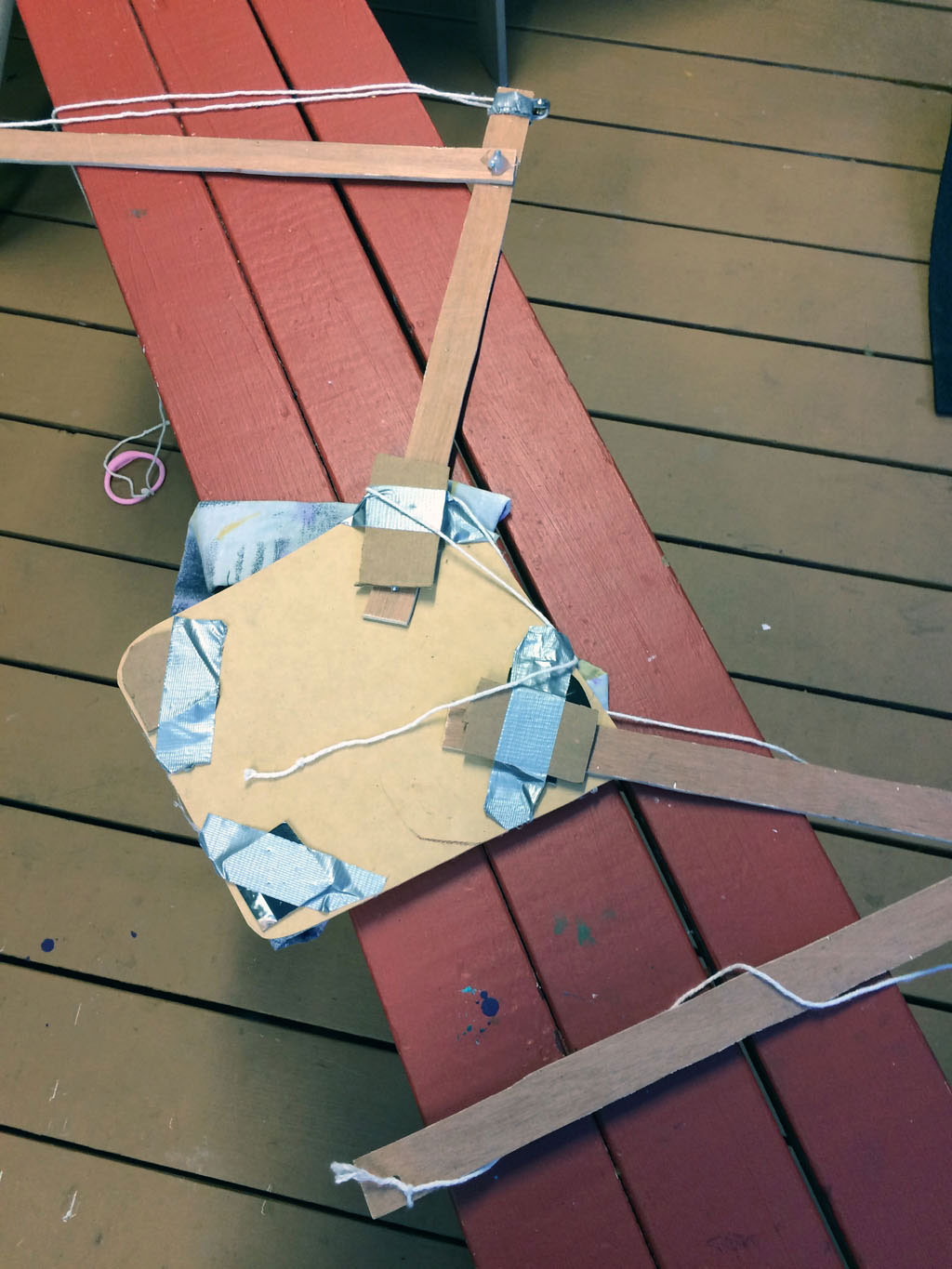
And these were a slightly more complex pair of wings:
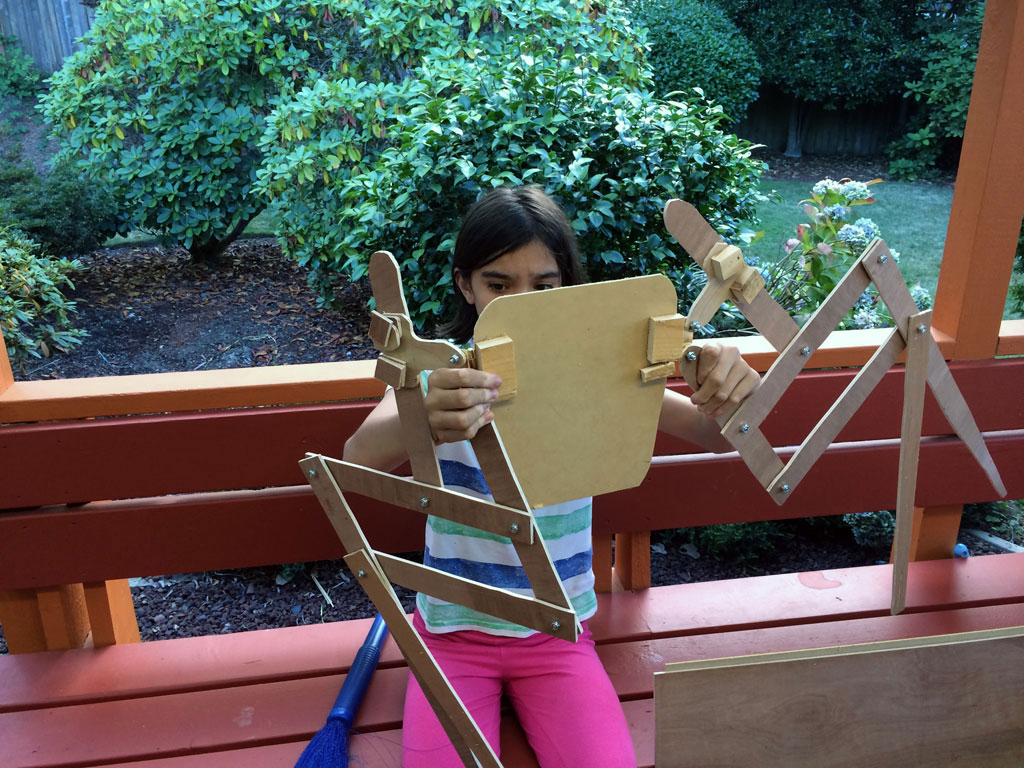
Once DI started, I looked online for ways to make a creature walk, and I found Theo Jansen's Strandbeest walking mechanism, and decided to make a prototype out of cardboard...
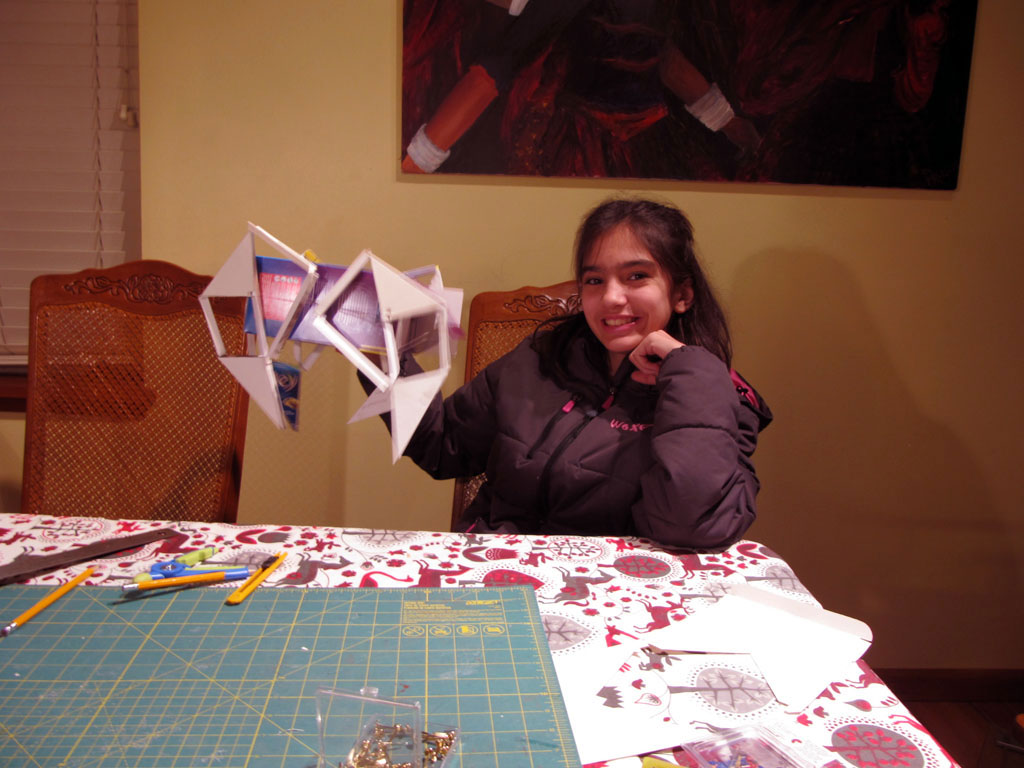
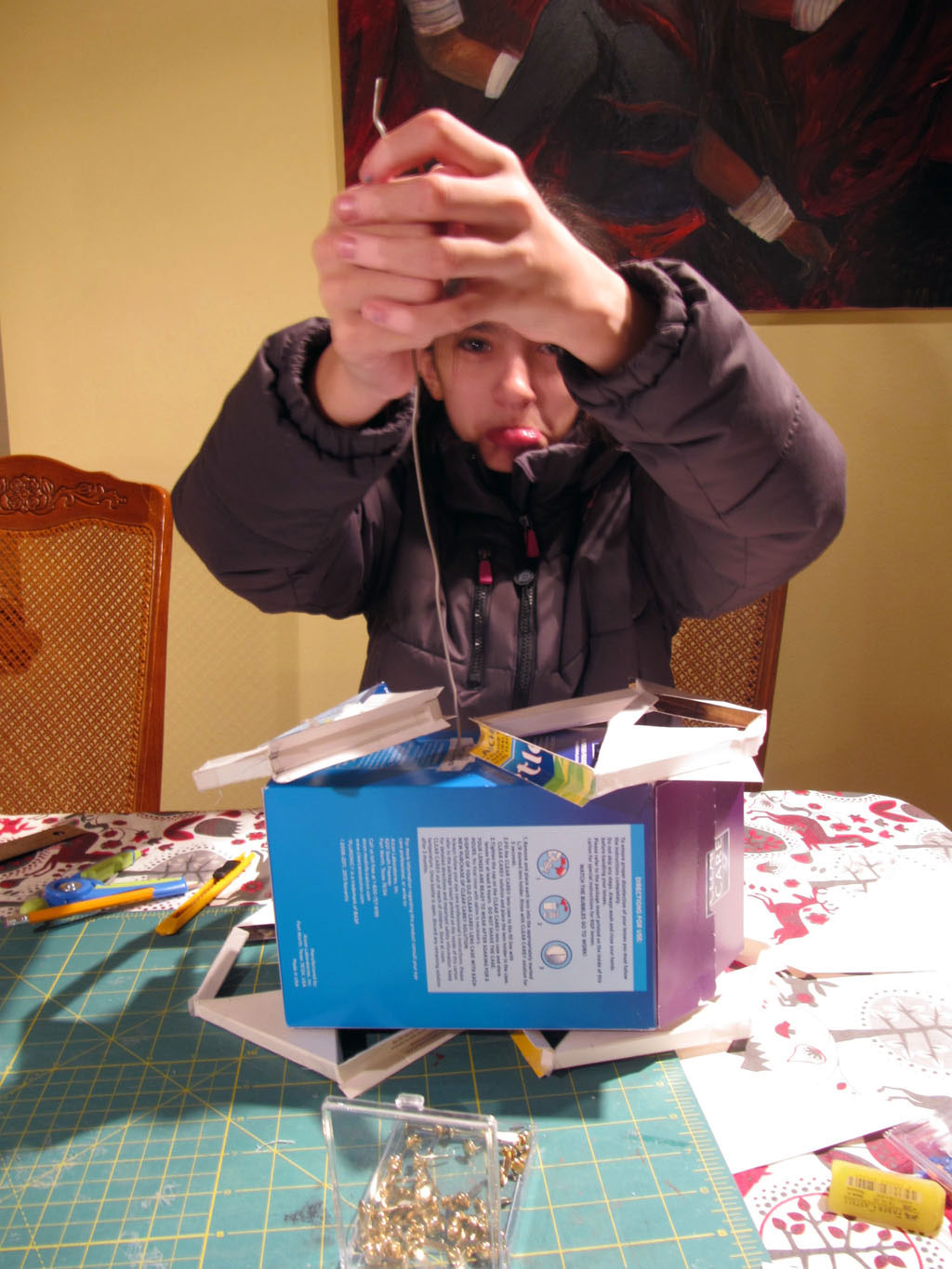
...complete with an axle for movement, inspired by Kinetic Creatures. It was hard to get the axle in.
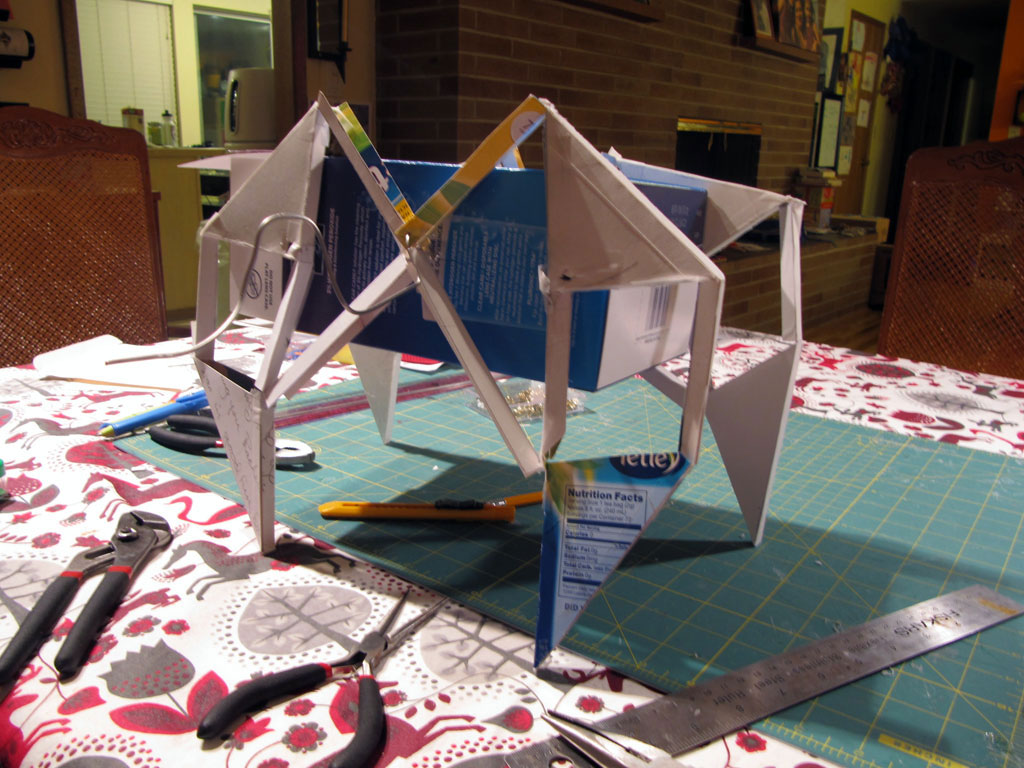
But it mostly worked.
Bluthe Prototype 1 from Fred Mannby on Vimeo.
Bluthe Prototype 2 from Fred Mannby on Vimeo.
I tried a few different types of wood for the legs. I was very tempted to use paint bucket stirrers, because they are really cheap, but I figured they wouldn't be strong enough. I started out with 3-ply plywood. Later, I switched to sticks I found at Home Depot that were about the same size, and very cheap, sold as a pile of sticks.
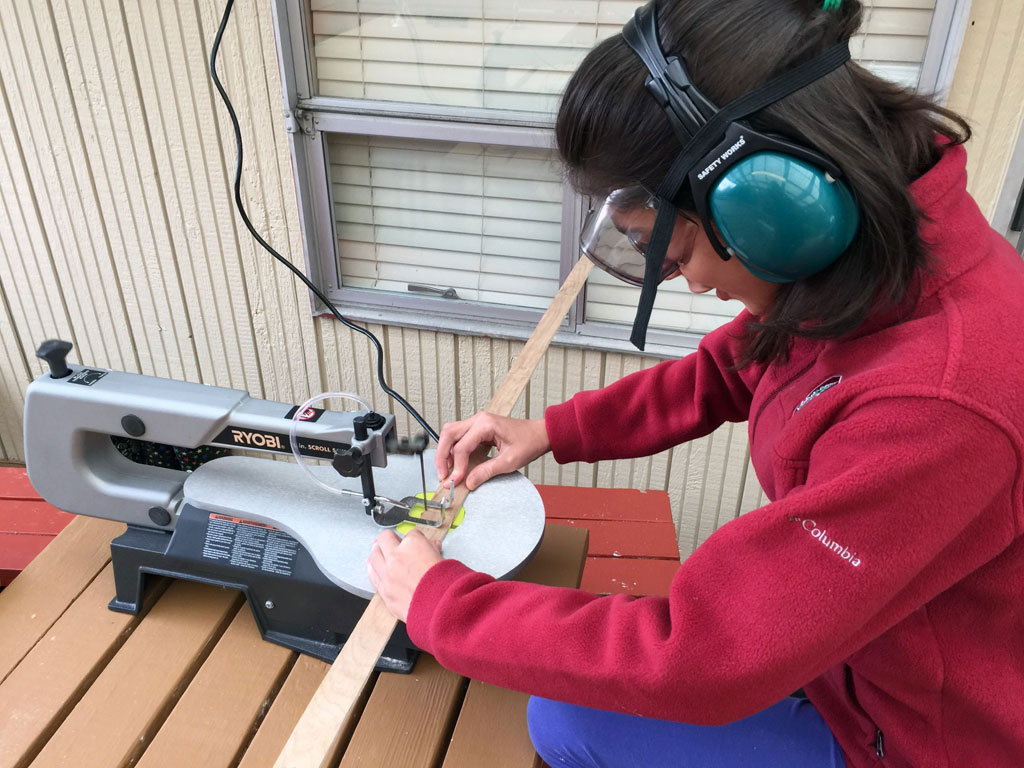
Leg Pieces from Fred Mannby on Vimeo.
Drilling one hole at a time...
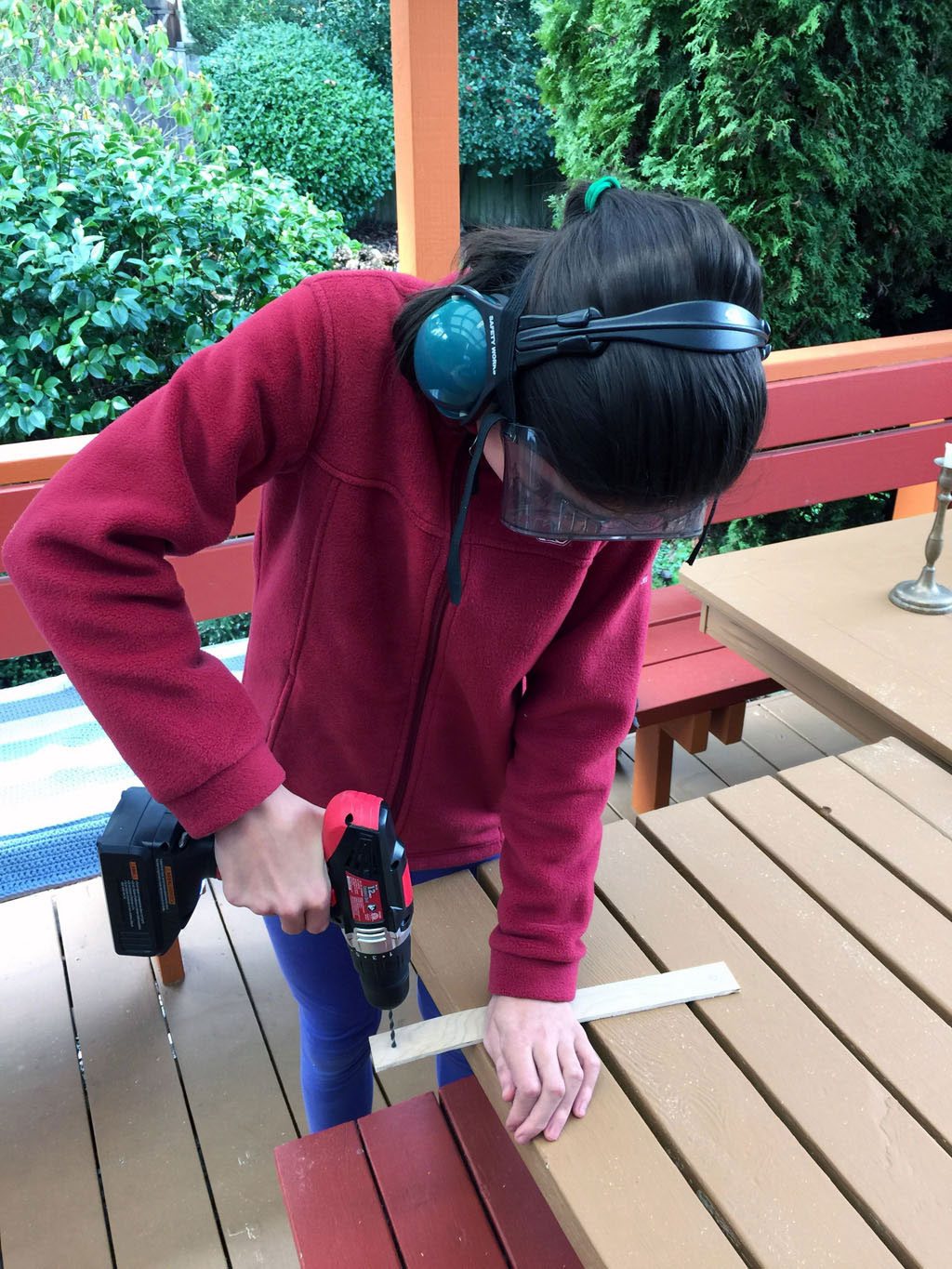
Are you kidding? That would take forever!
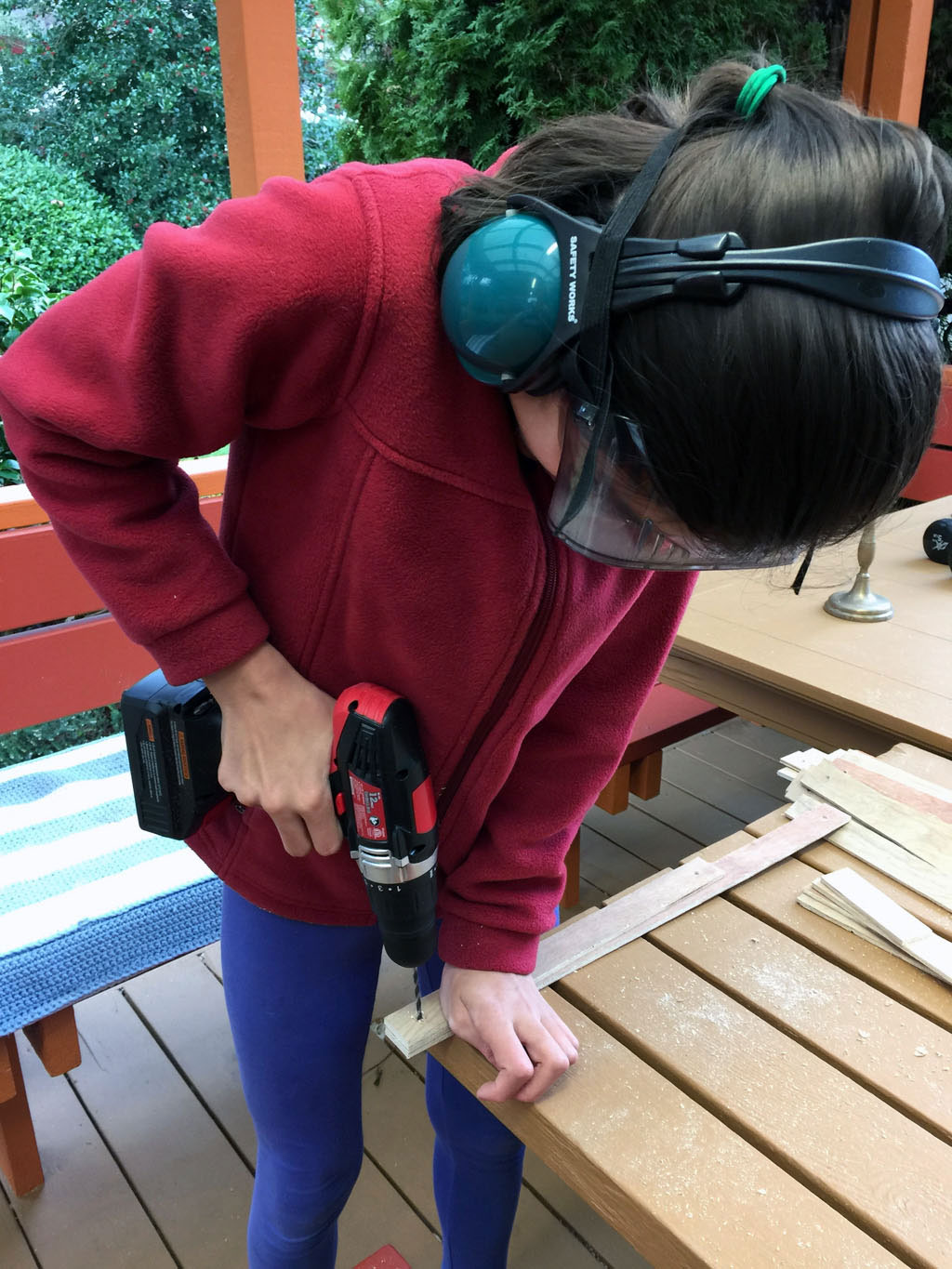
I found all the leg dimensions online, and I scaled them up to get a creature roughly the size of a very large dog.
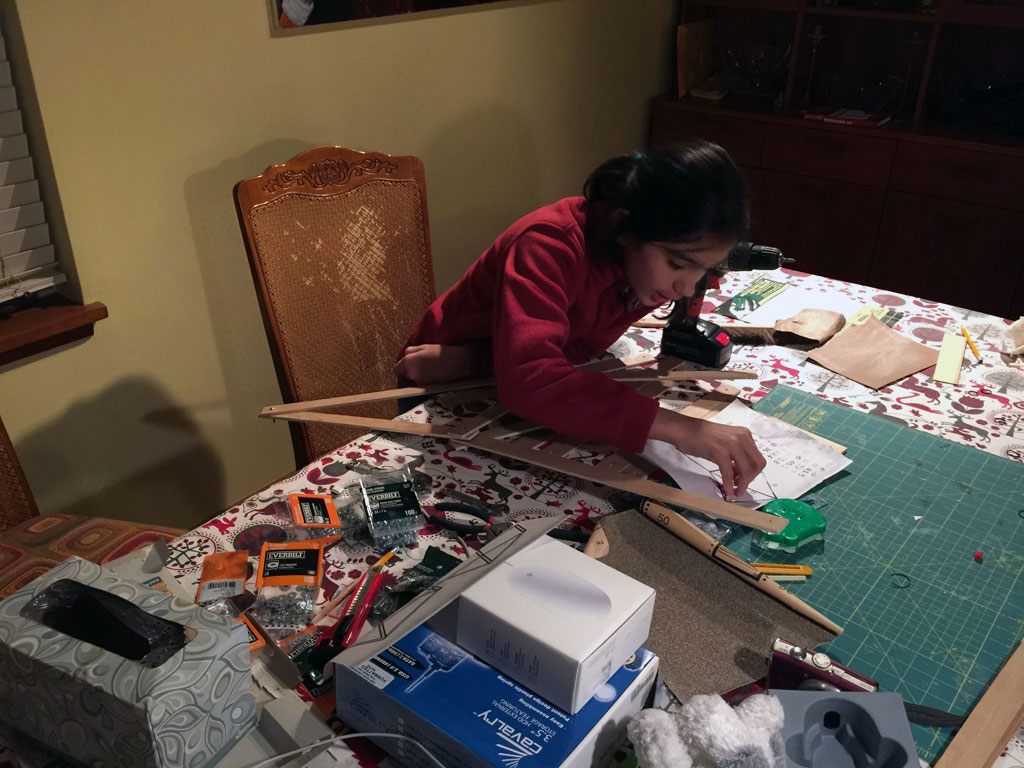
Because so many sticks were connected to each other, it was important to make sure I got a good order between them so they would all be at about the same place sideways. I kept careful track of the order, and tried to keep the order reversed on opposite sides of the creature (I called him George at the time).
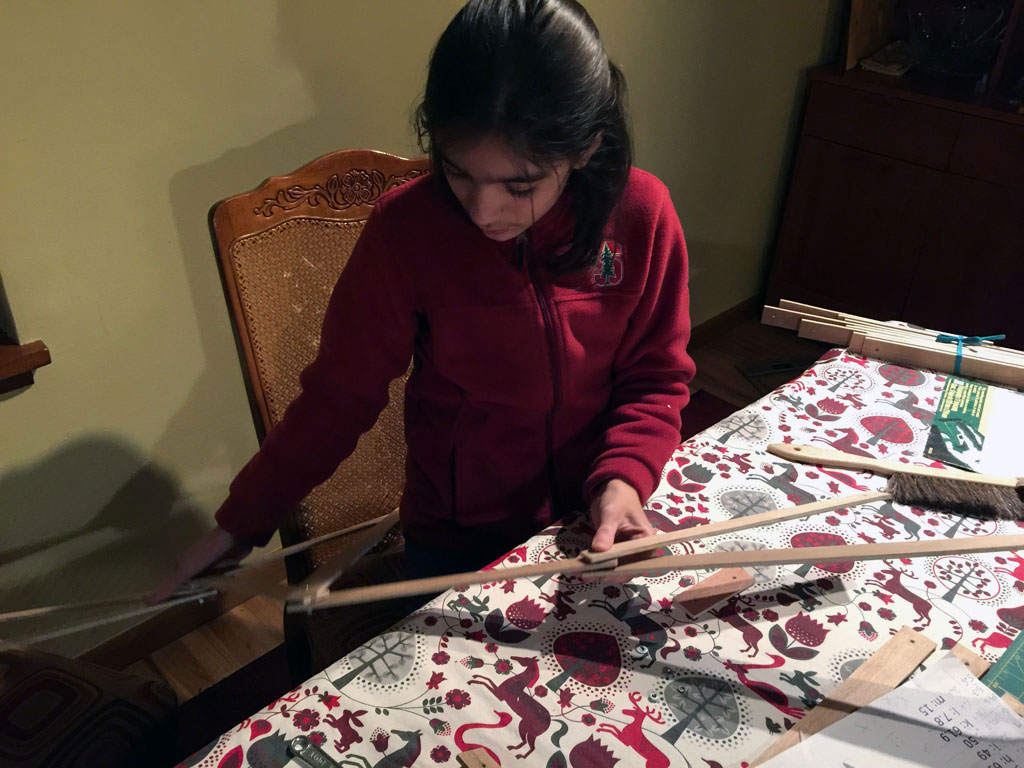
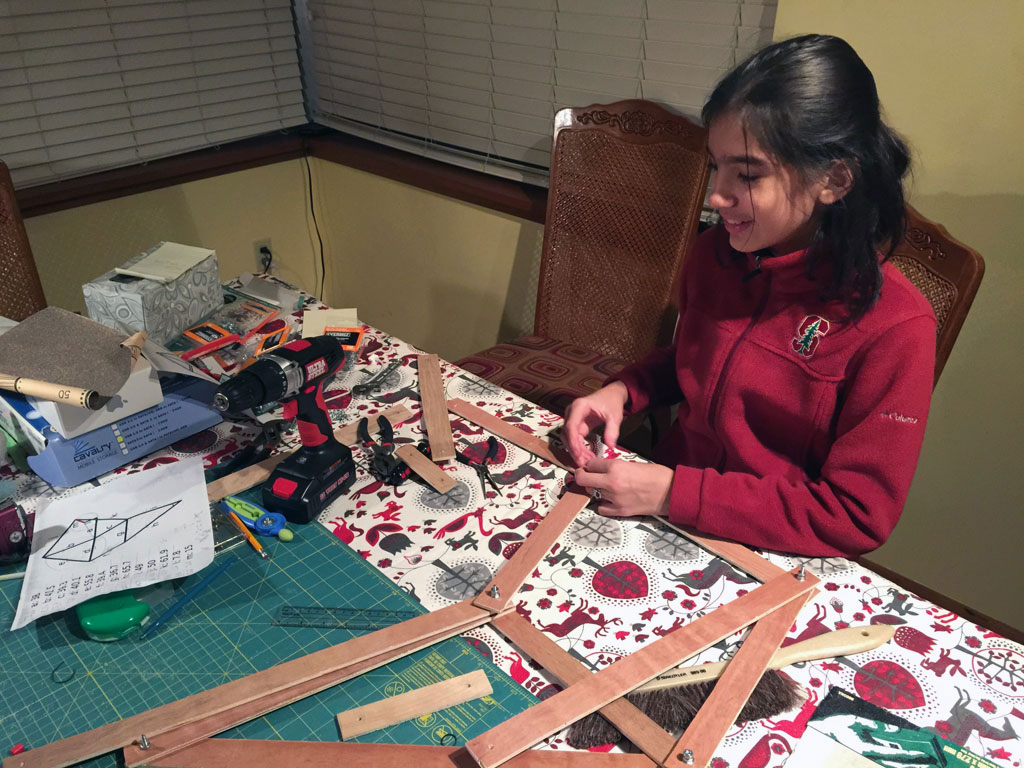
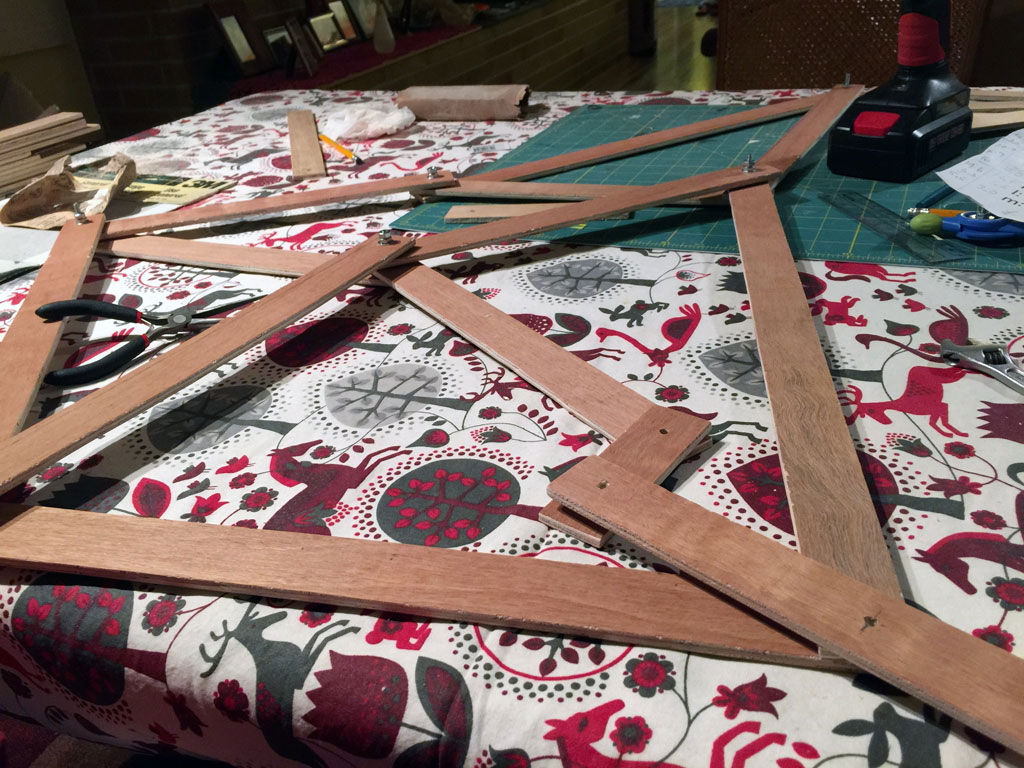
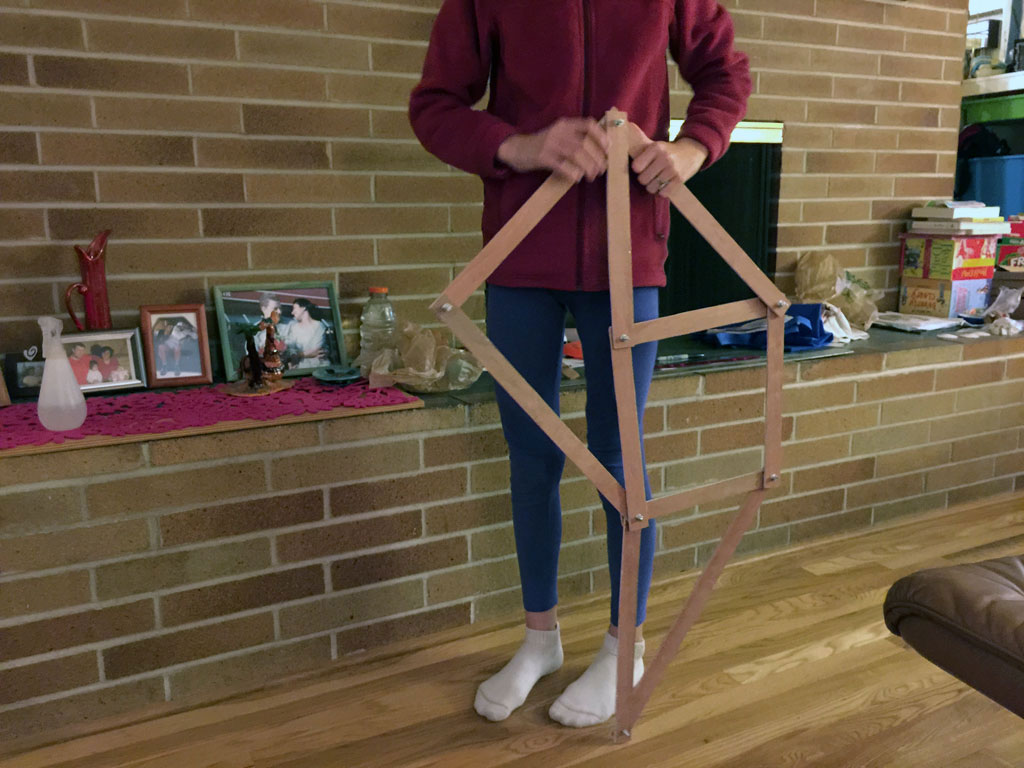
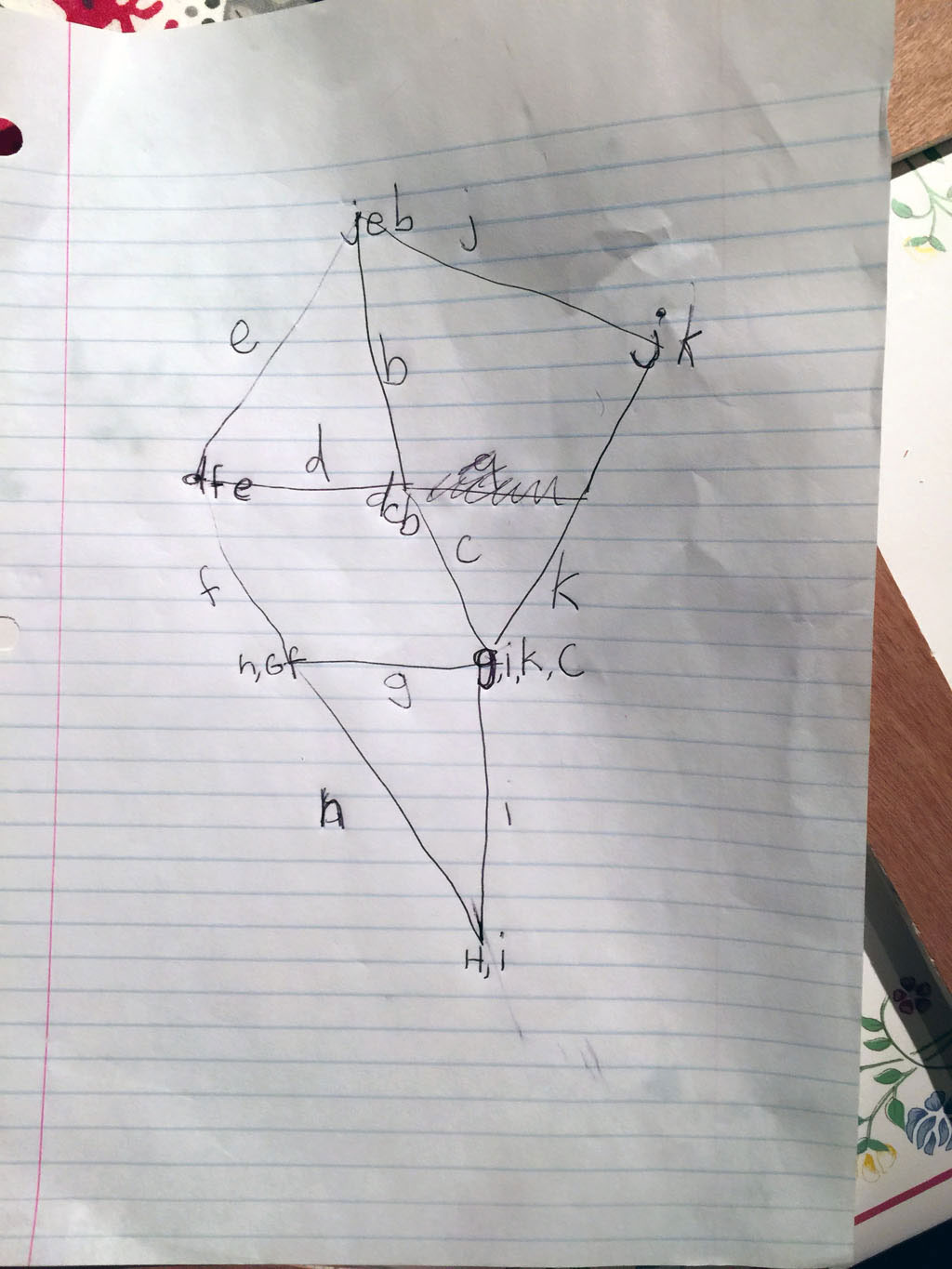
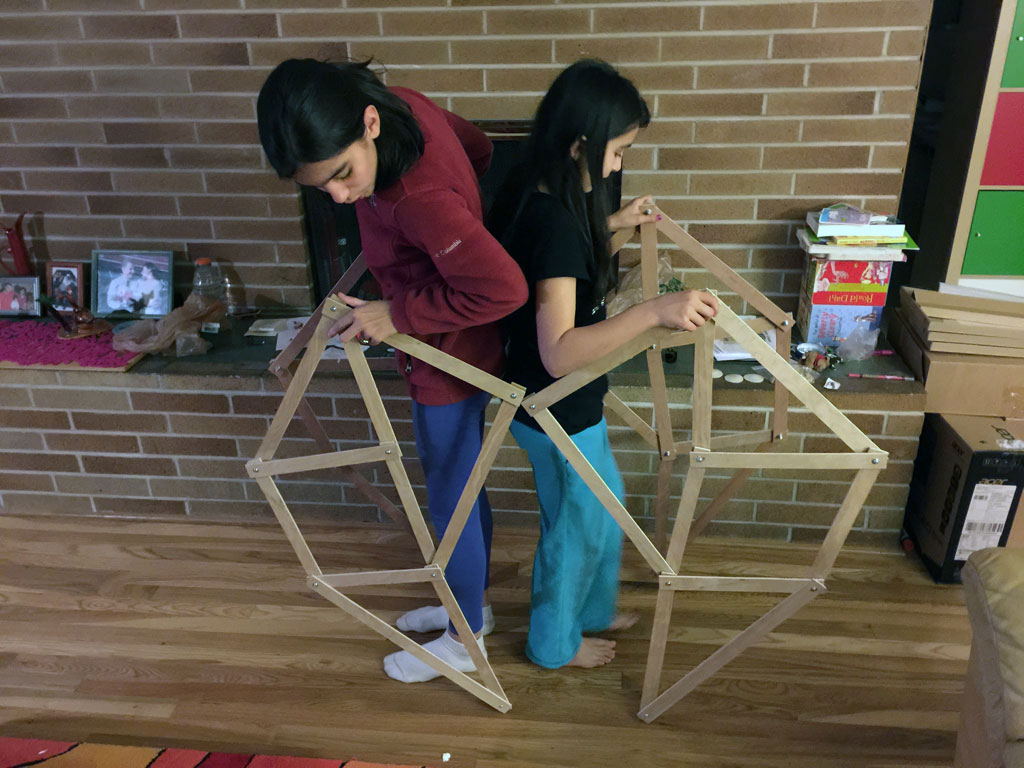
I had to learn to become a two-tong twister to be able to put all the nuts together around the locknuts. But, slowly the legs took shape, and I could see what the creature would look like.
Leg Rotation from Fred Mannby on Vimeo.
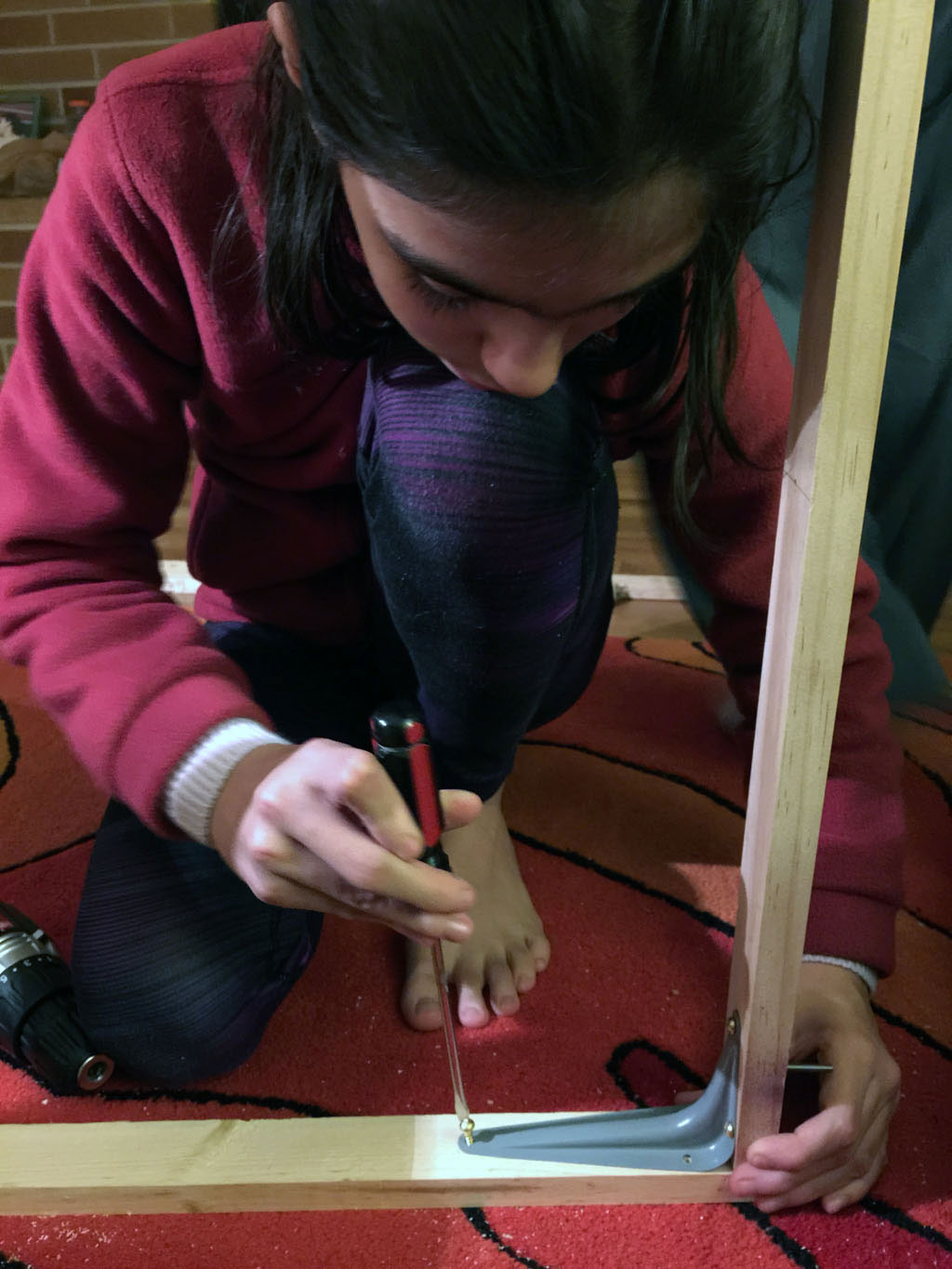
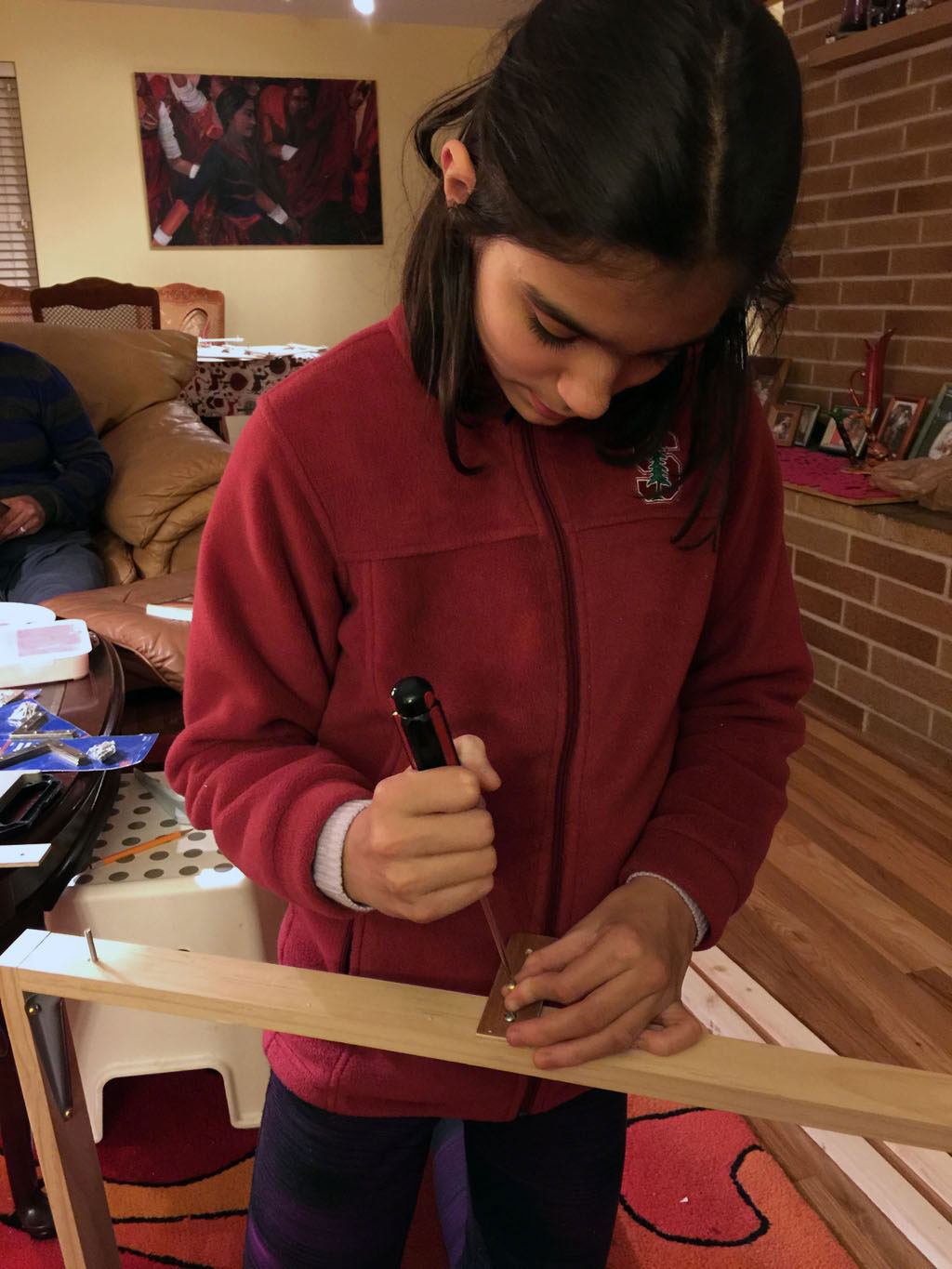
He clearly needed a strong body to hold up the legs, so I made him one.
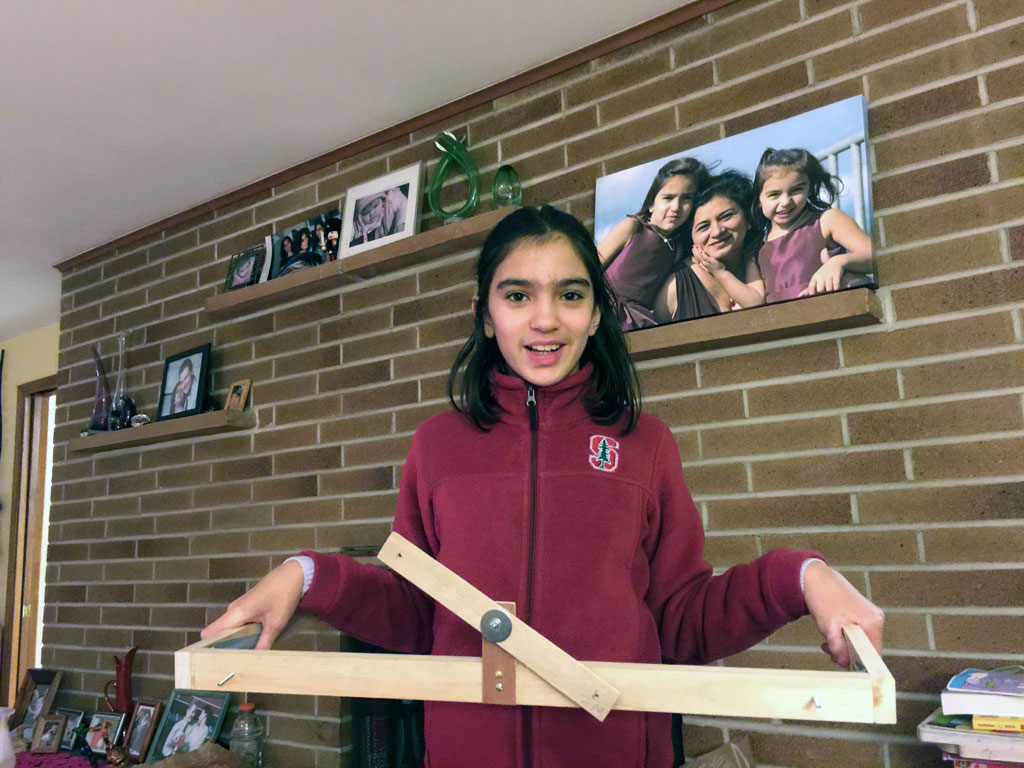
Bluthe Frame from Fred Mannby on Vimeo.
Next I attached the frame to the first sets of legs.
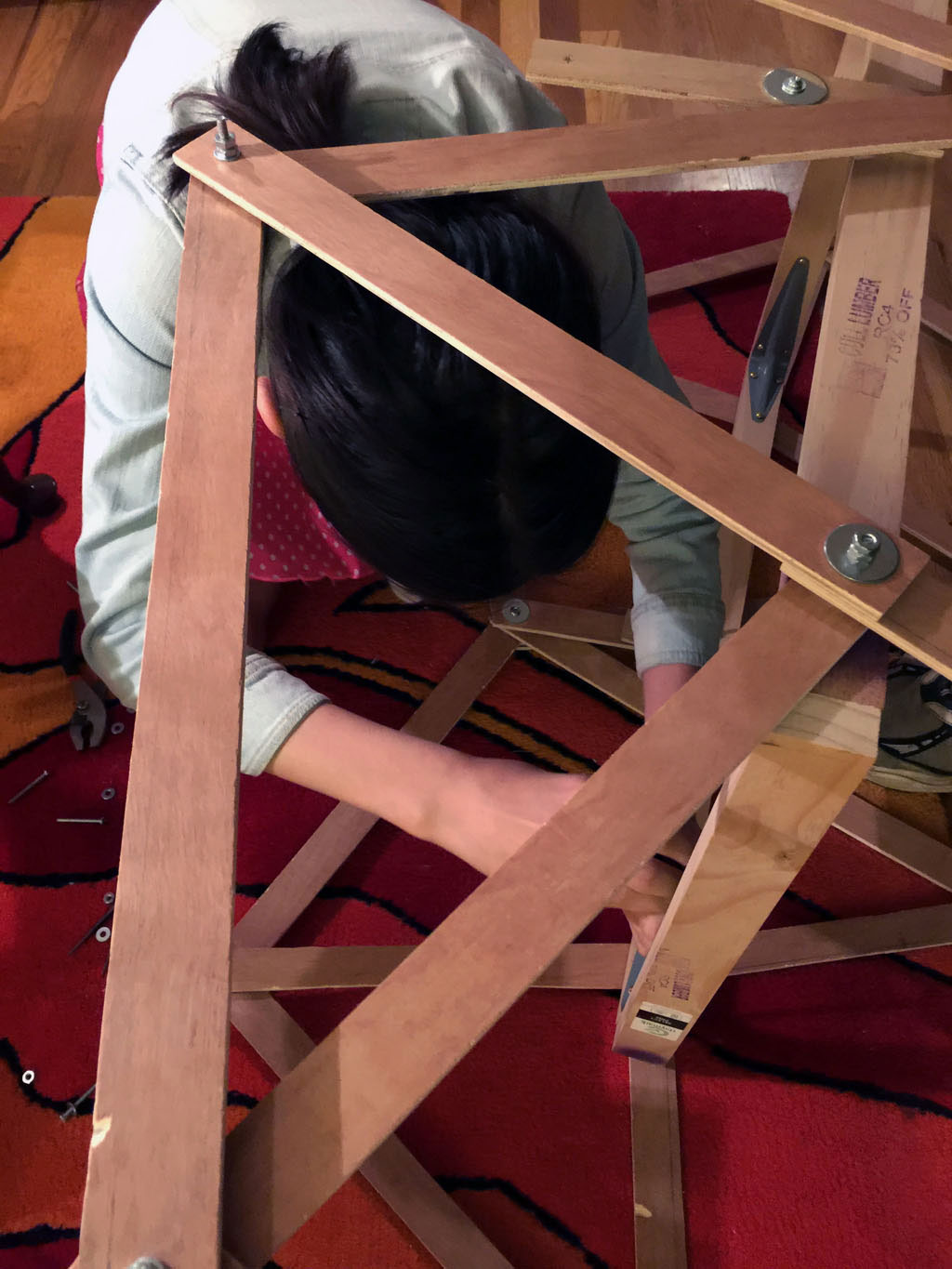
It stands!
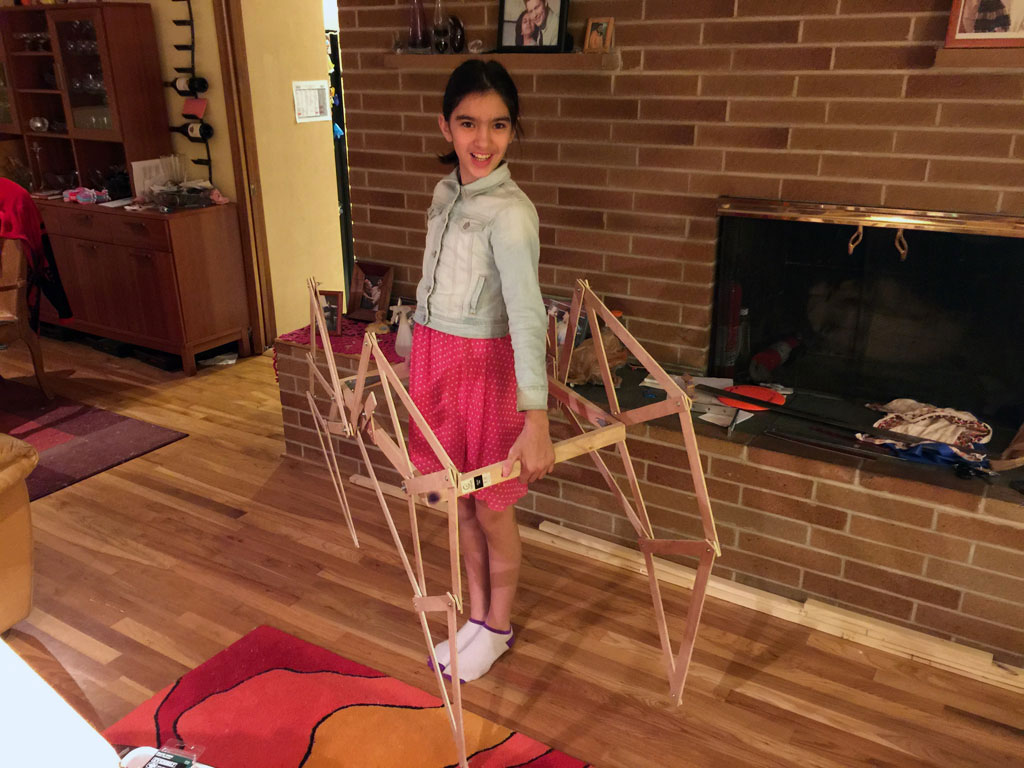
At least with some scaffolding.
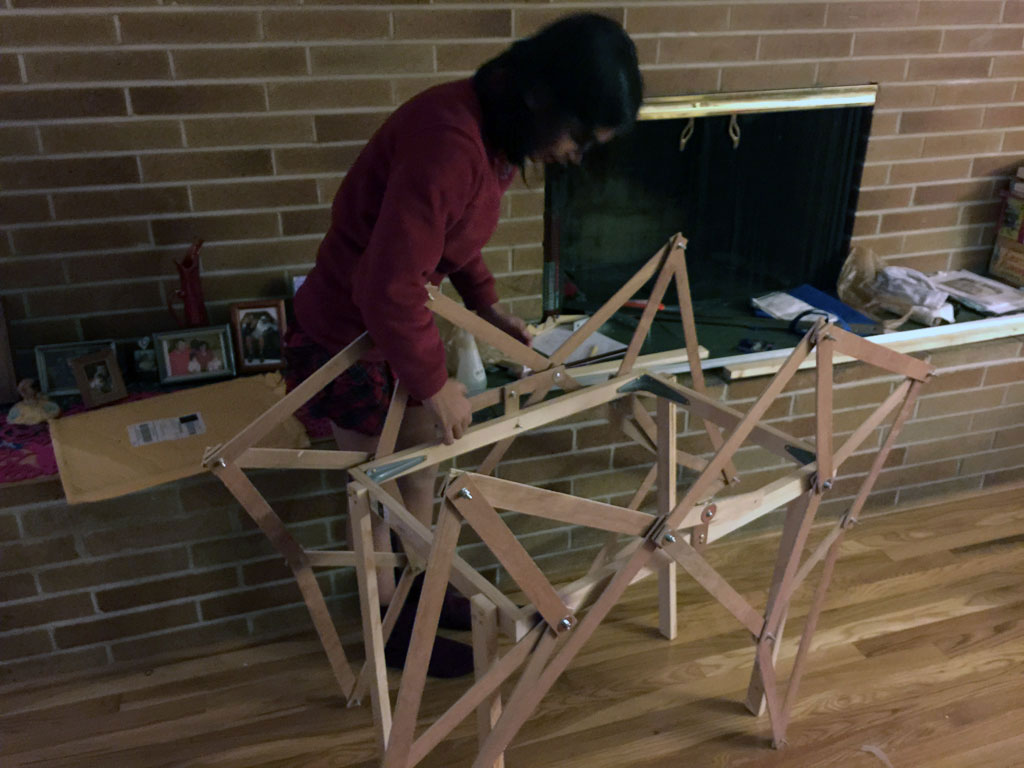
It needs better feet. Tennis balls should do.
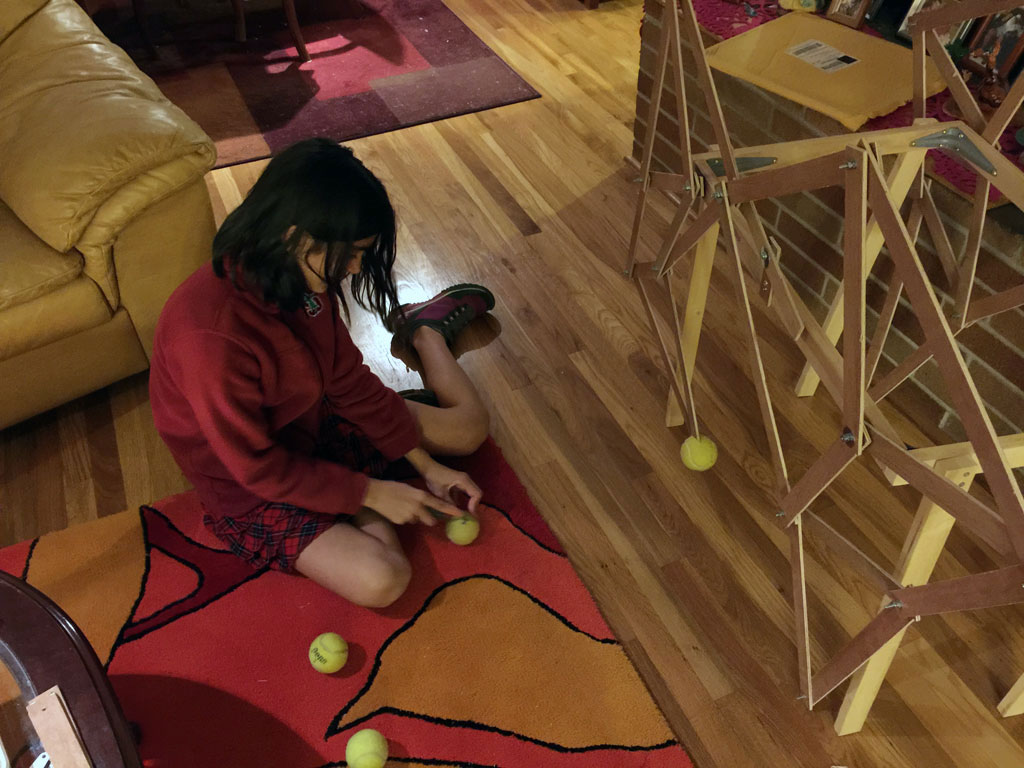
Roar!
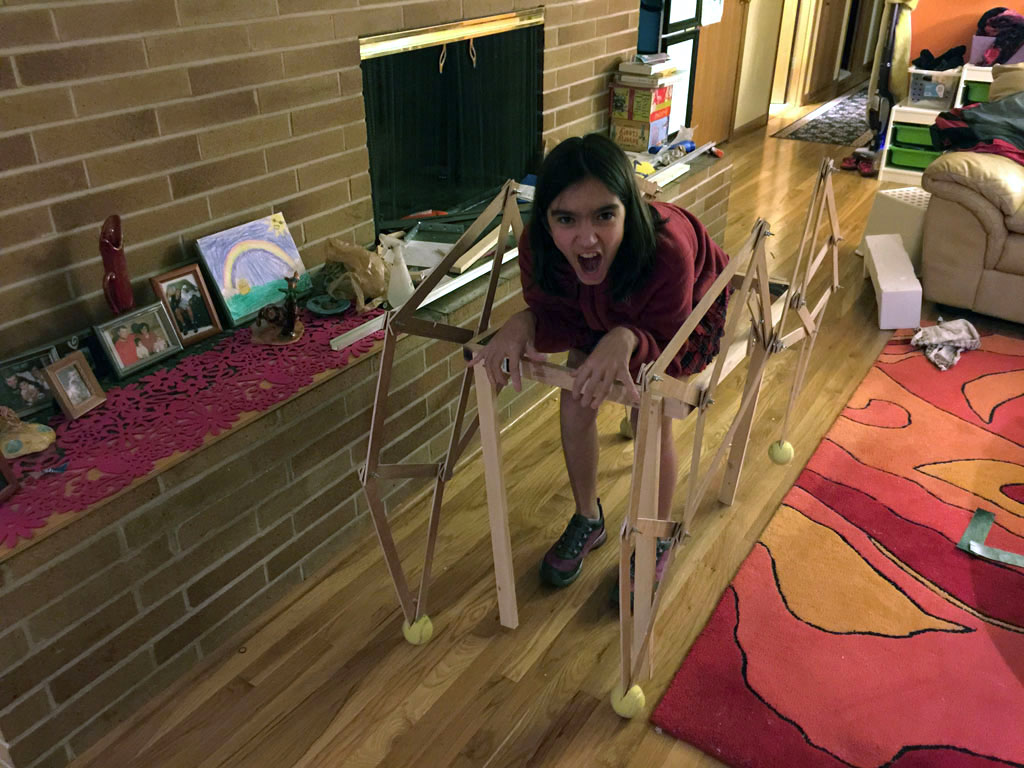
Next it needs a crankshaft.
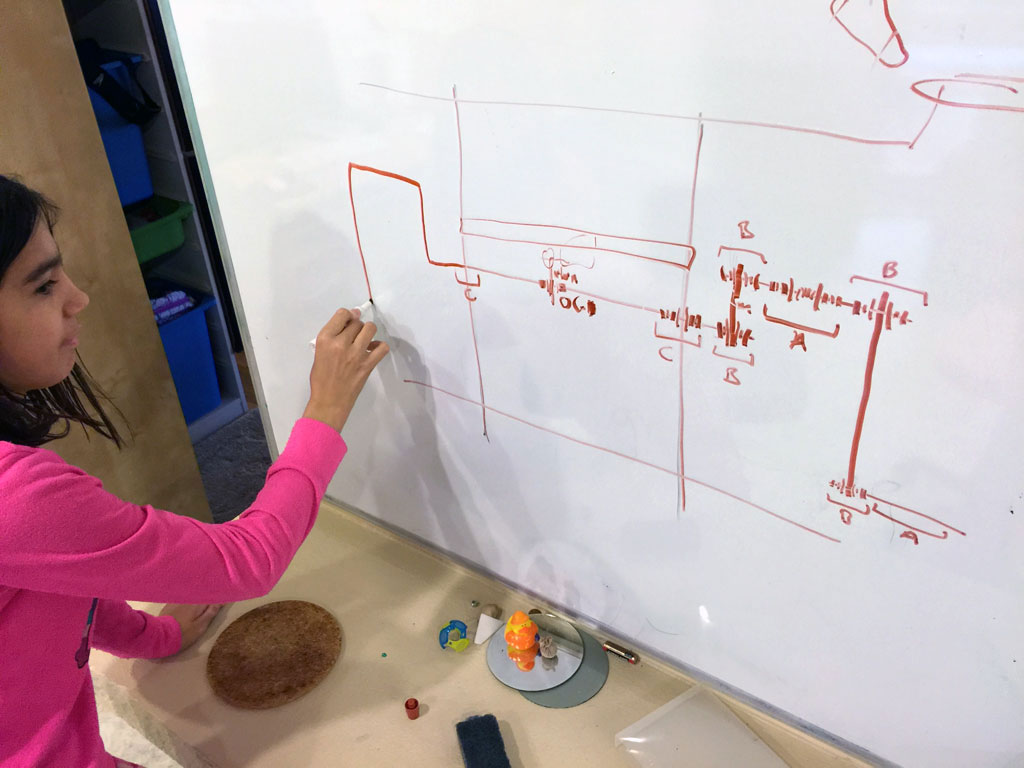
The first one was made of threaded rod and plywood.
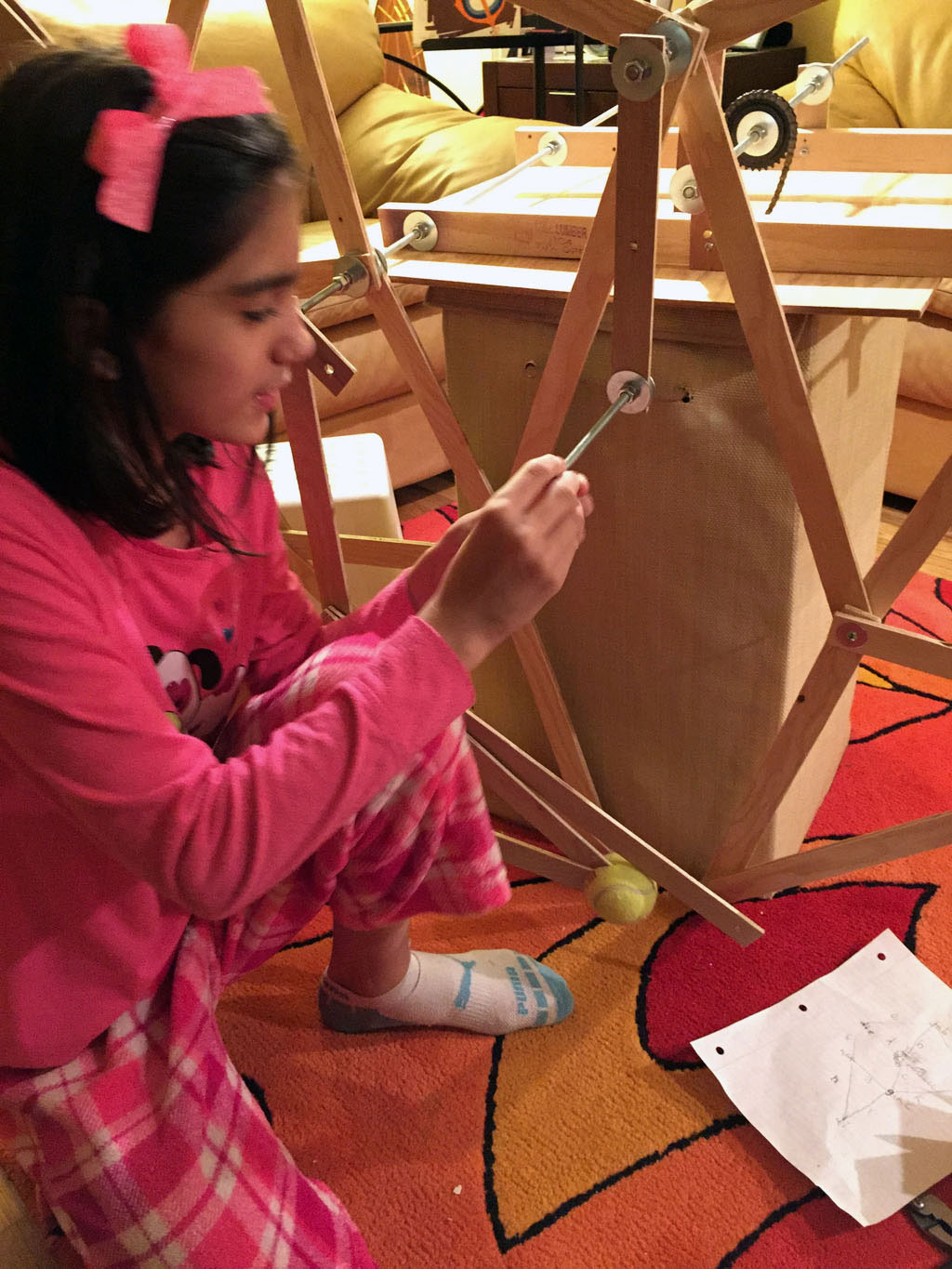
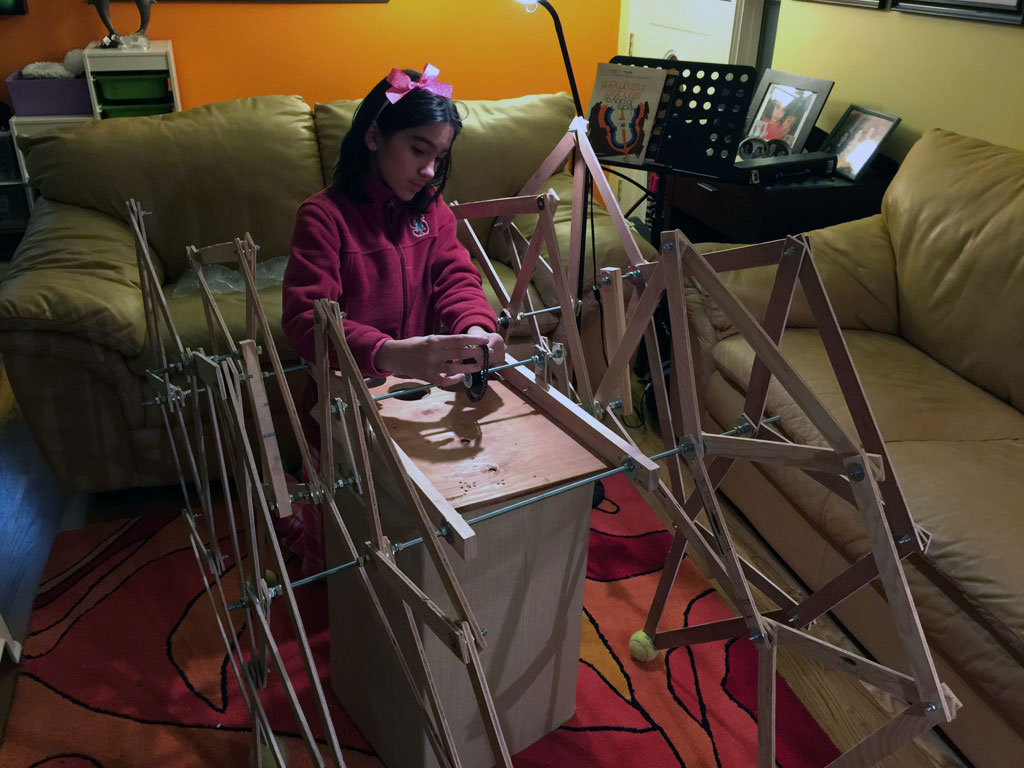
He can sit!
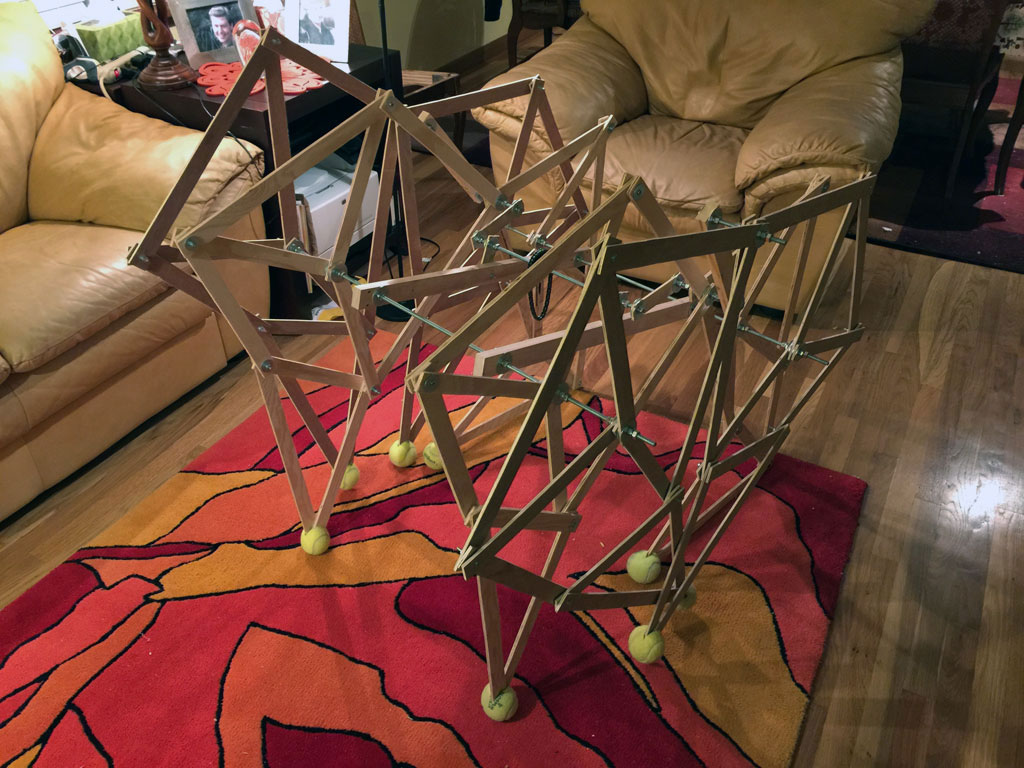
The crank shaft kept on slipping, though. I asked around at Home Depot and Grainger, and looked online for 90-degree threaded rod bends and how to bend rebar. Nothing panned out. 90-degree bends exist, but I could only find ones for plumbing thread, which is tapered in diameter, and bending metal requires heat, and I think I'd burn the creature if I tried to bend a bar as I threaded it through the body.
Finally, I asked my neighbor for ideas. After all, he builds rockets.
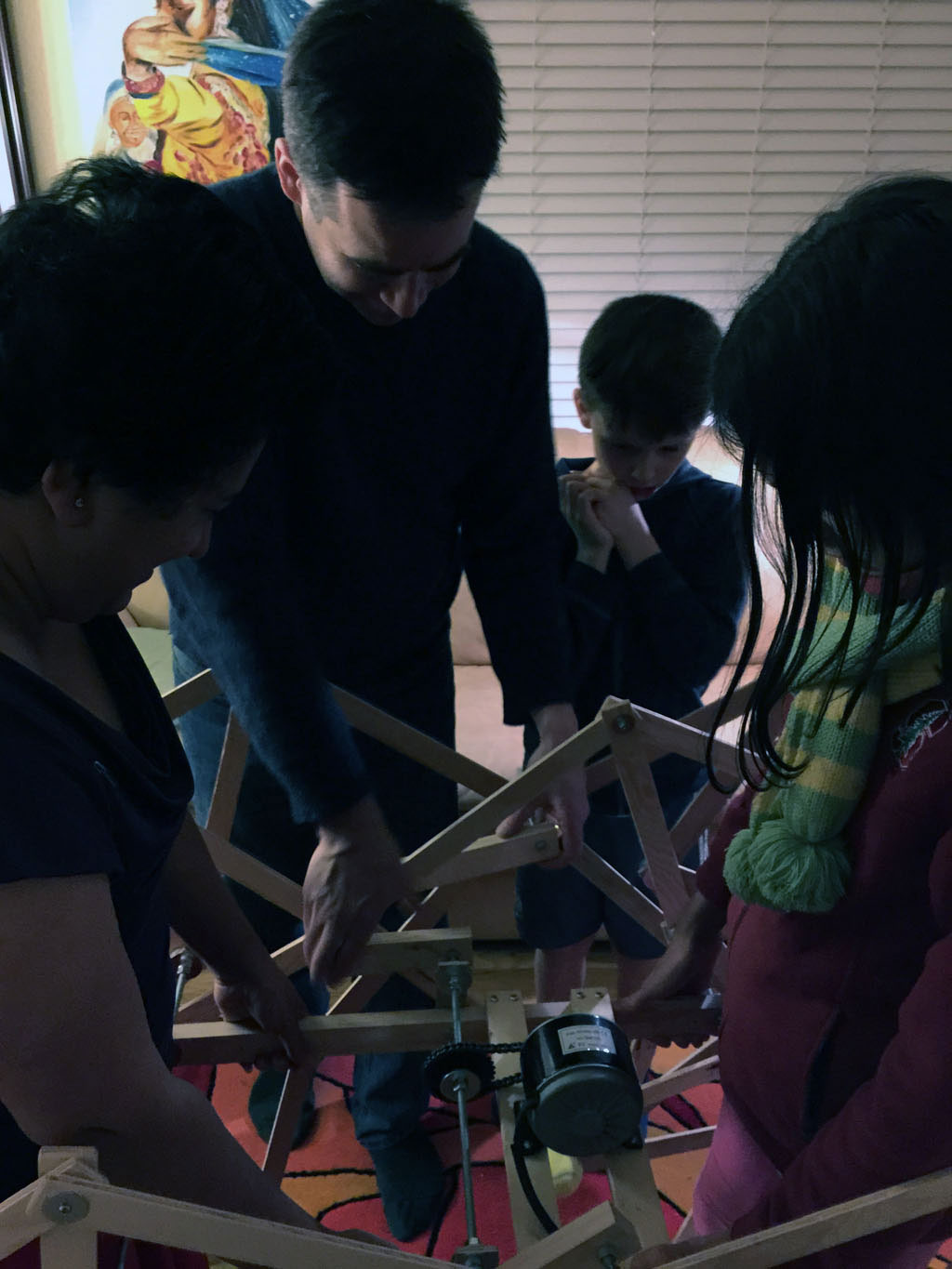
He suggested tapping threads in aluminum, which he taught me how to do.
Sawing Aluminum from Fred Mannby on Vimeo.
Smoothing Aluminum from Fred Mannby on Vimeo.
Sawing Threaded Rods from Fred Mannby on Vimeo.
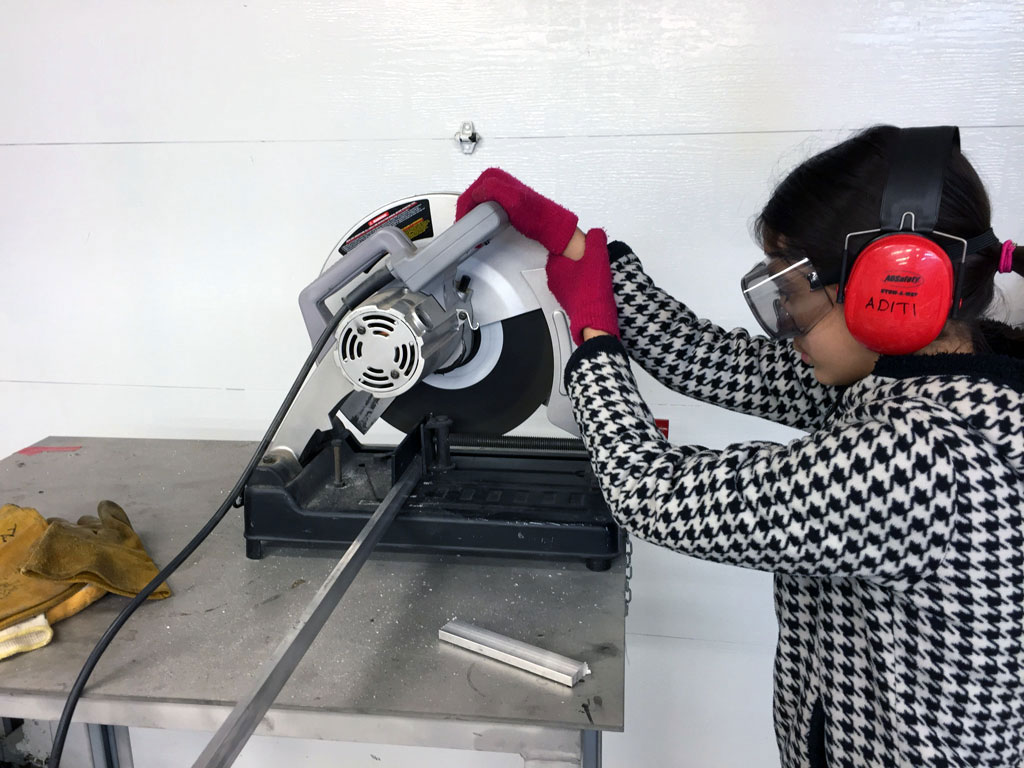
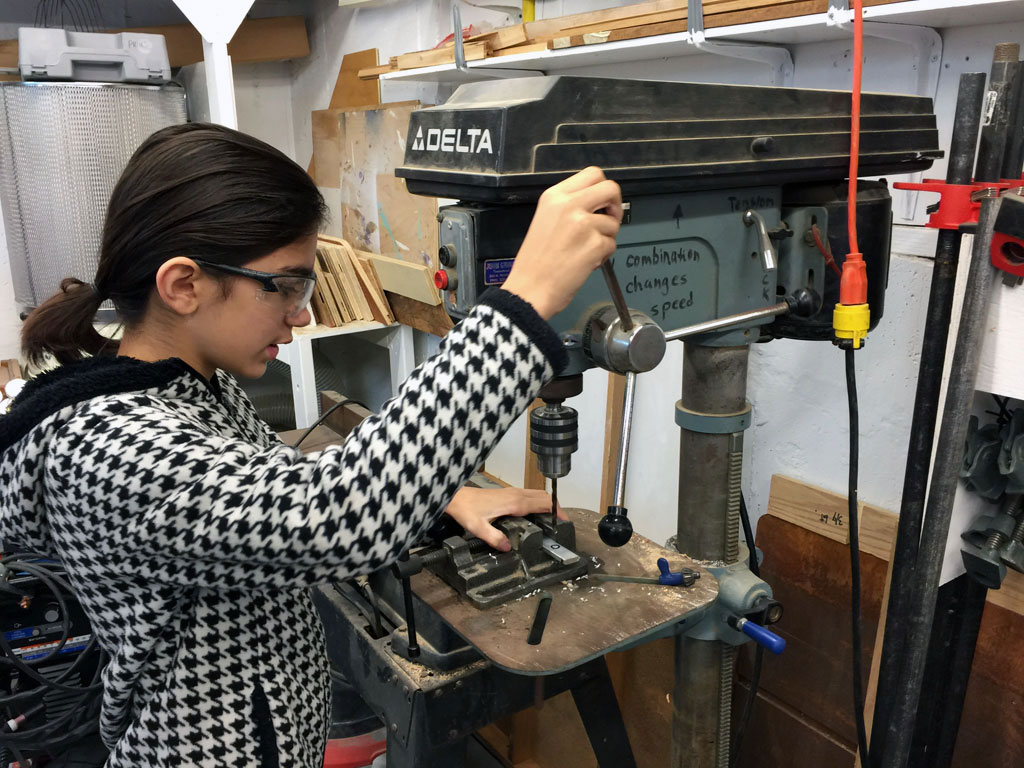
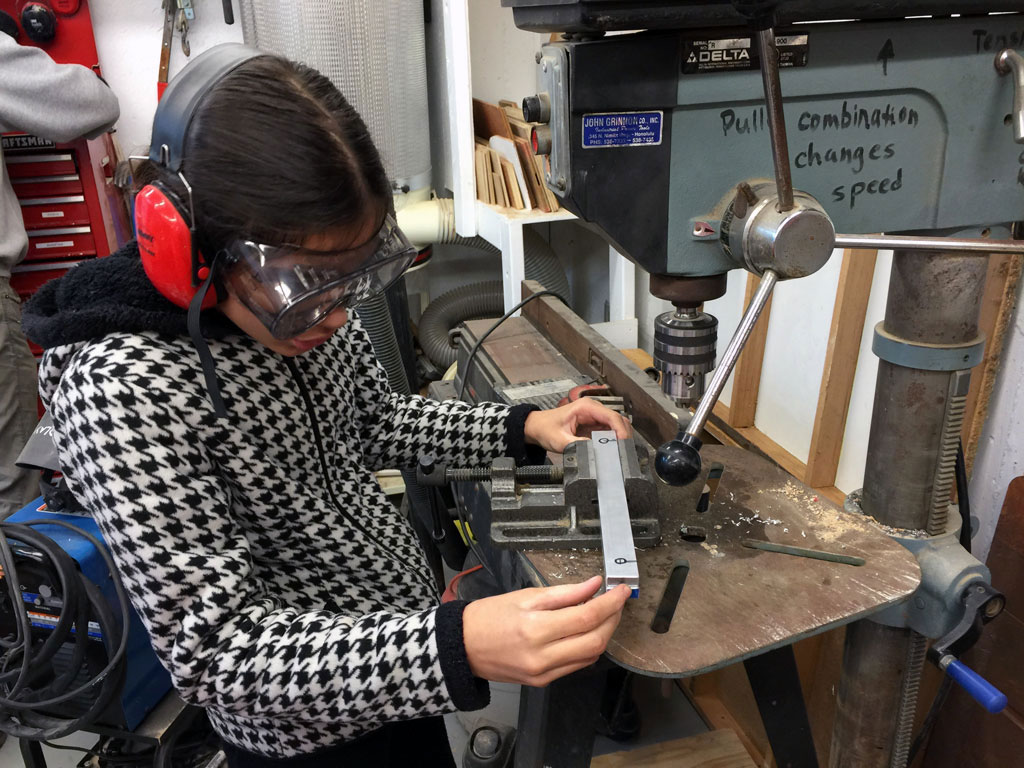
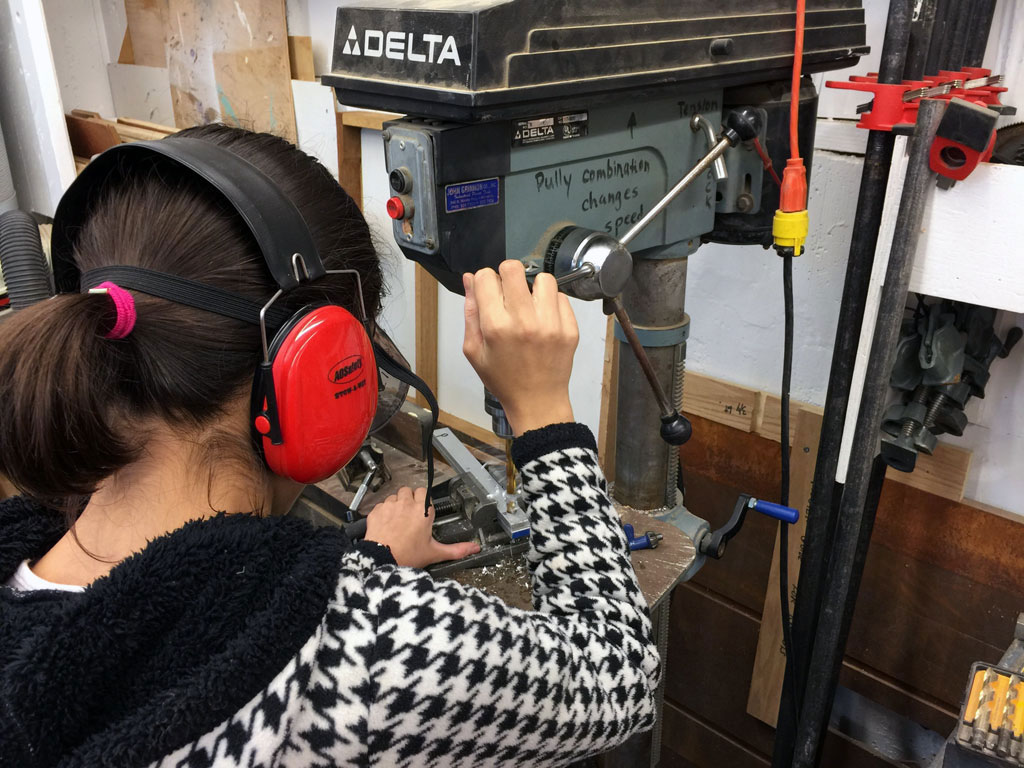
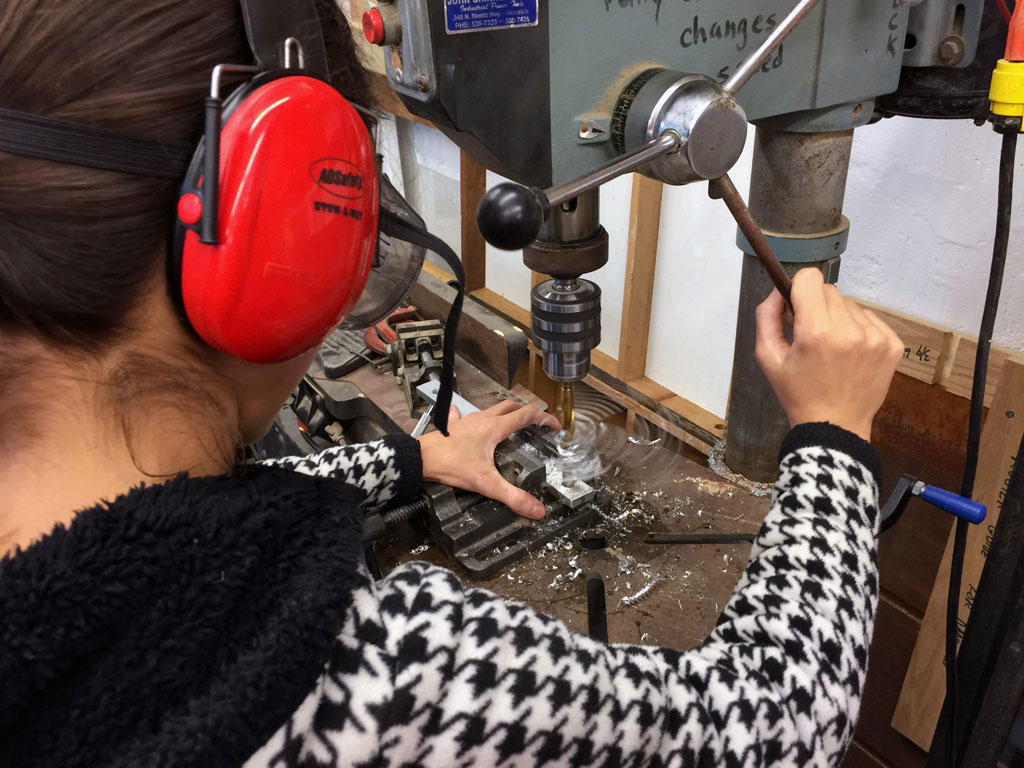
Drilling Aluminum from Fred Mannby on Vimeo.
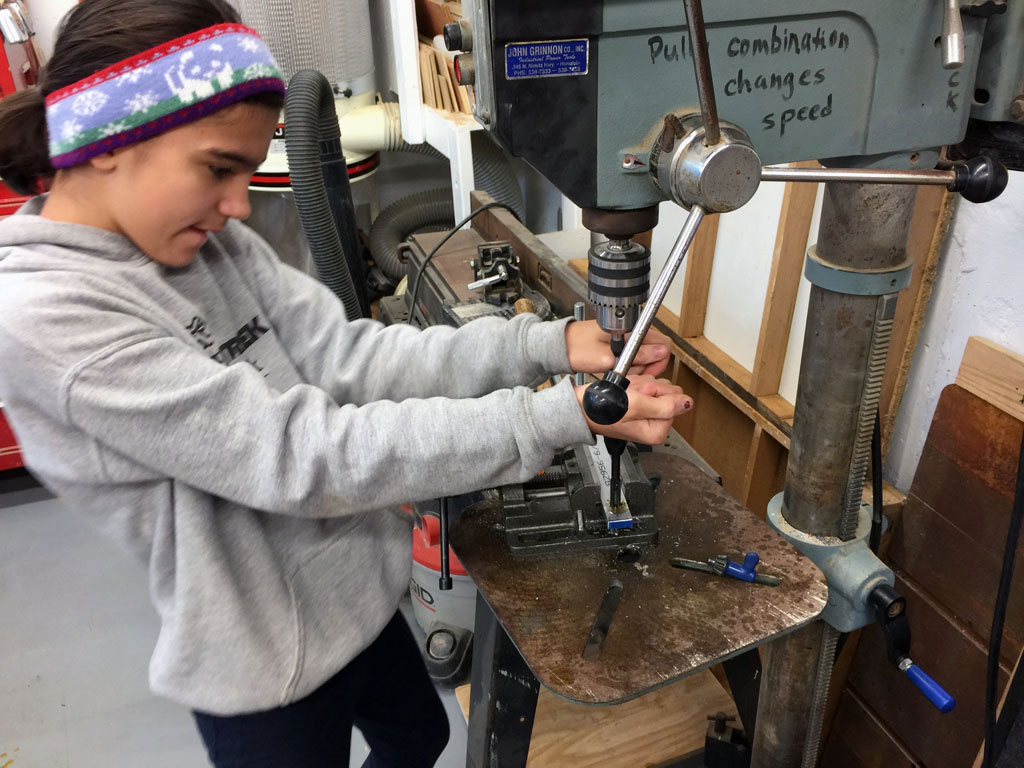
Using the drill press, grinders and saws was lots of fun. And, I definitely couldn't budge the new joints.
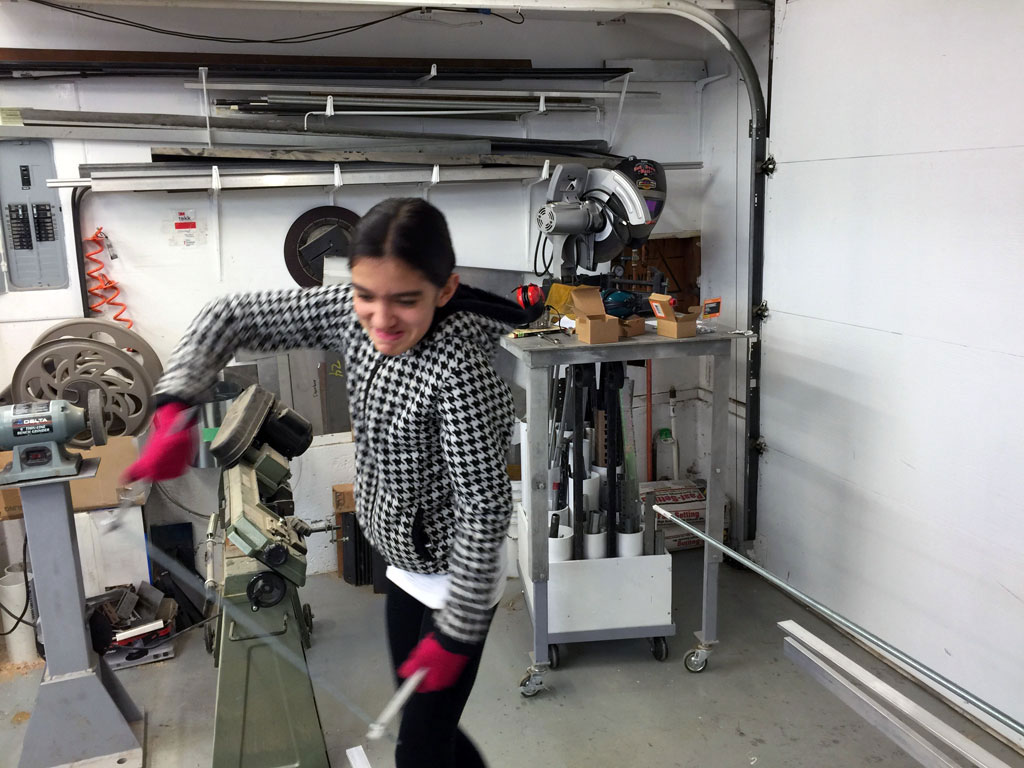
So, I had to take the crankshaft apart.
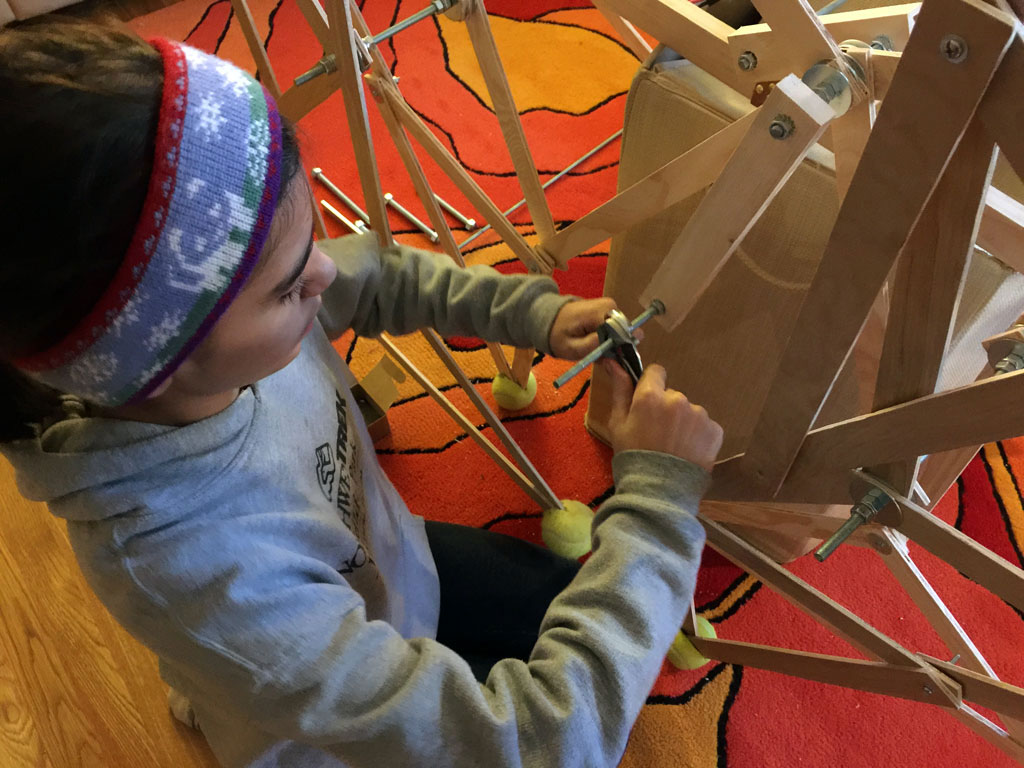
And I had to take the body apart to make the motor turn the legs more slowly.
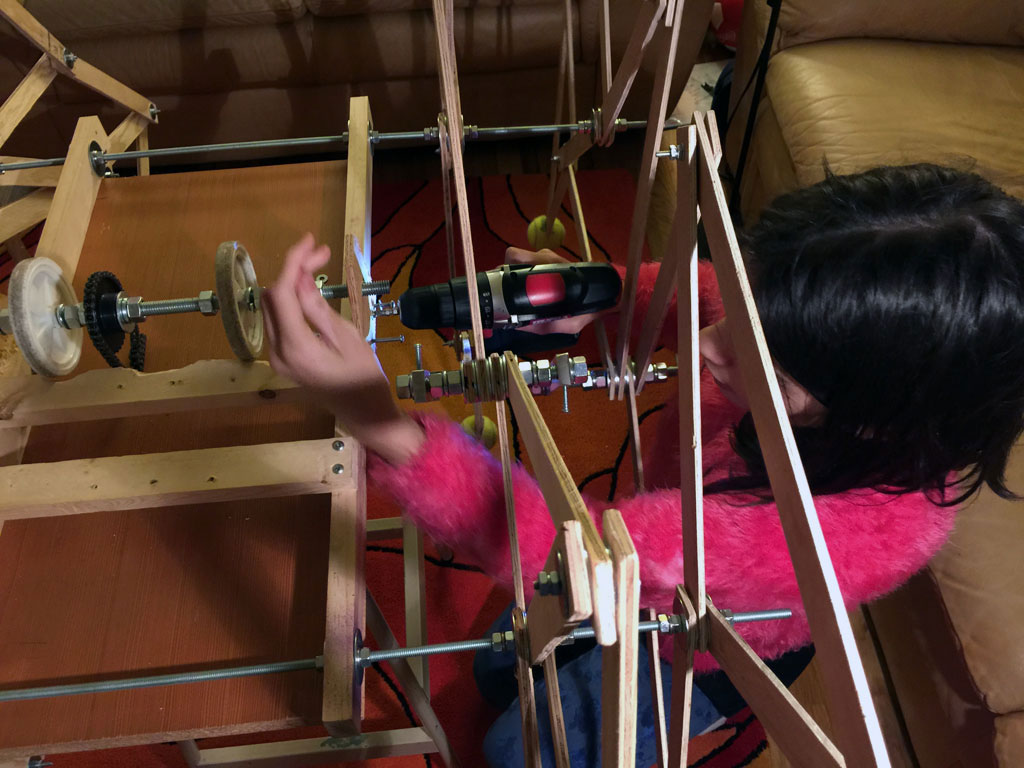
I took apart some old bicycles for chains and cog wheels.
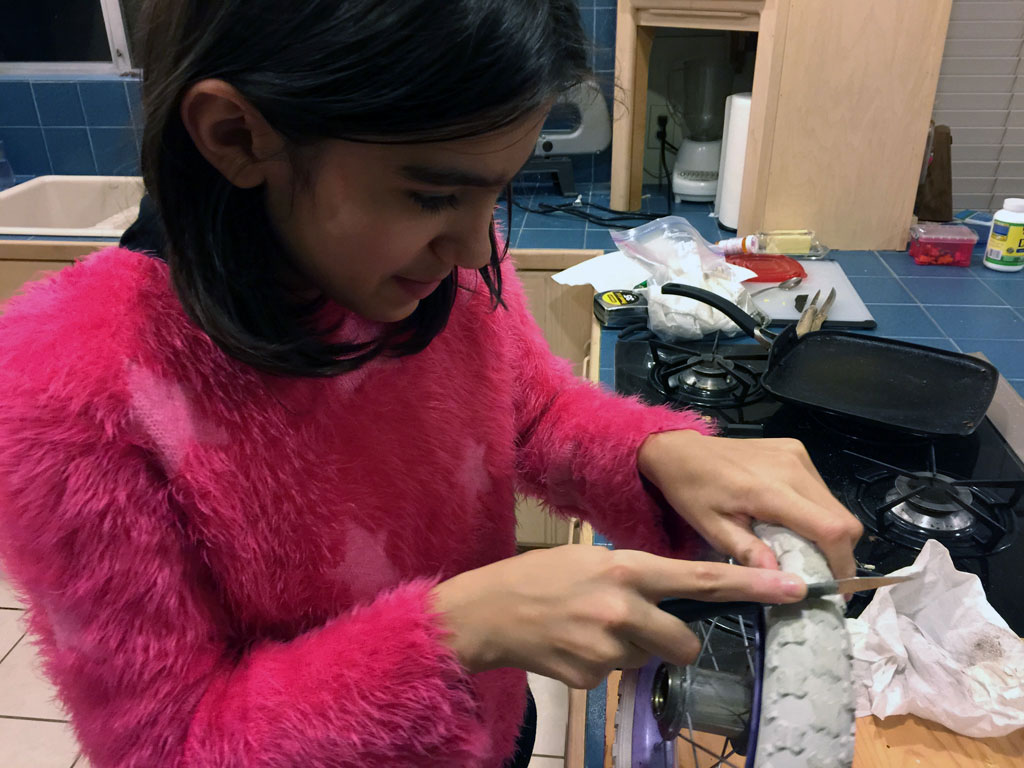
Mounting the motor.
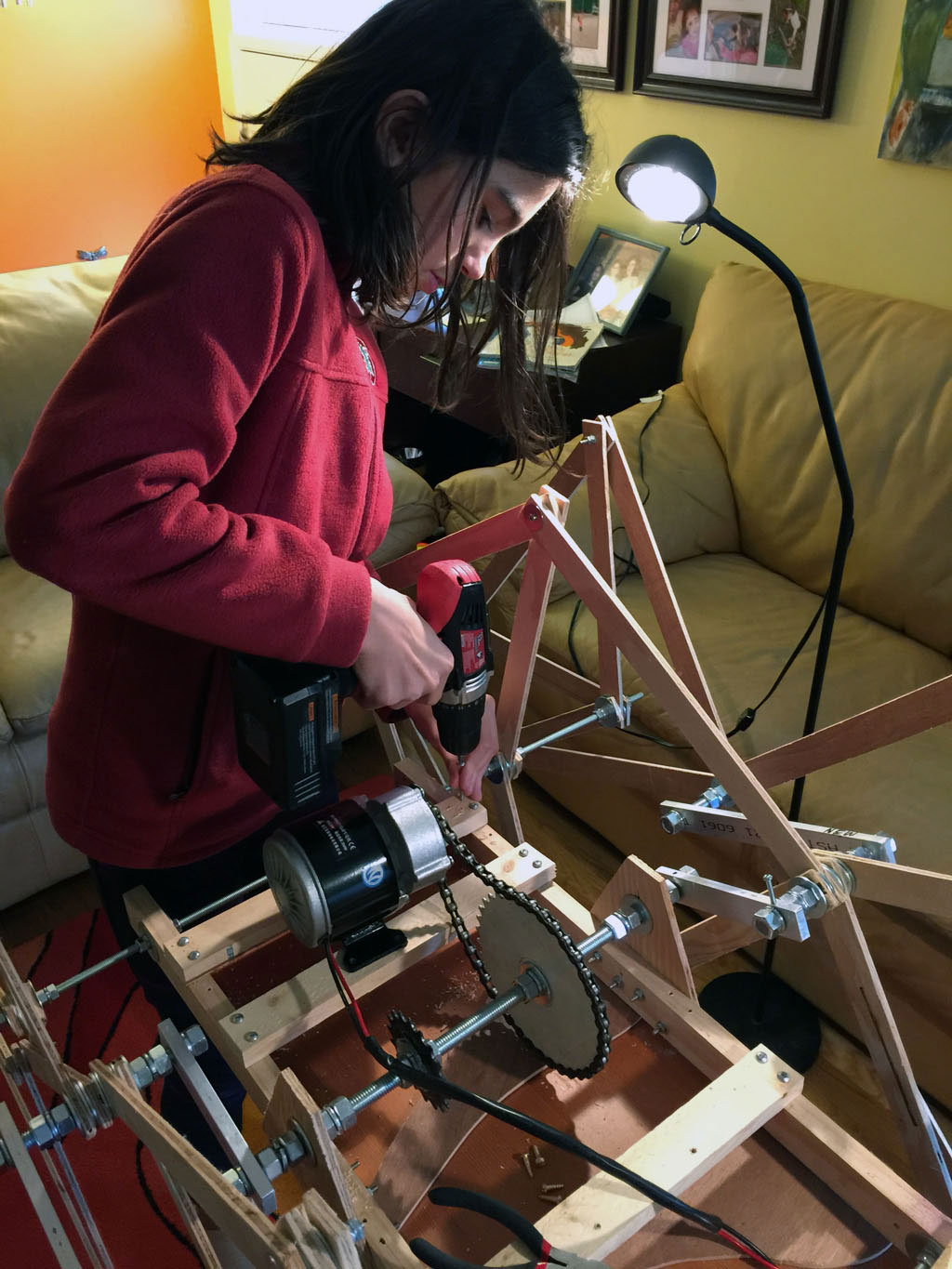
Aluminum Crankshaft Test from Fred Mannby on Vimeo.
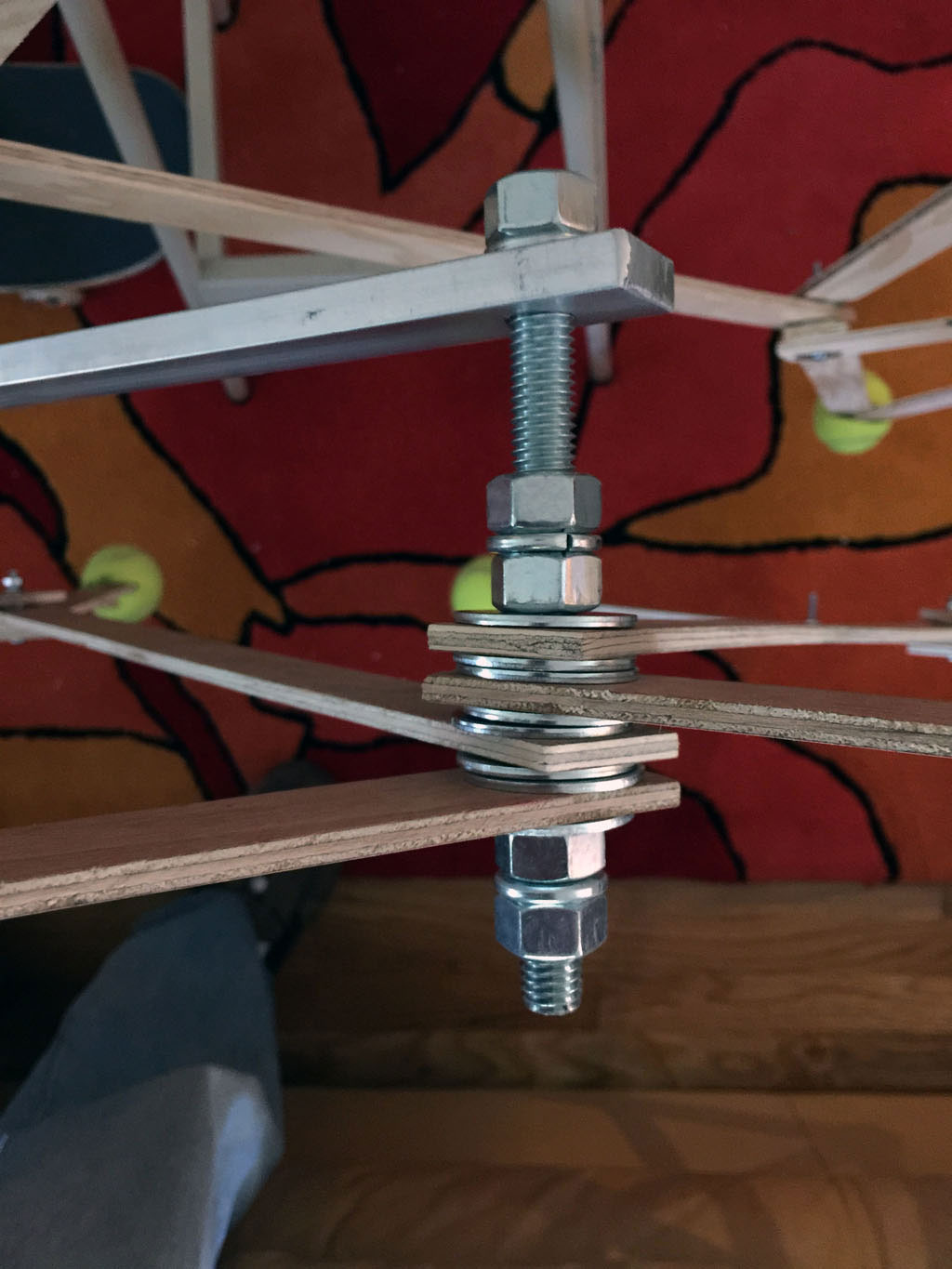
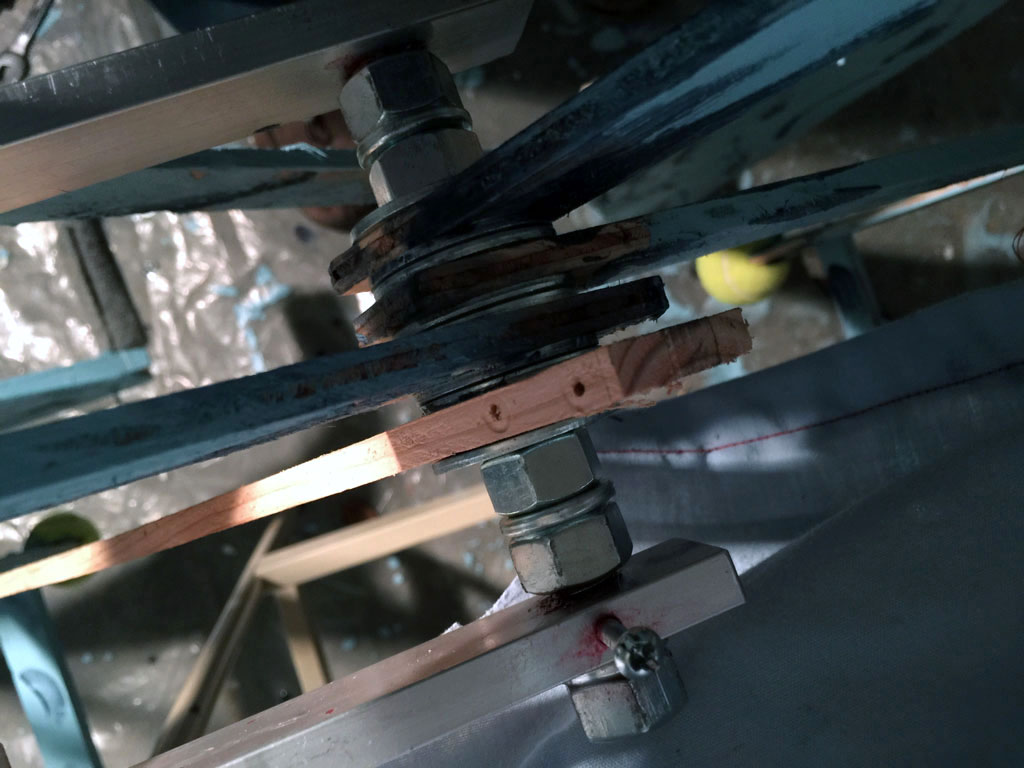
Here is a detailed picture of the crankshaft joints.
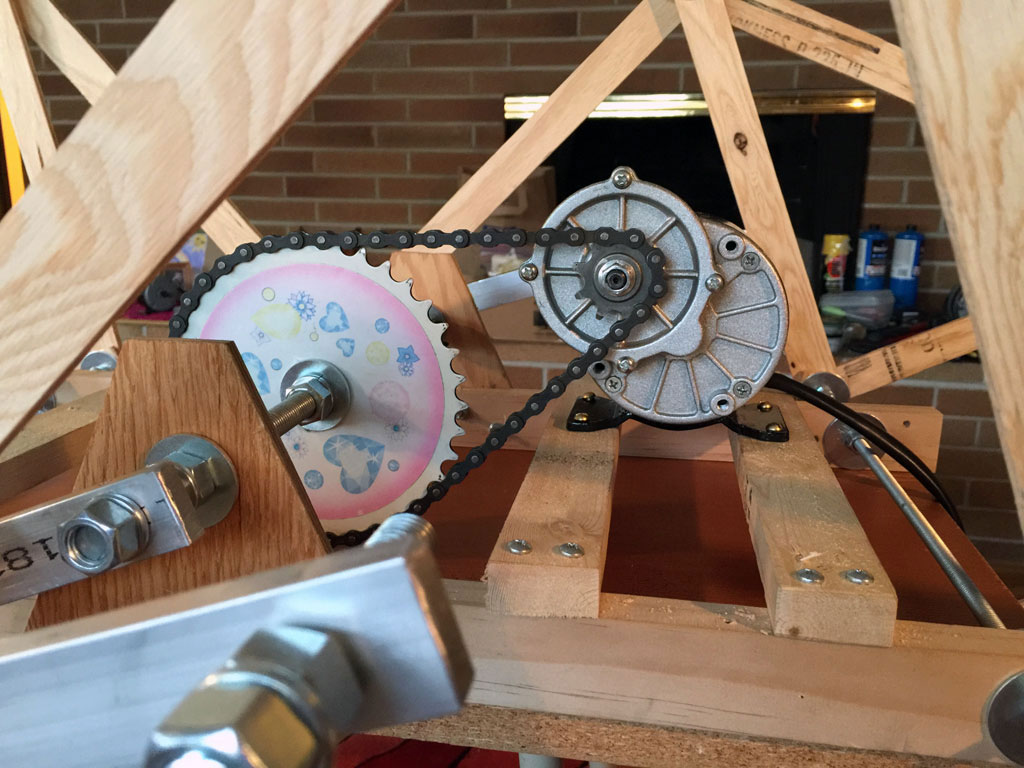
Here is the motor and cog wheels.
Mechanism from Fred Mannby on Vimeo.
The length of the threaded rods needed adjusting with the new aluminum parts.
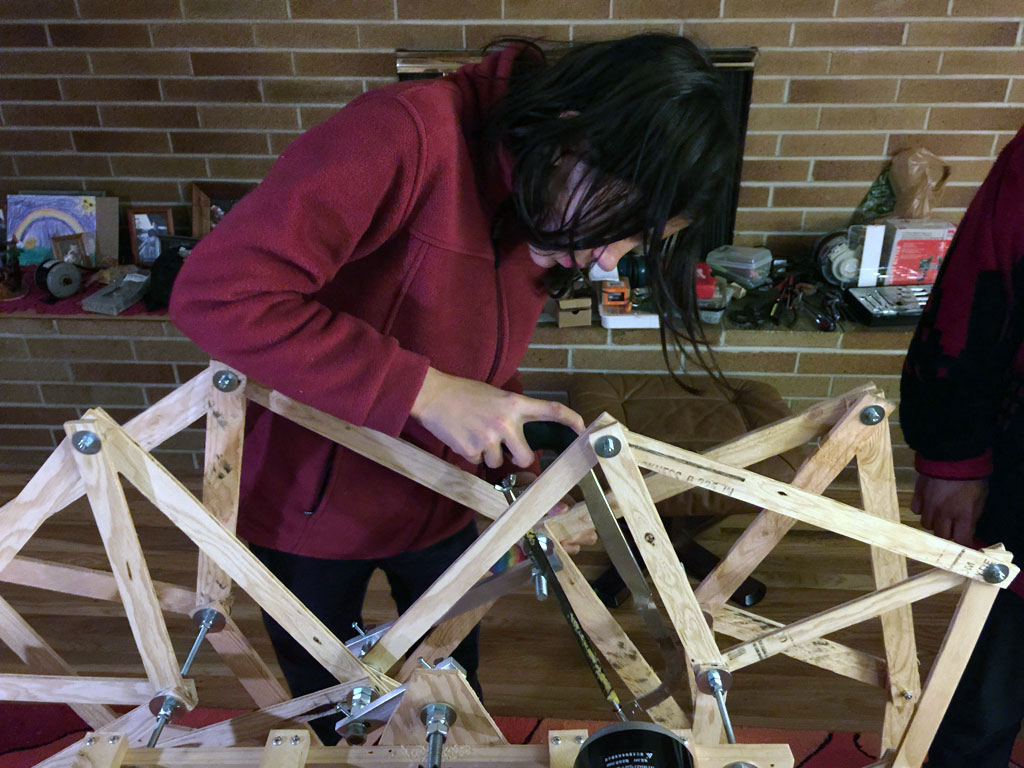
It was too unstable, sideways, so I added cross-bracing beams.
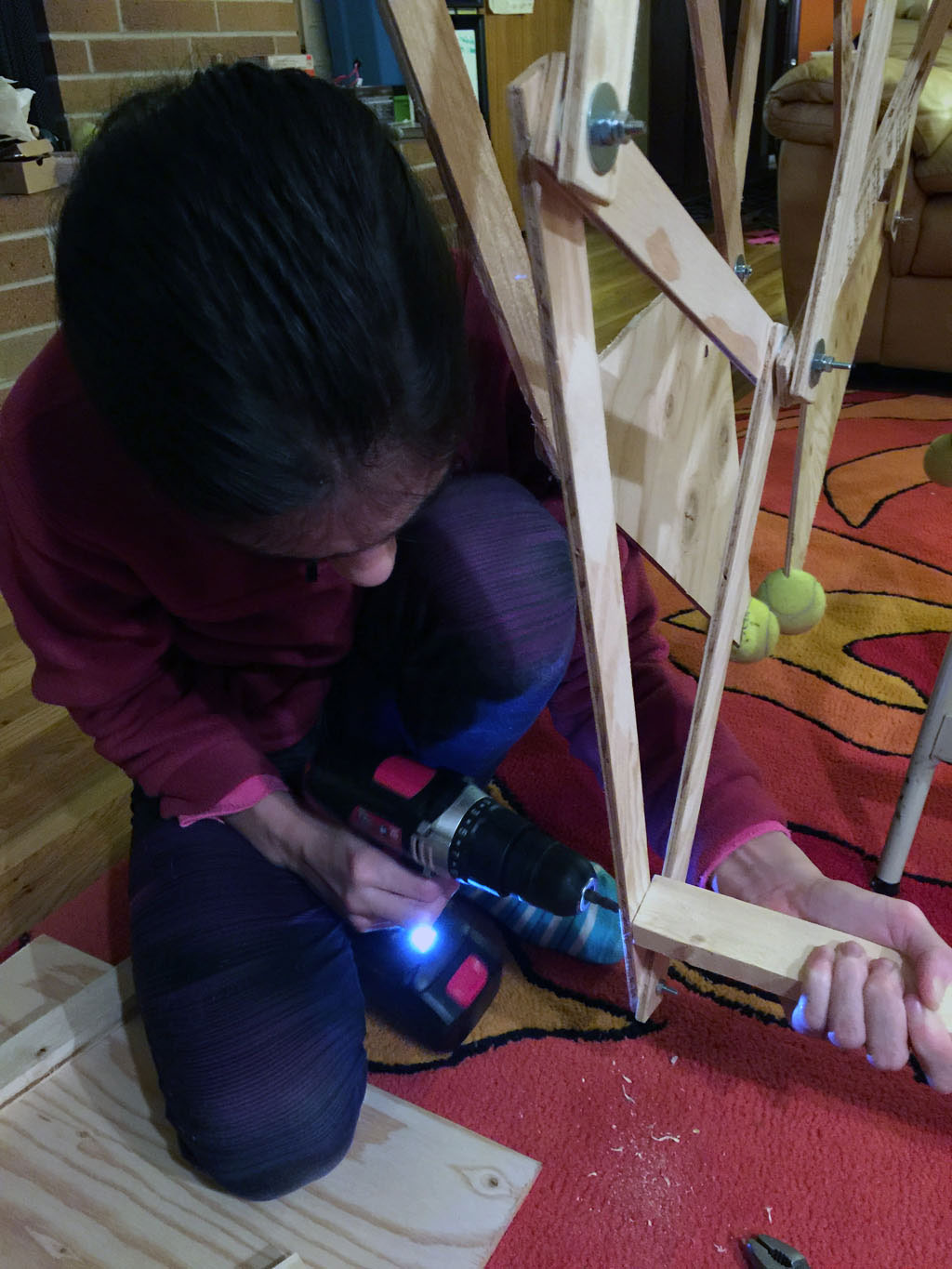
Triangle pieces for the parts of the legs that don't move.
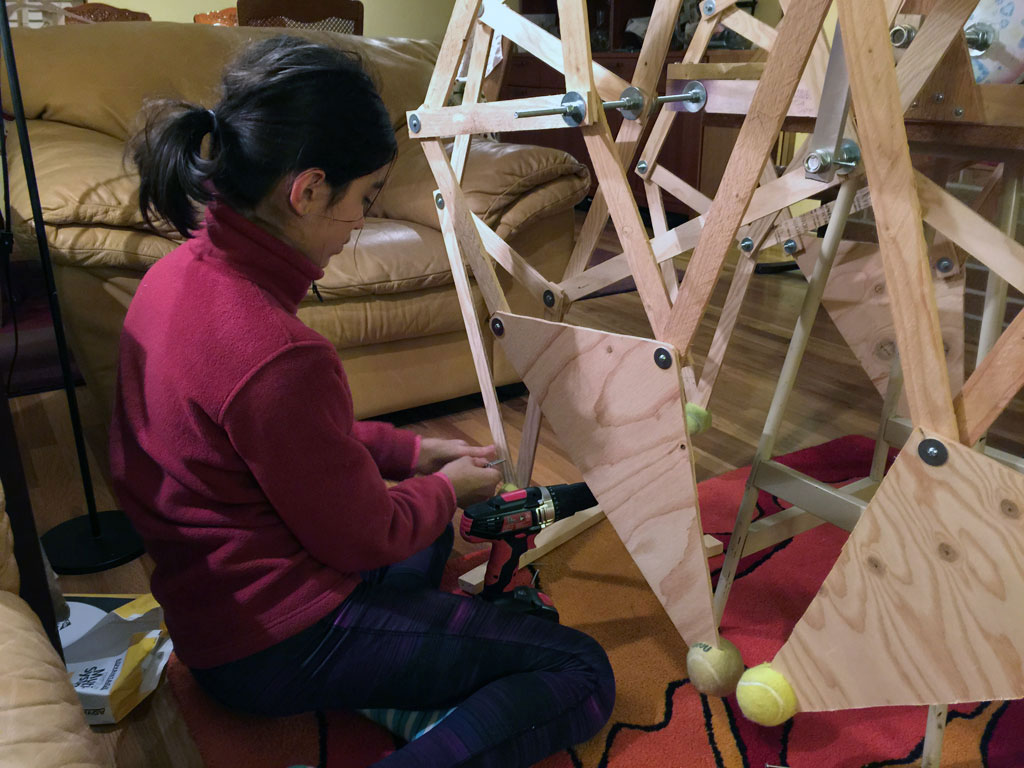
And feet.
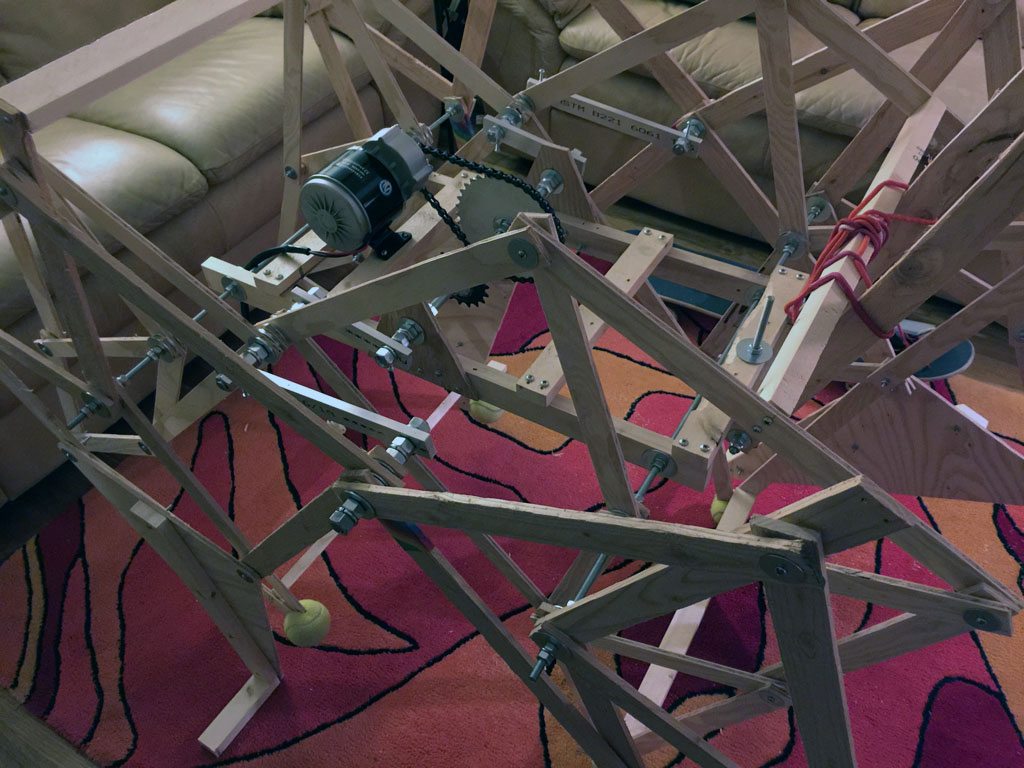
I tried to stop the joints in the cranshaft from slipping by screwing smaller bolts sideways into the rod, but the bolts just snapped. Finally I tried threadlocker, and it held, although it turns out, just barely. When the crankshaft slips, the legs get out of alignment, and they can break very quickly.
Here he is partially reassembled, after I found he wouldn't fit through the door, and needed to be slimmed down:
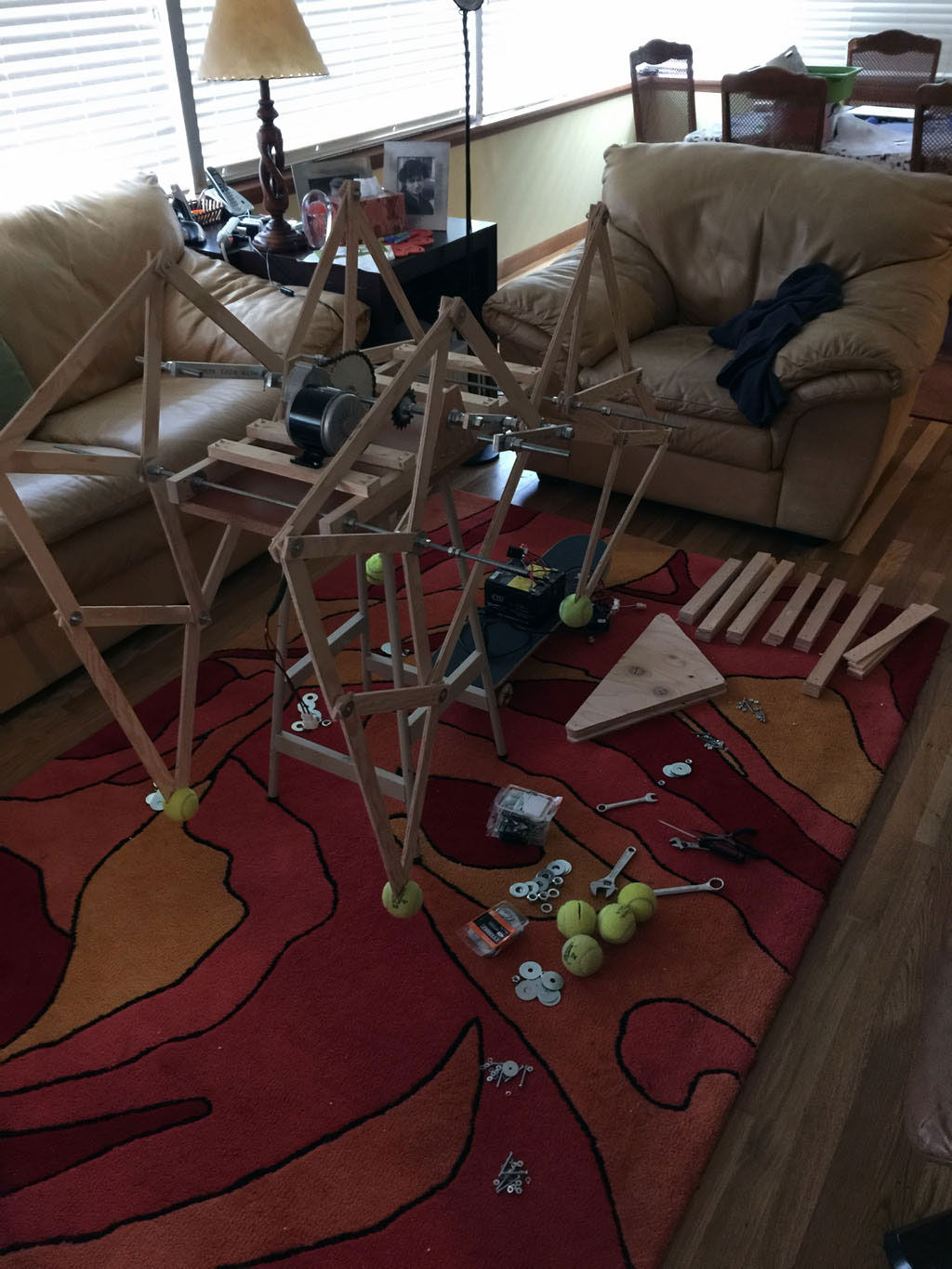
Then I started working on the head. I found some great projects online as inspiration for the jaw and the animatronic eyes.
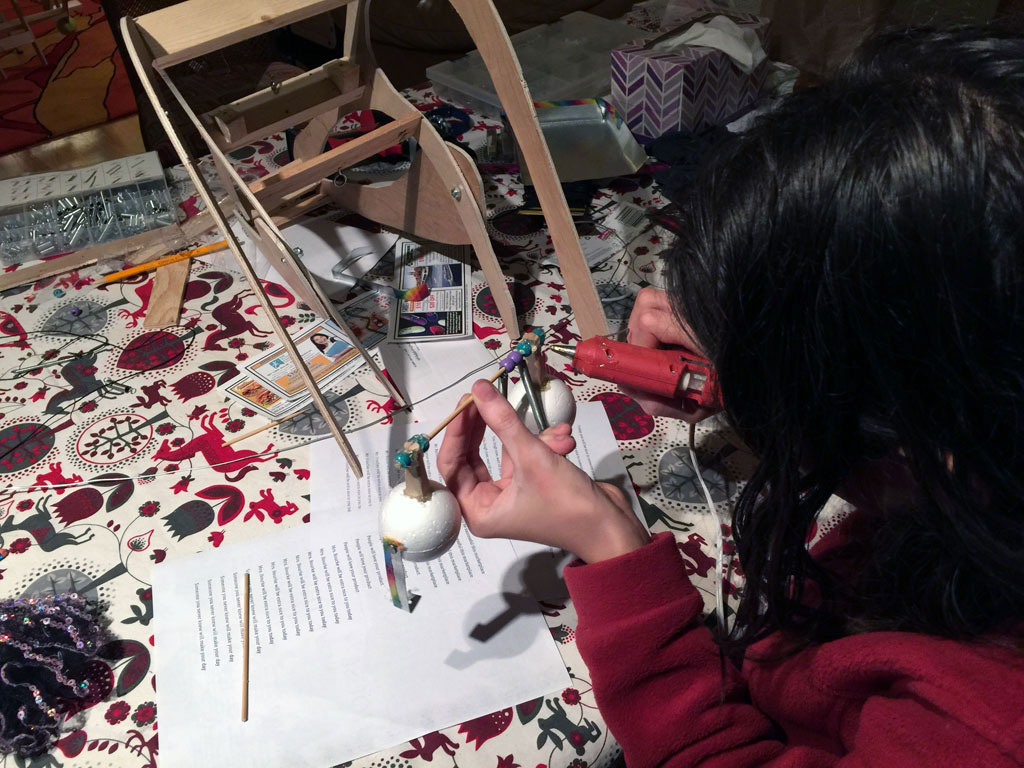
Finally something that looks almost ready, and we have our first rehearsal presentation at school.
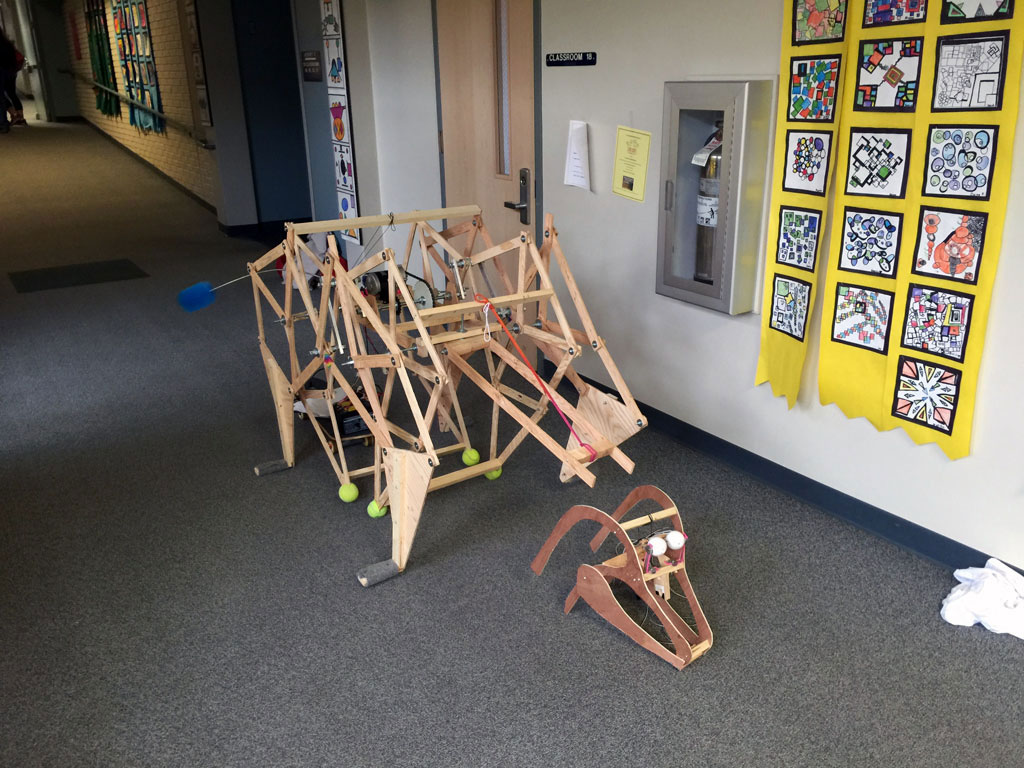
Everyone seems really impressed, but there's still a ton of work to do.
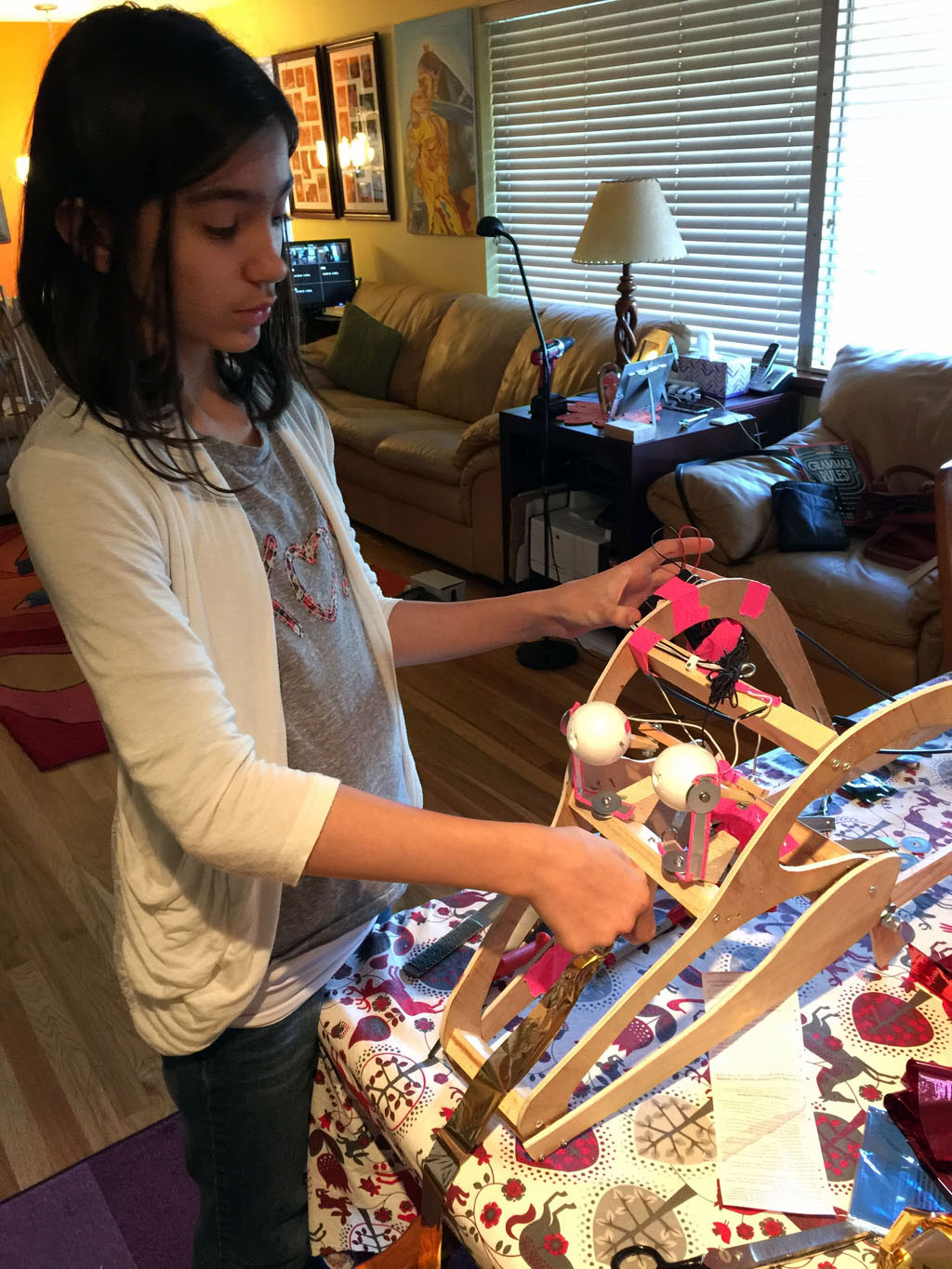
Bluthe Eyes from Fred Mannby on Vimeo.
Eye lids.
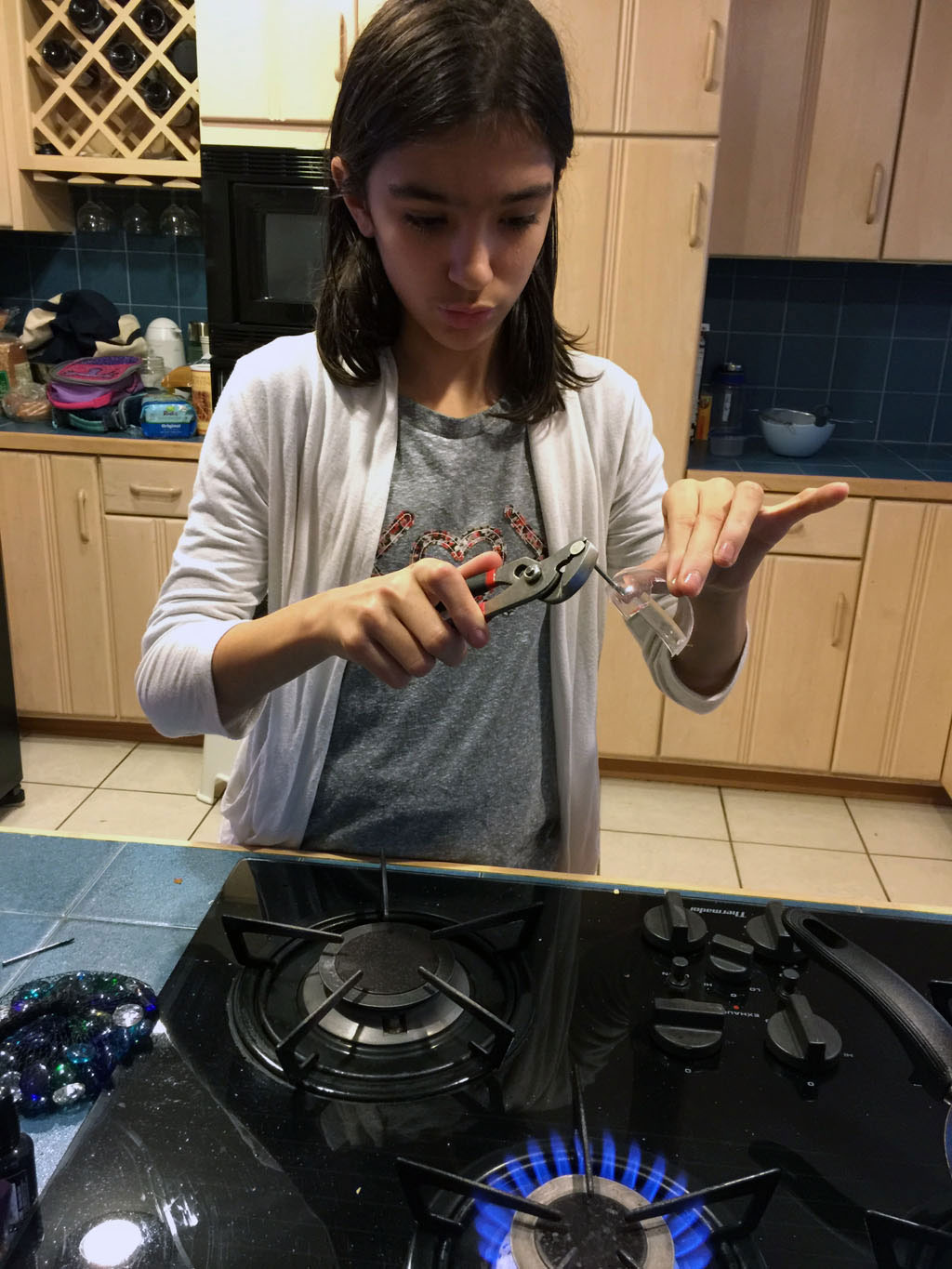
He gets eye lashes.
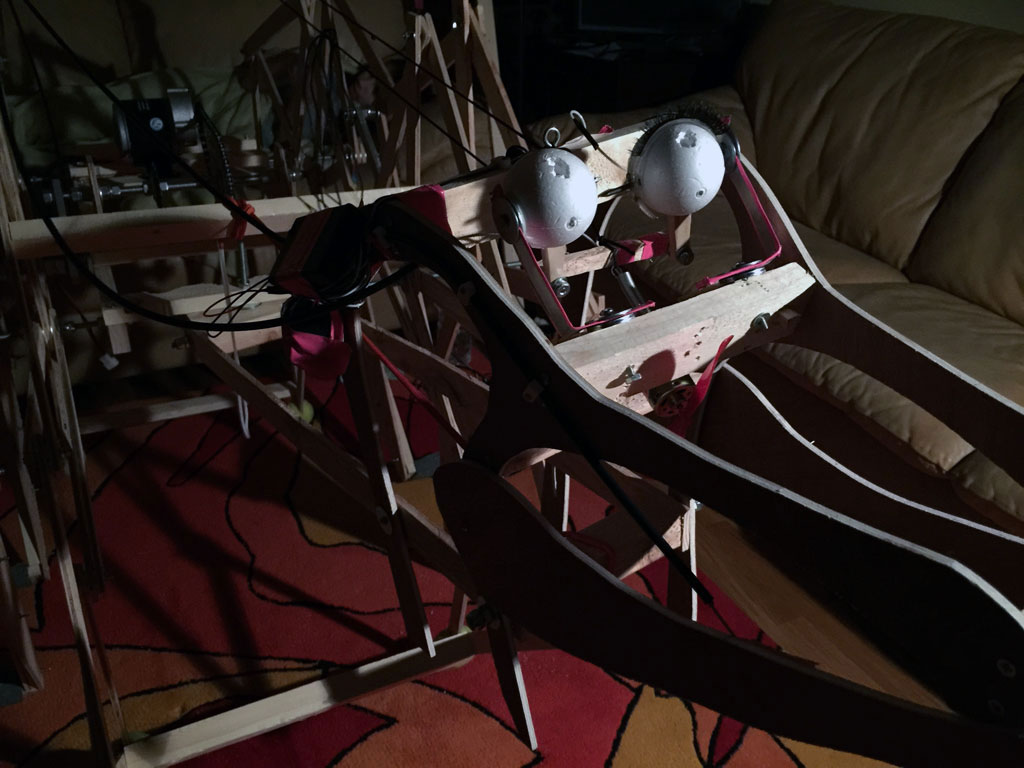
And a paint job.
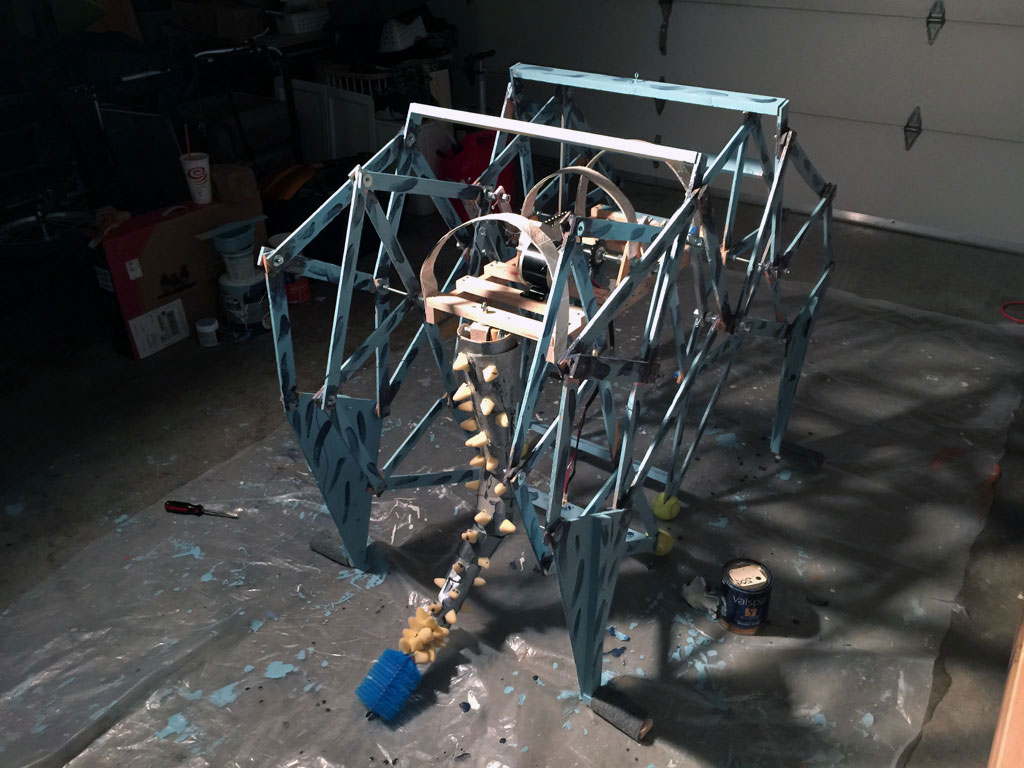
And a back.
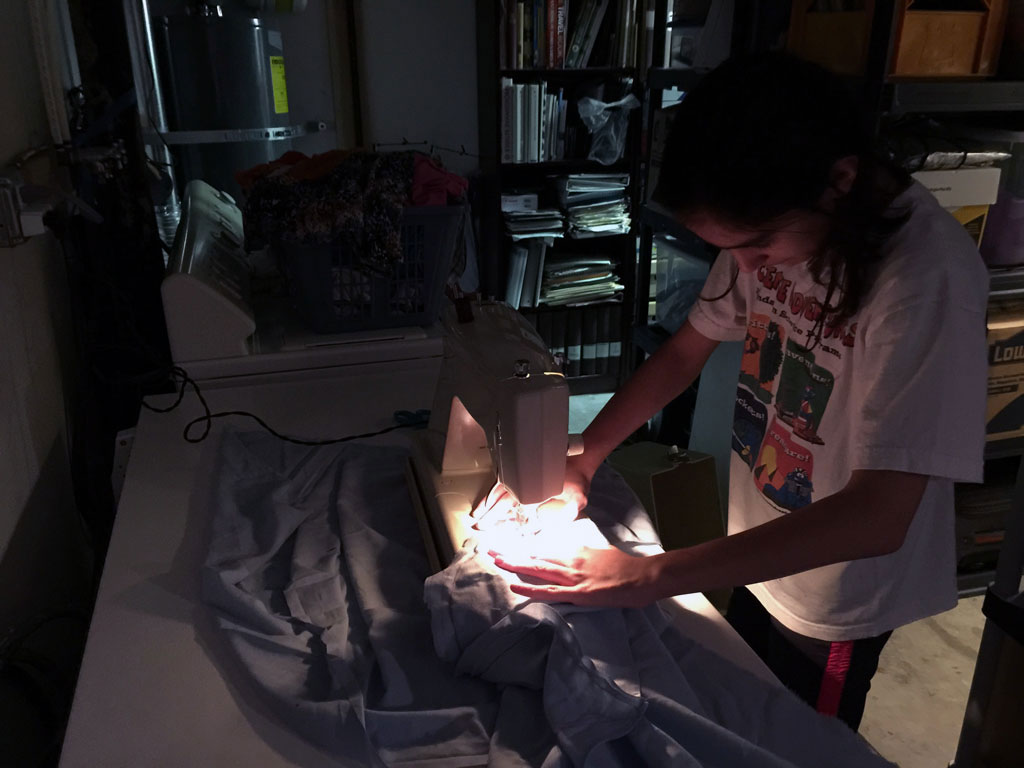
And a facelift.
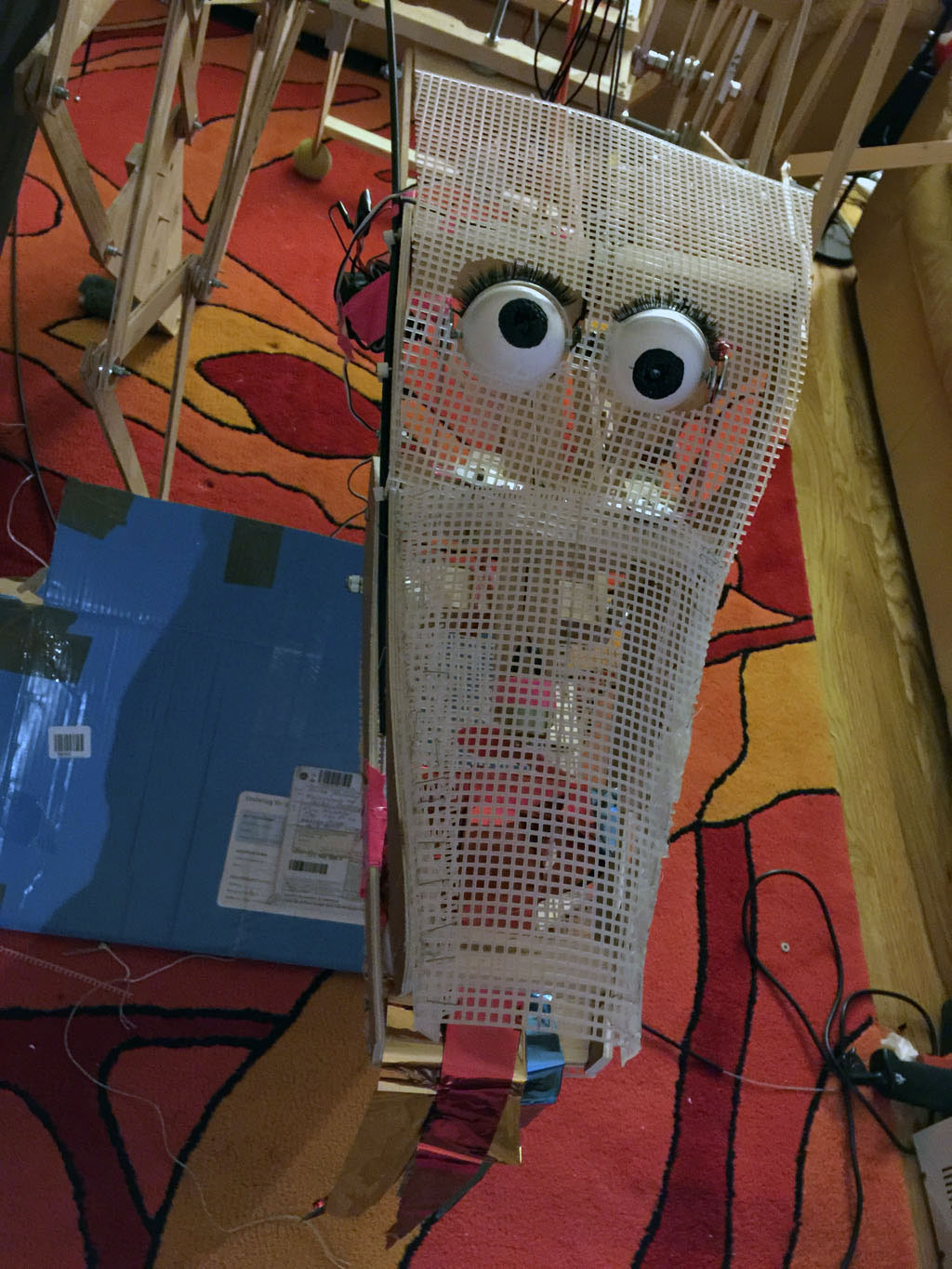
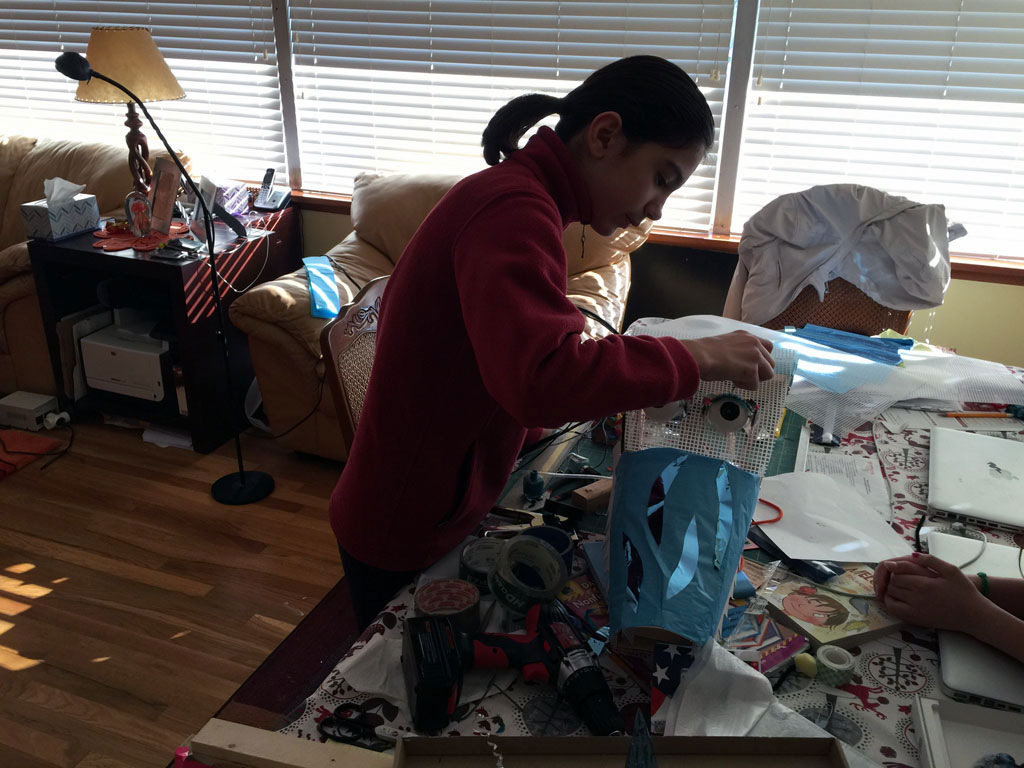
And fire!
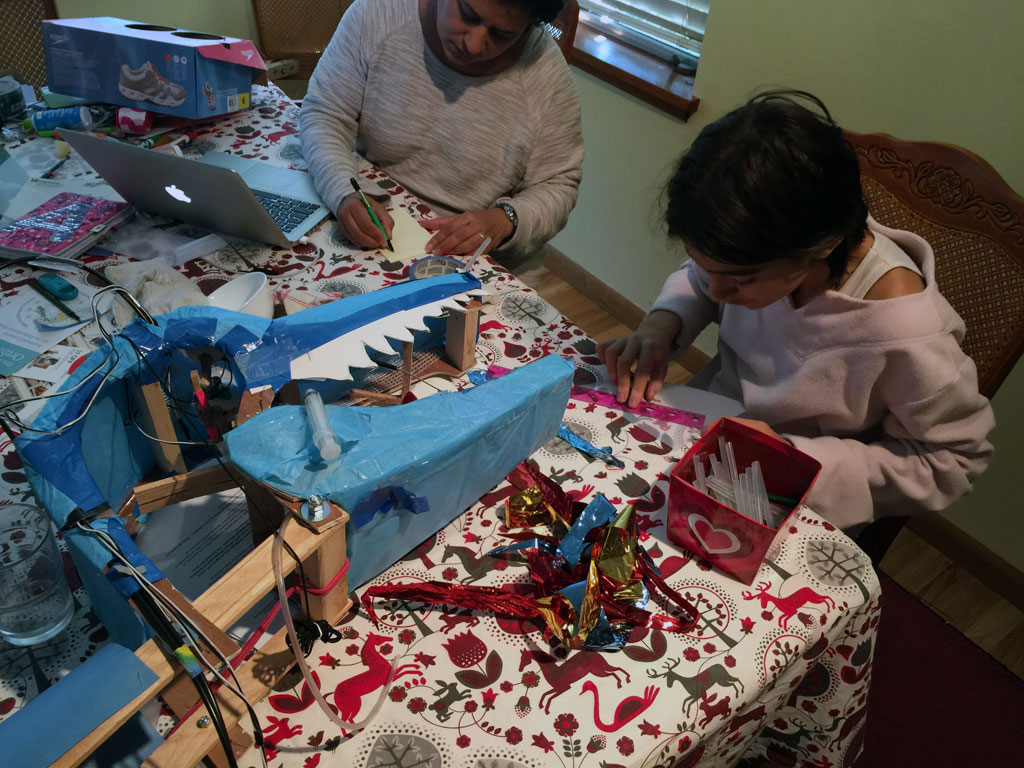
Bluthe Fire 1 from Fred Mannby on Vimeo.
Bluthe Fire 2 from Fred Mannby on Vimeo.
Eyes and Fire from Fred Mannby on Vimeo.
Fellow creatures: lots of bristle bots!
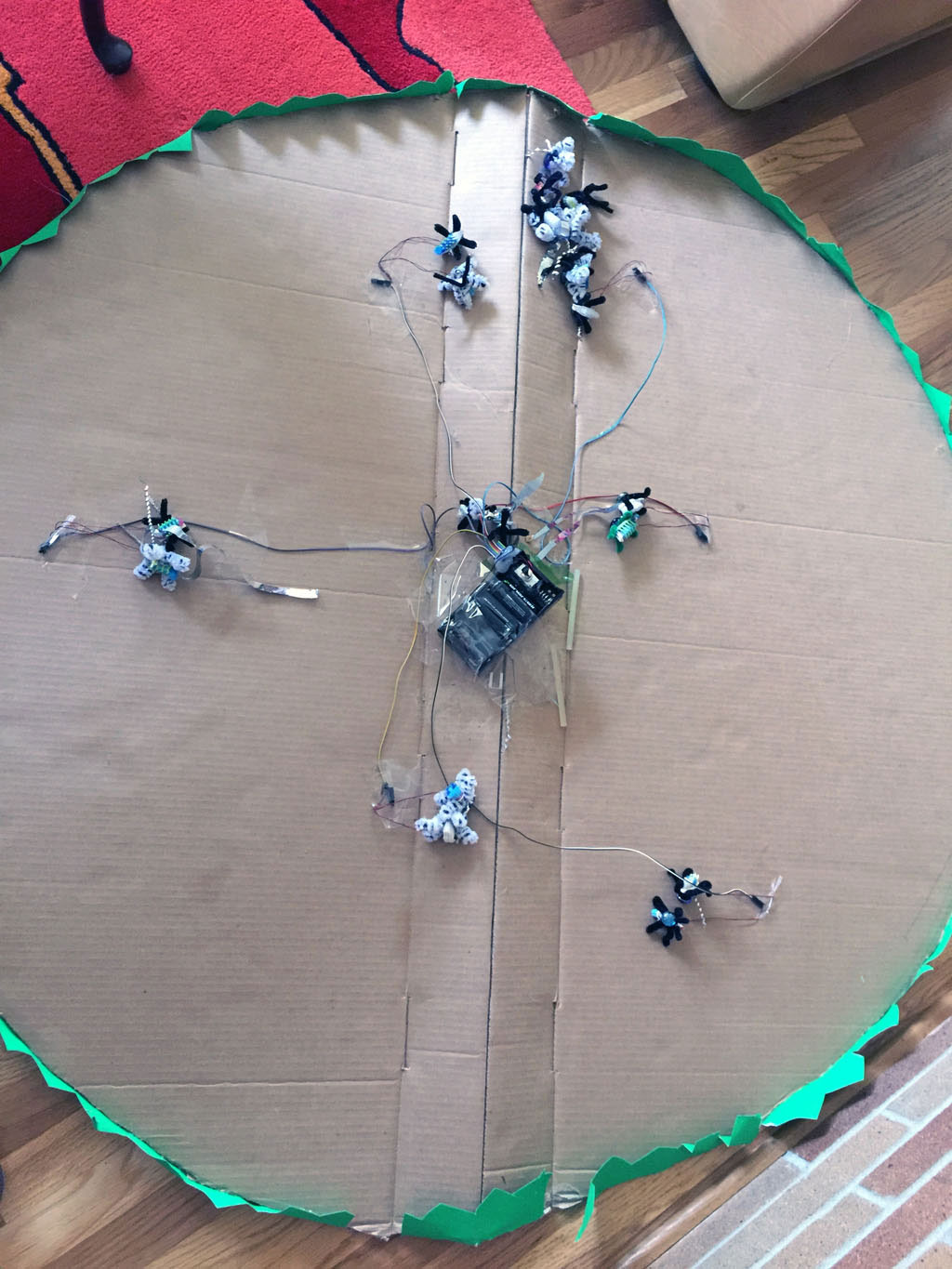
Bristle Bot from Fred Mannby on Vimeo.
Bugmania from Fred Mannby on Vimeo.
How is he going to fit?
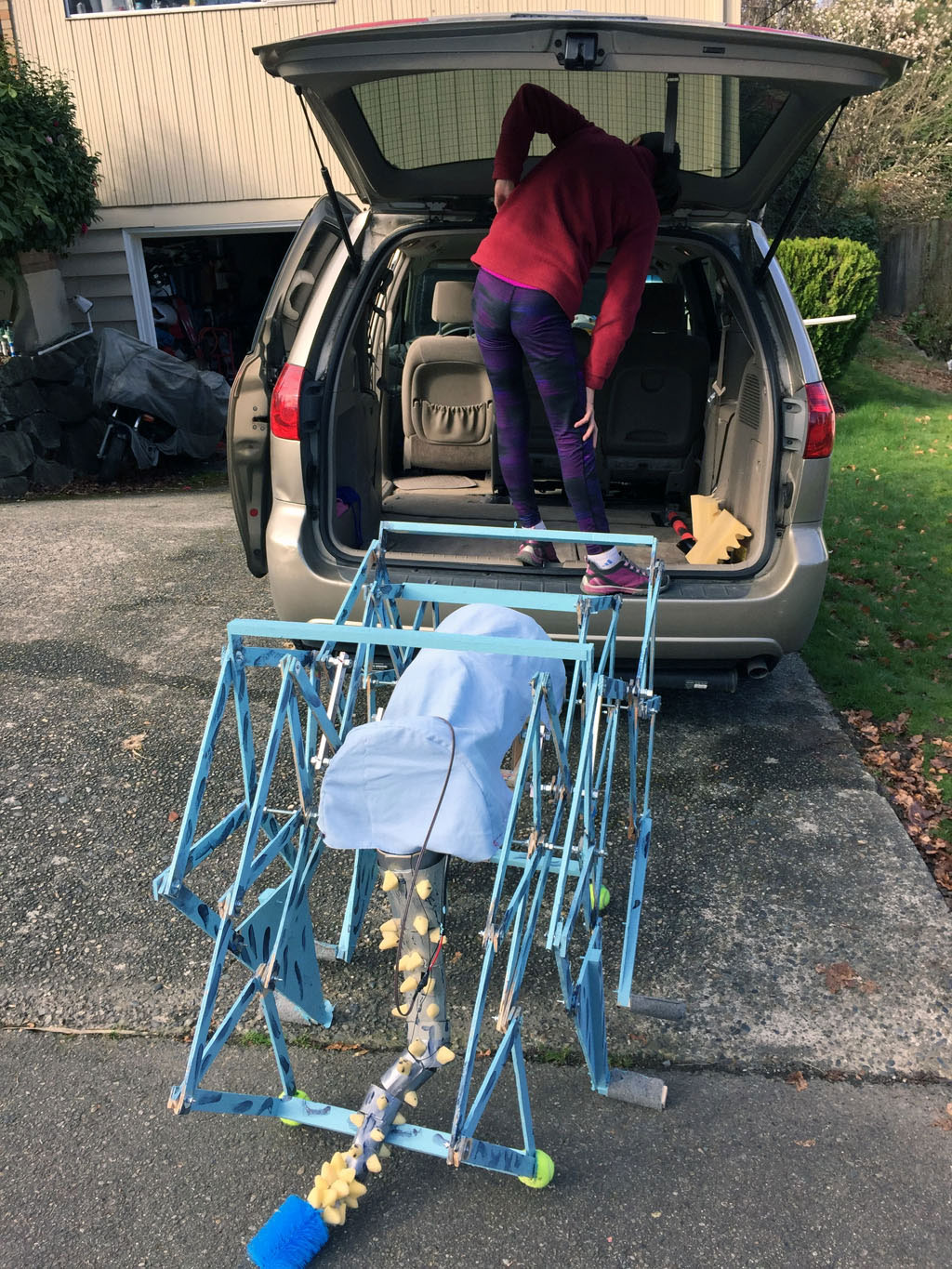
During the first presentation, he broke a leg. Luckily I found a way to give him a new one without taking apart the whole thing again.
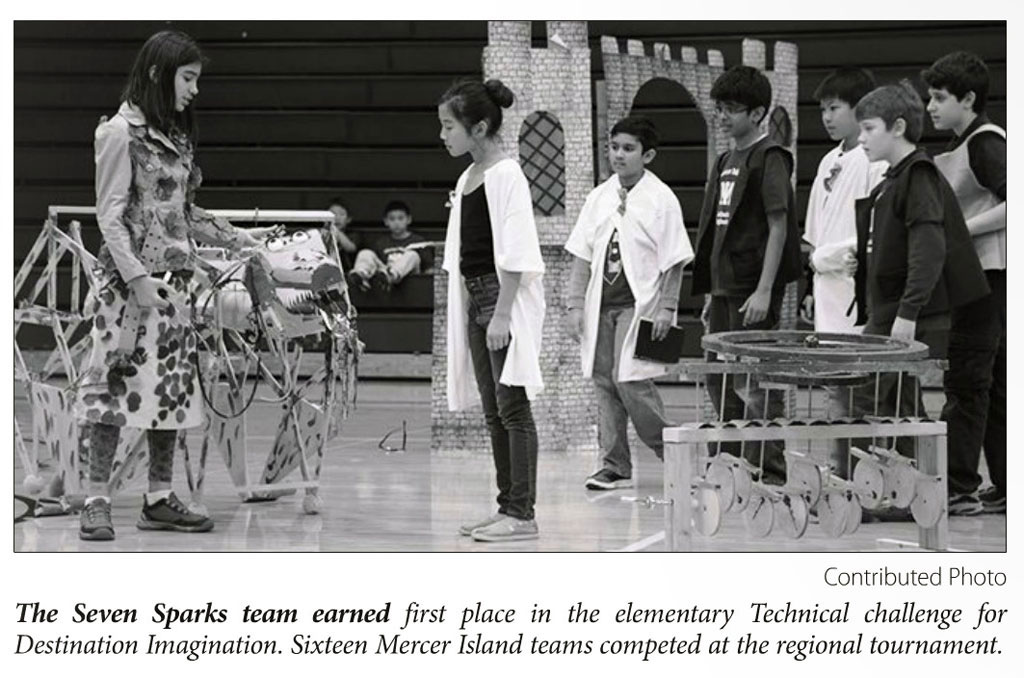
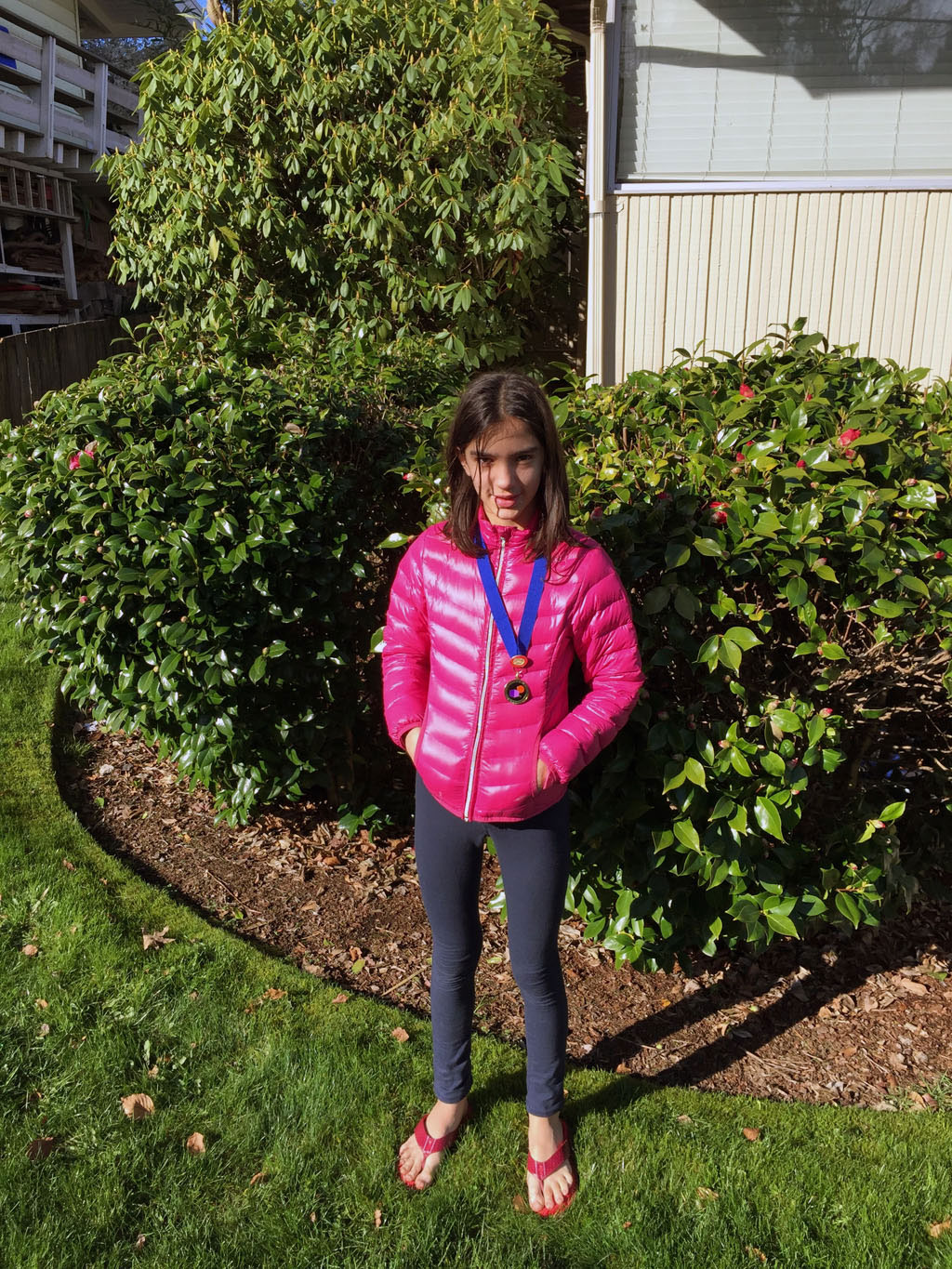
We got a Renaissance Award (and 1st place)! This is dad's photo in the Mercer Island Reporter, March 11, 2015, page 24.
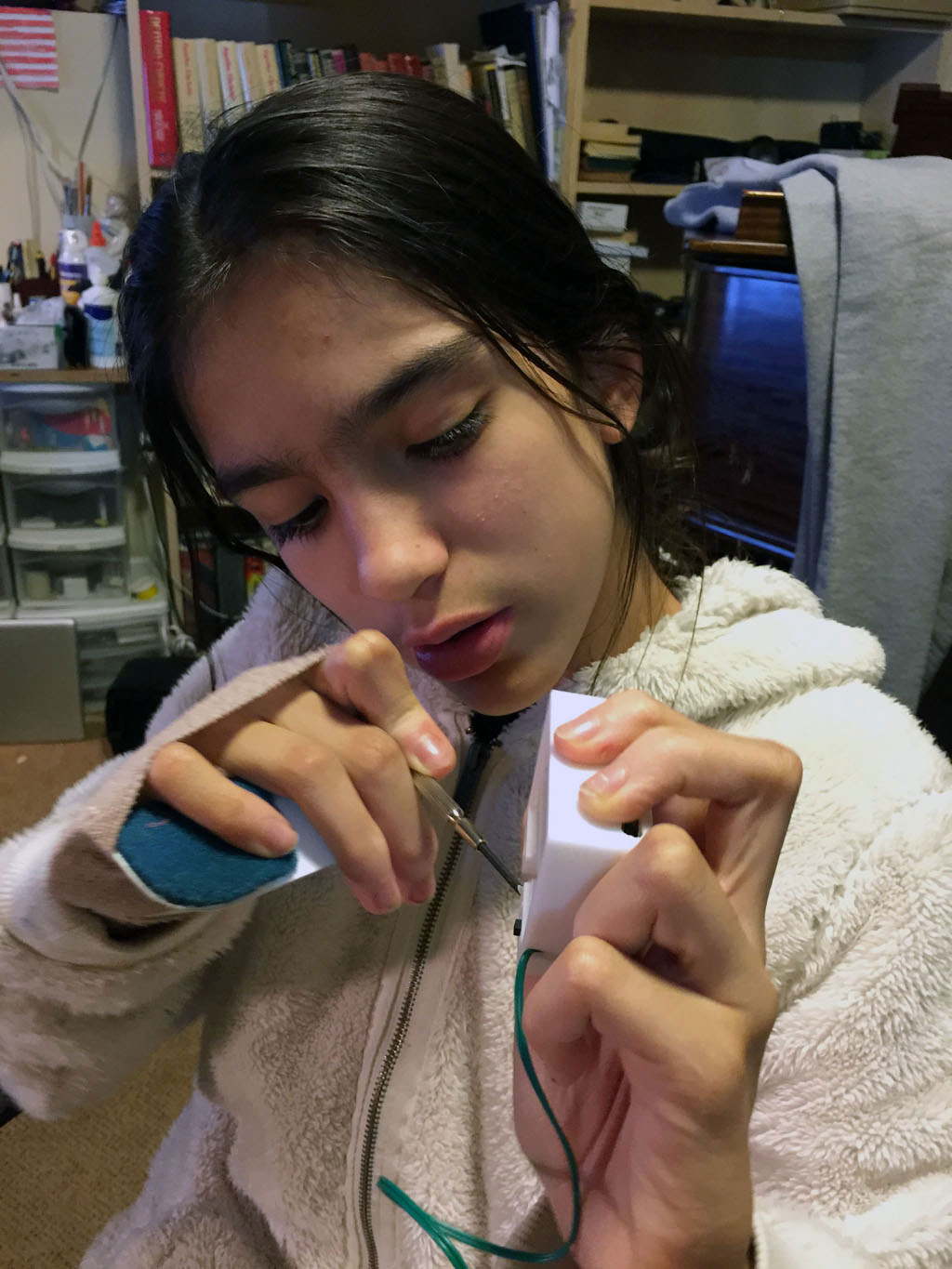
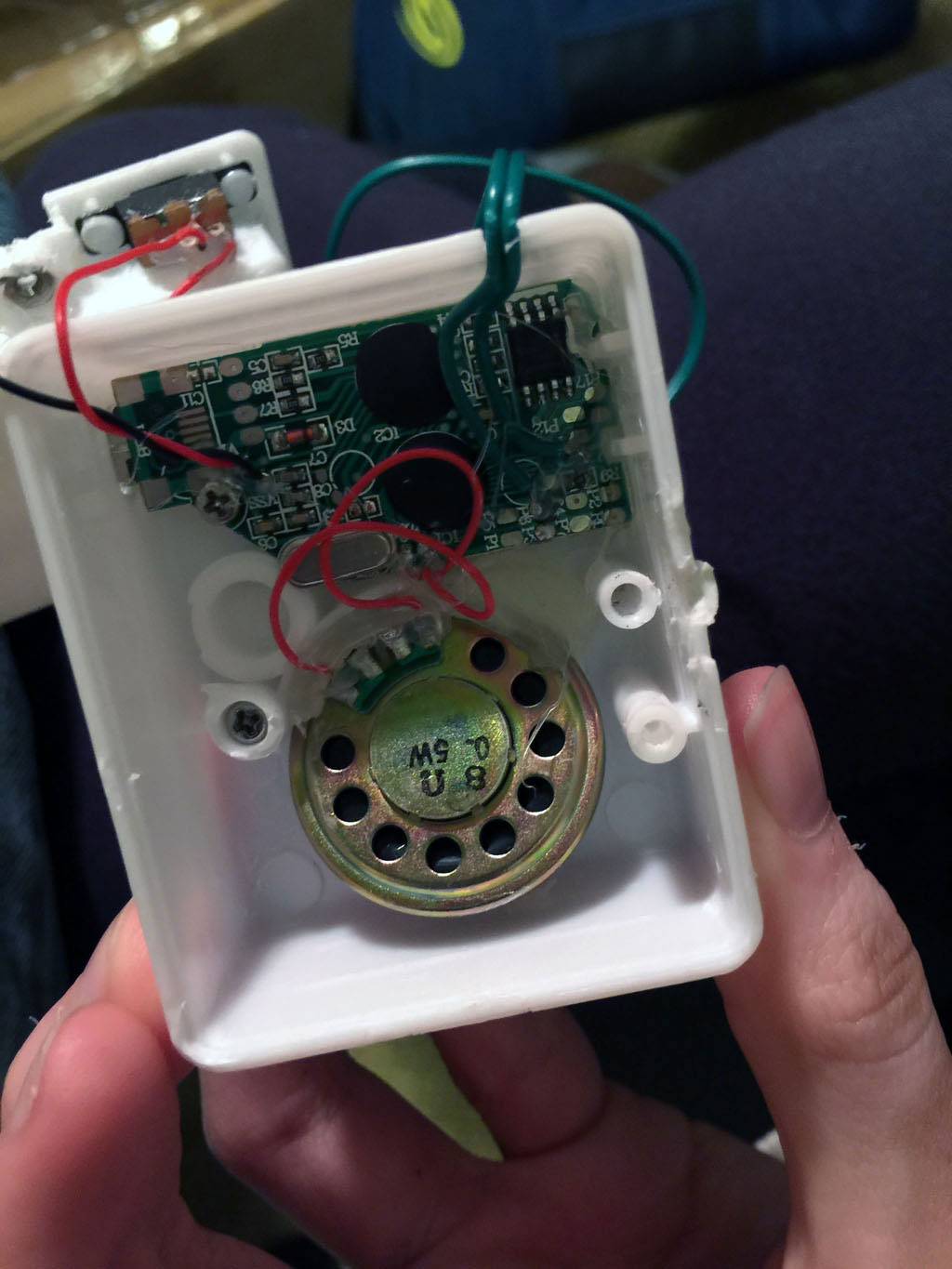
Bluthe gets a voice using a teddy bear voice recorder and a tweaked recording of a roar in Audacity. The sound had to be modified to sound good on the tiny speaker in the voice recorder.
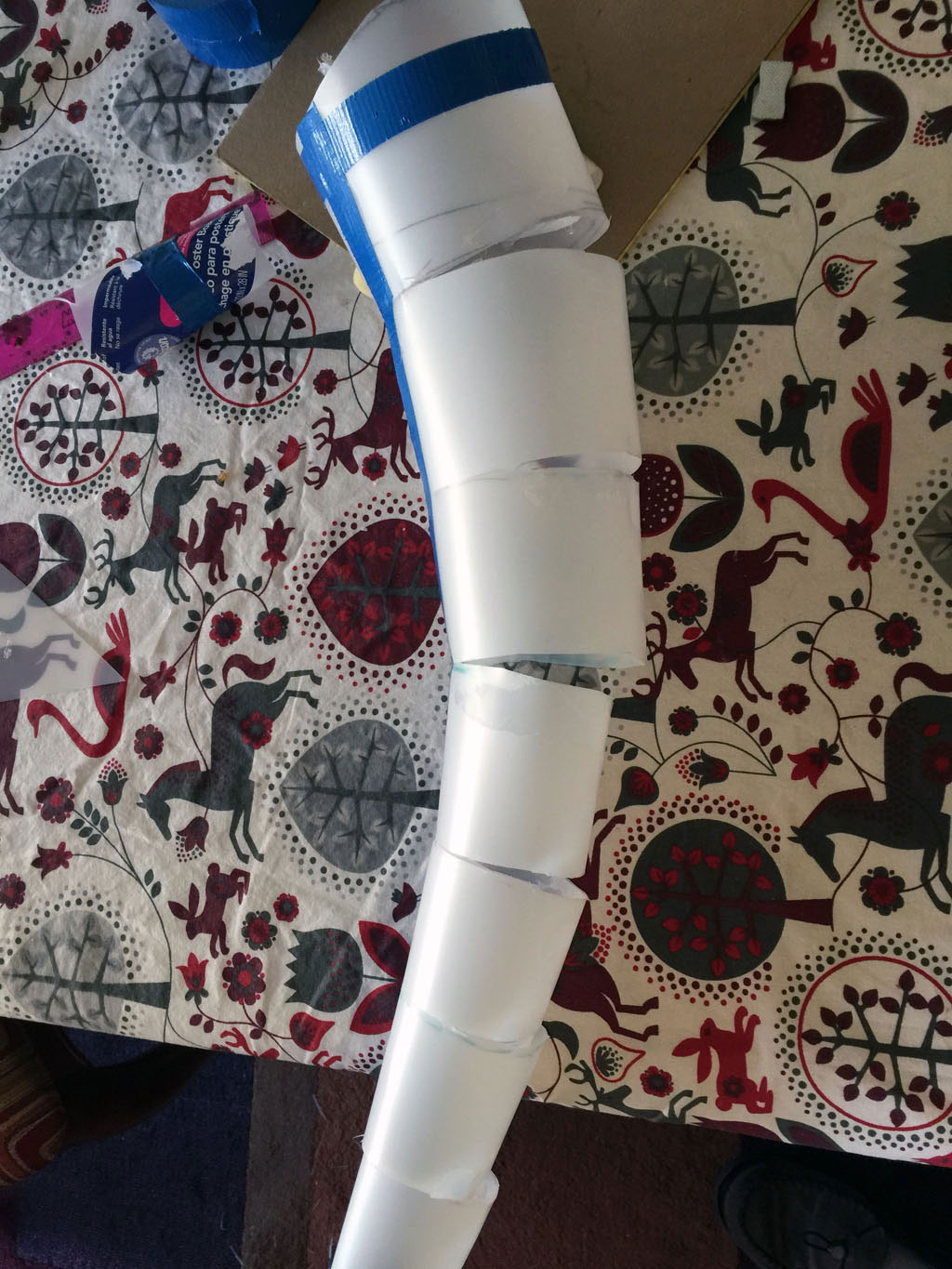
New tail design.
Rehearsal before State.
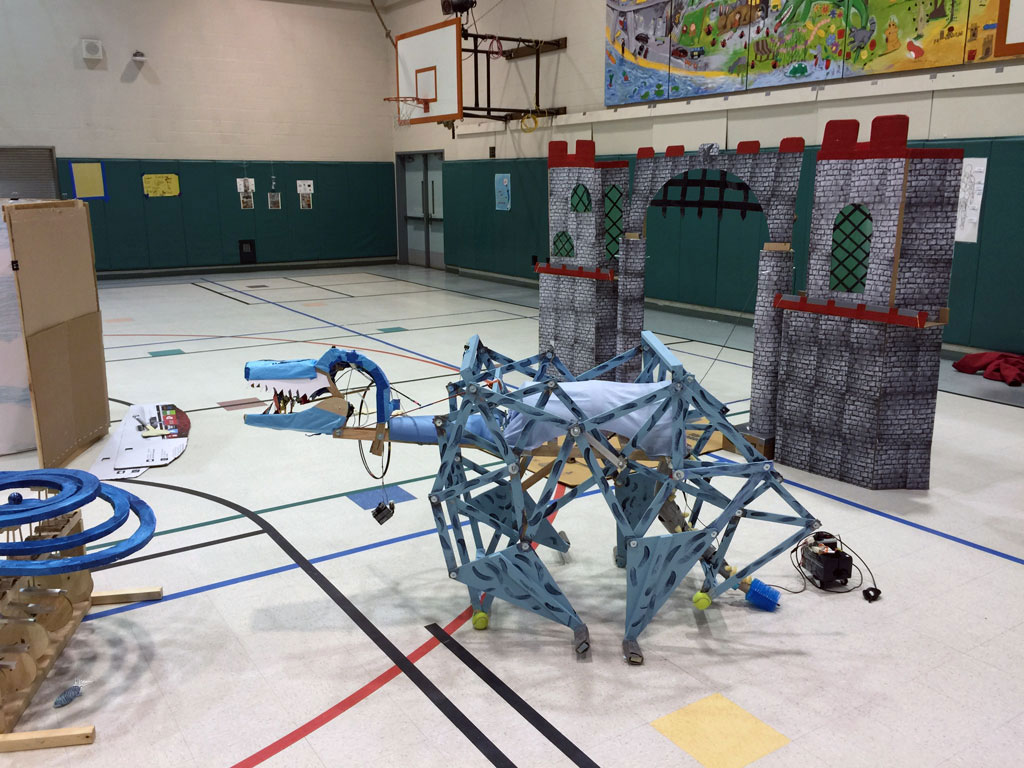
Bluthe doesn't fit through the portal.
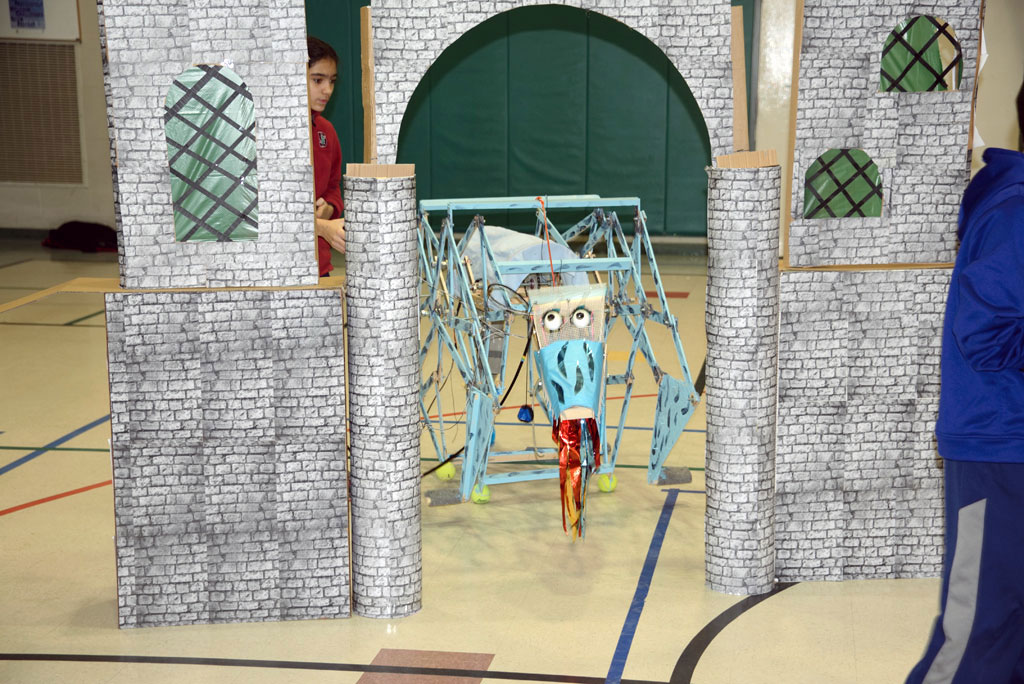
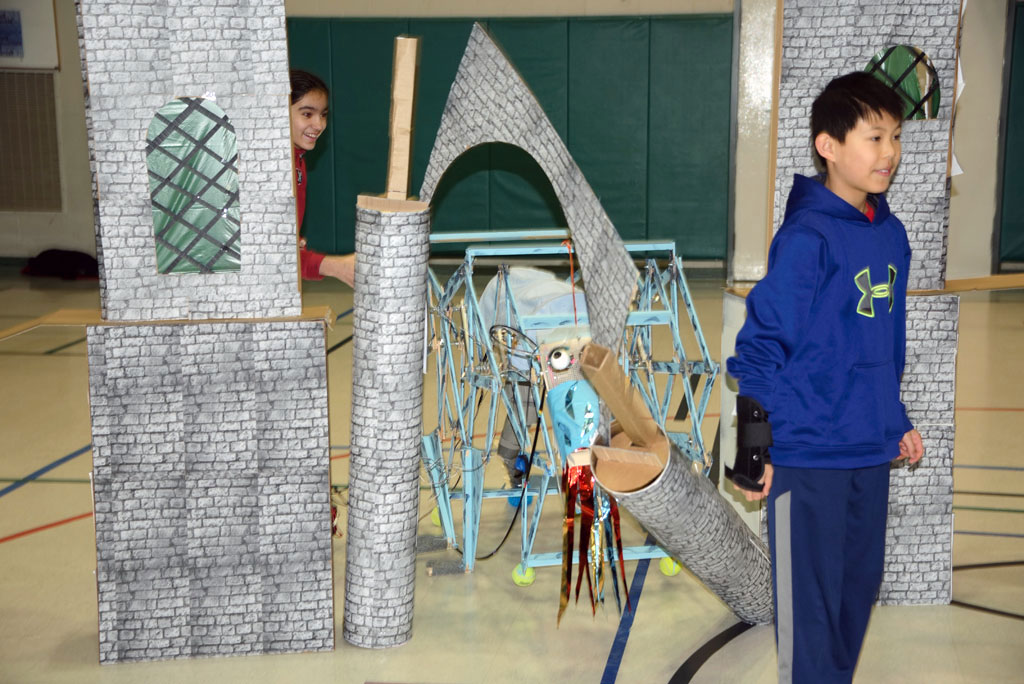
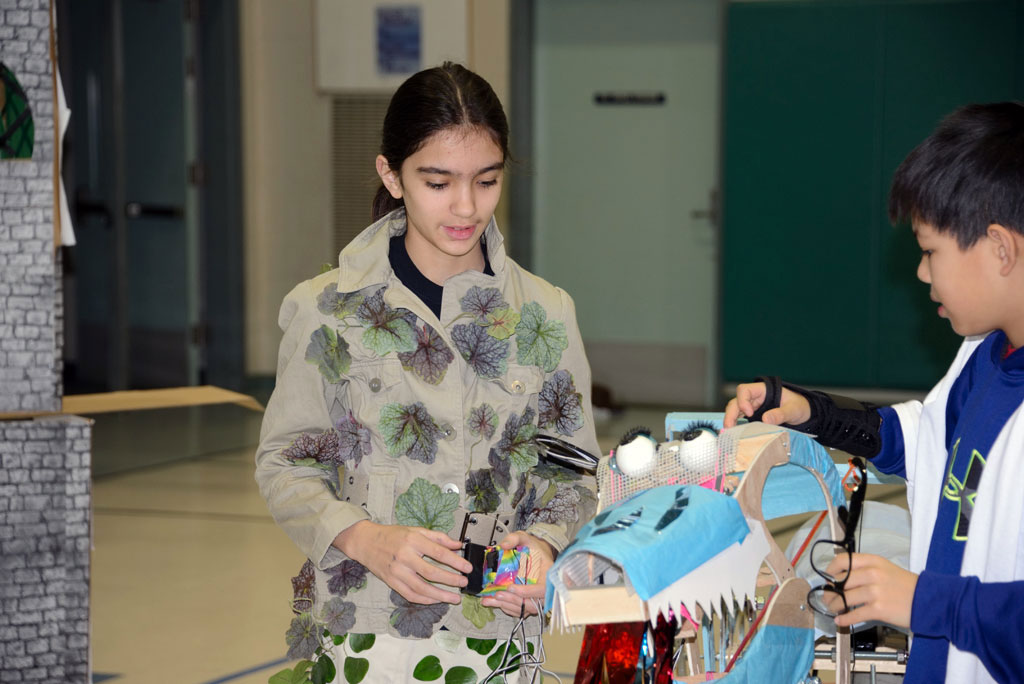
Bluthe goes on the road to Wenatchee for the State competition.
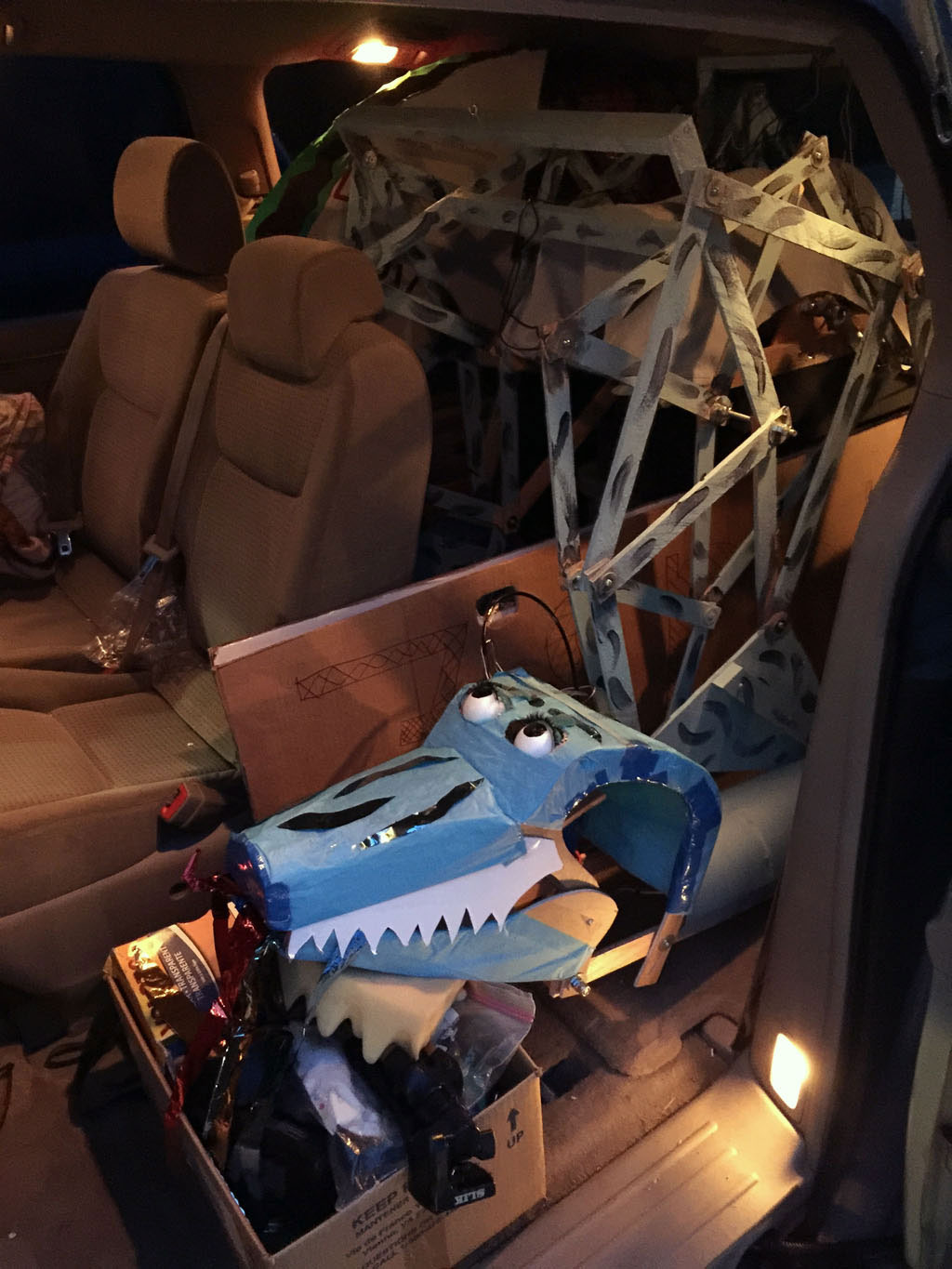
State performance
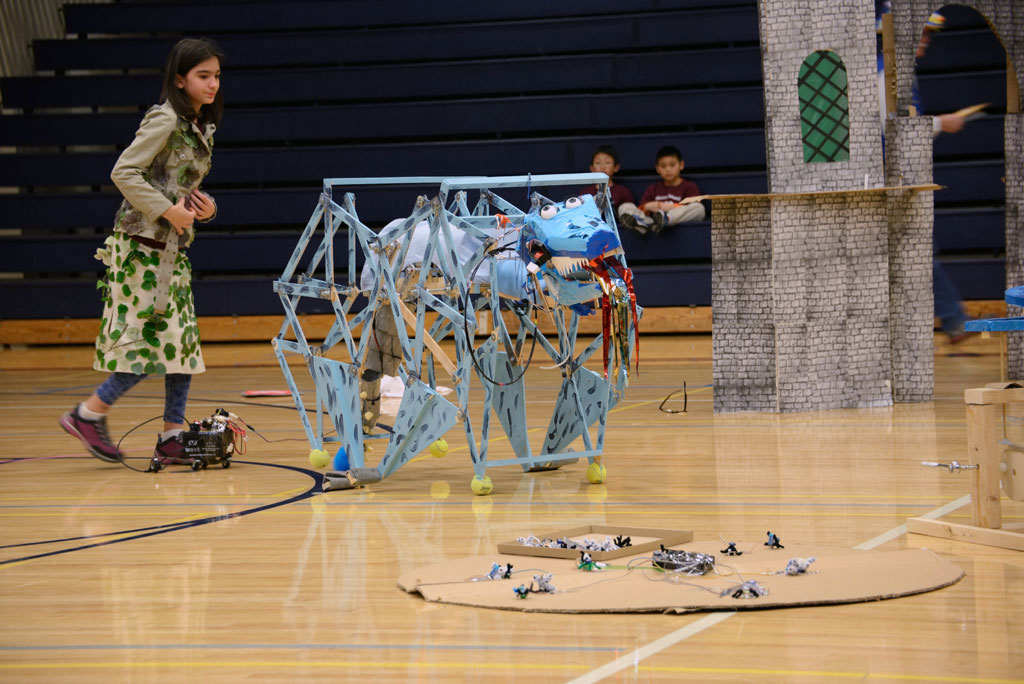
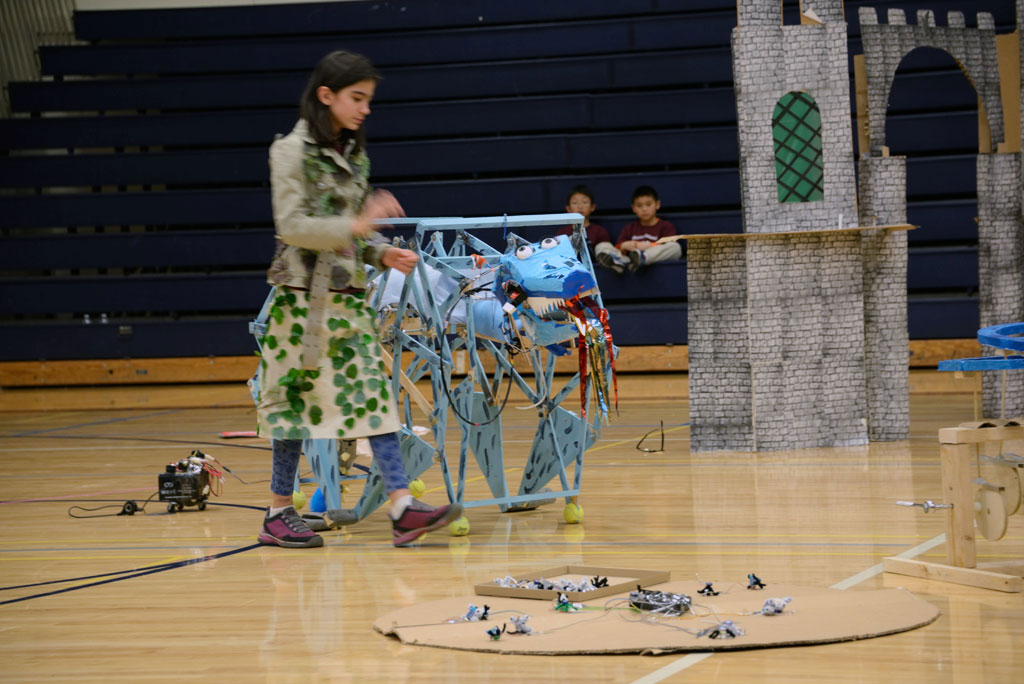
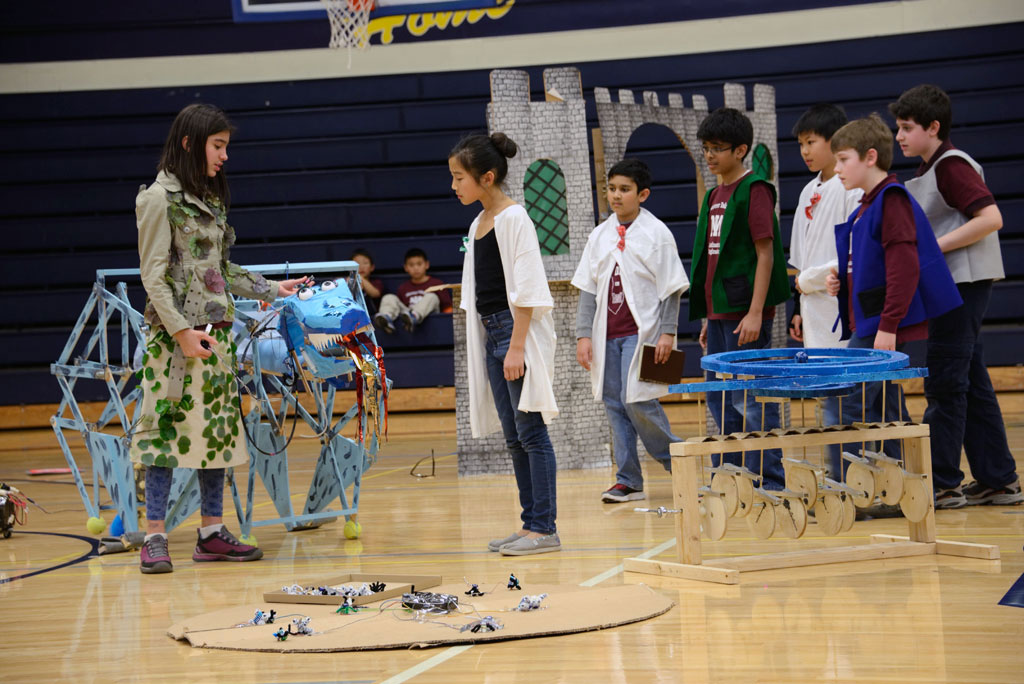
Bluthe treats his saliva with fire, and saves the world!
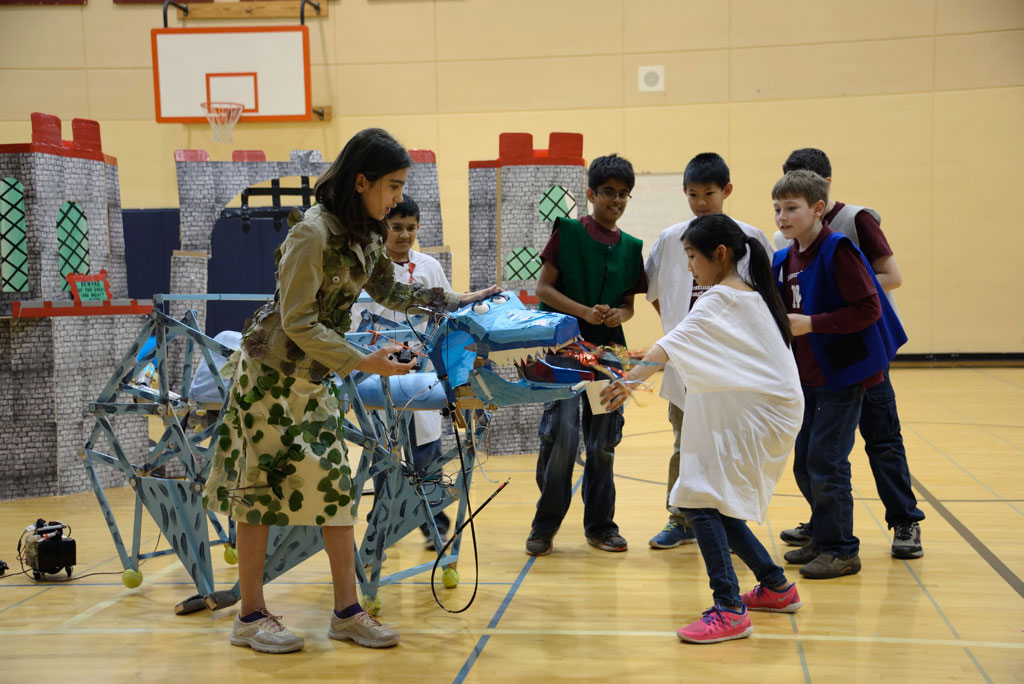
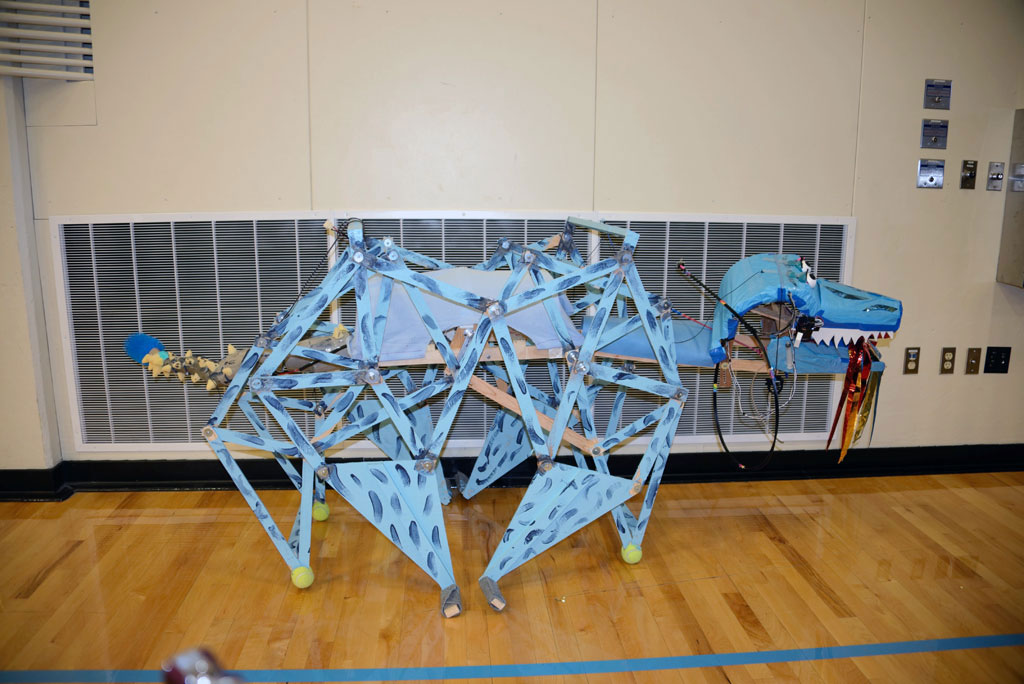
Bluthe after the performance
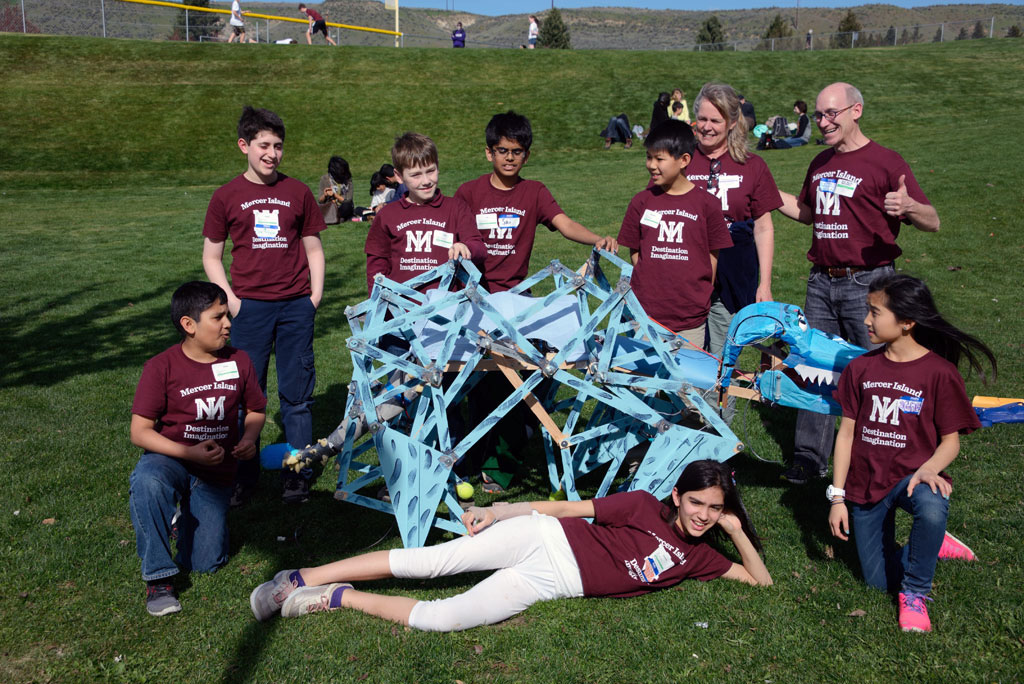
The team after the performance
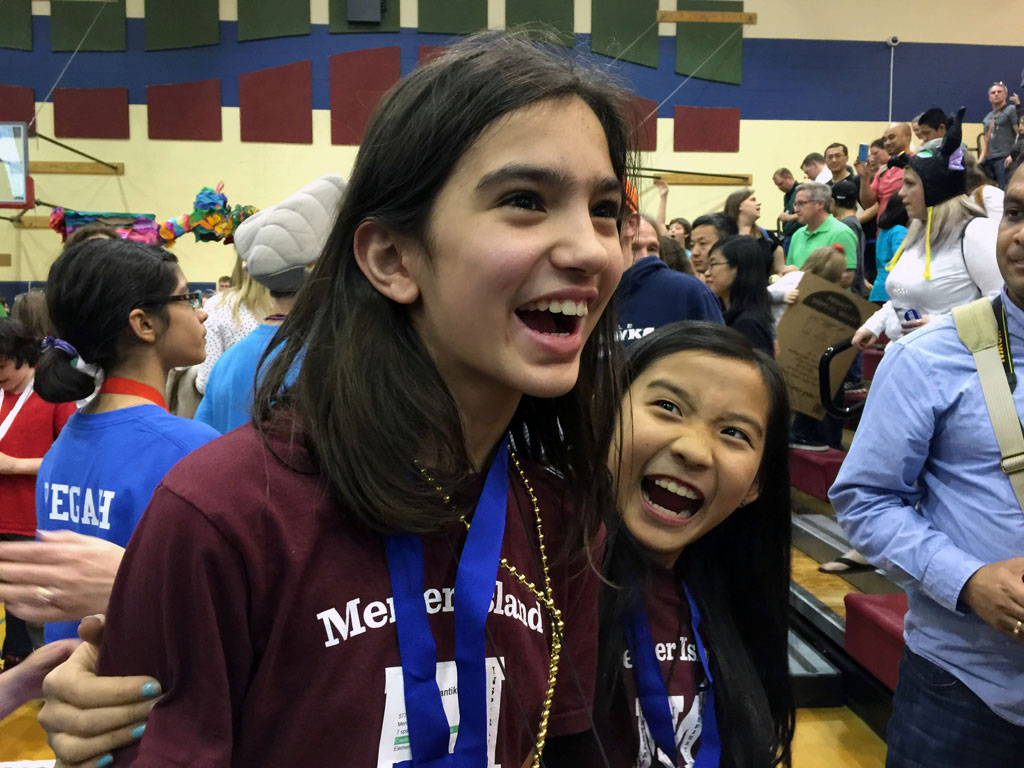
State victory
Bluthe embarks on a road trip to Knoxville, Tennessee.
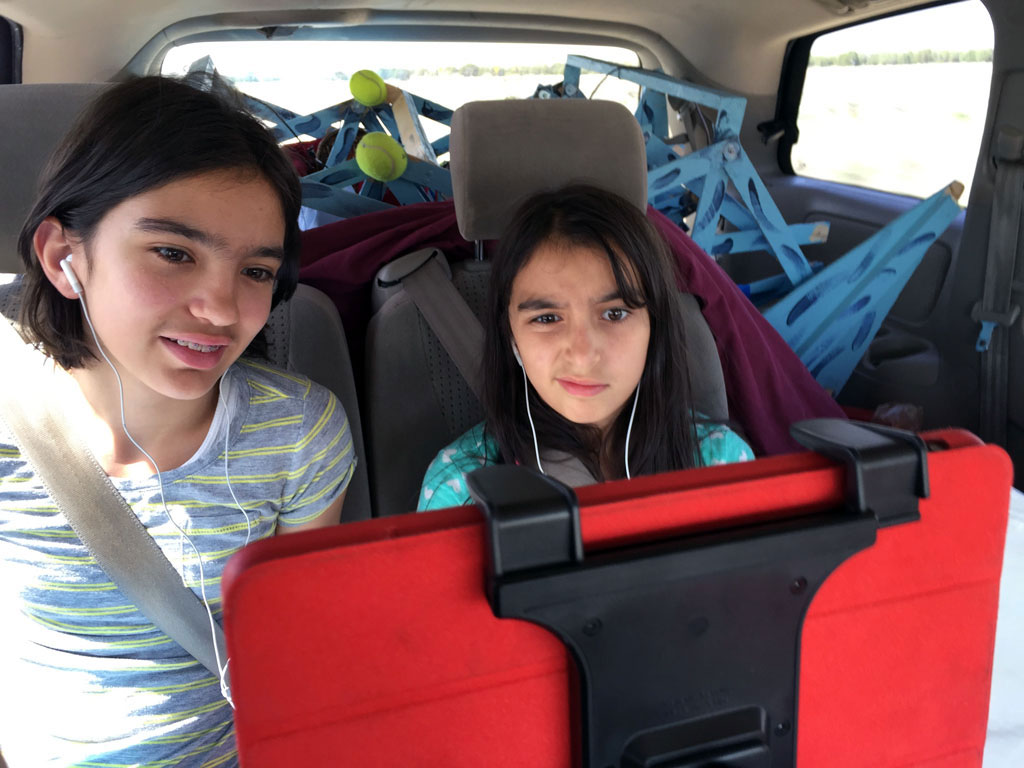
4 days on the road ahead
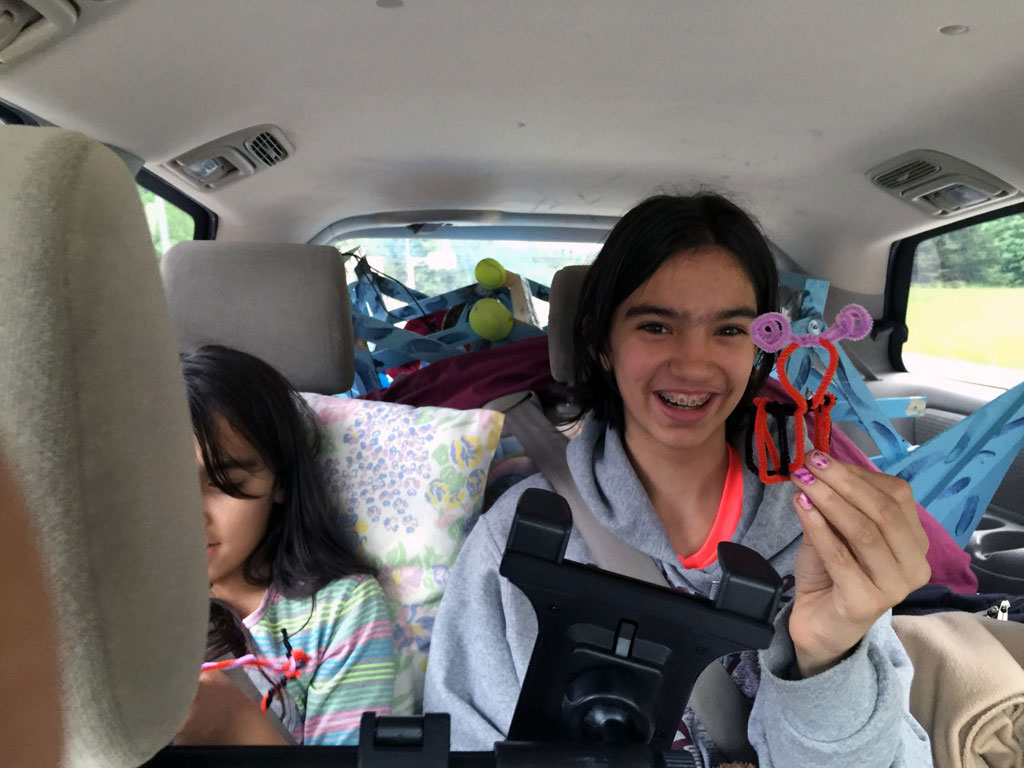
Salt Lake City
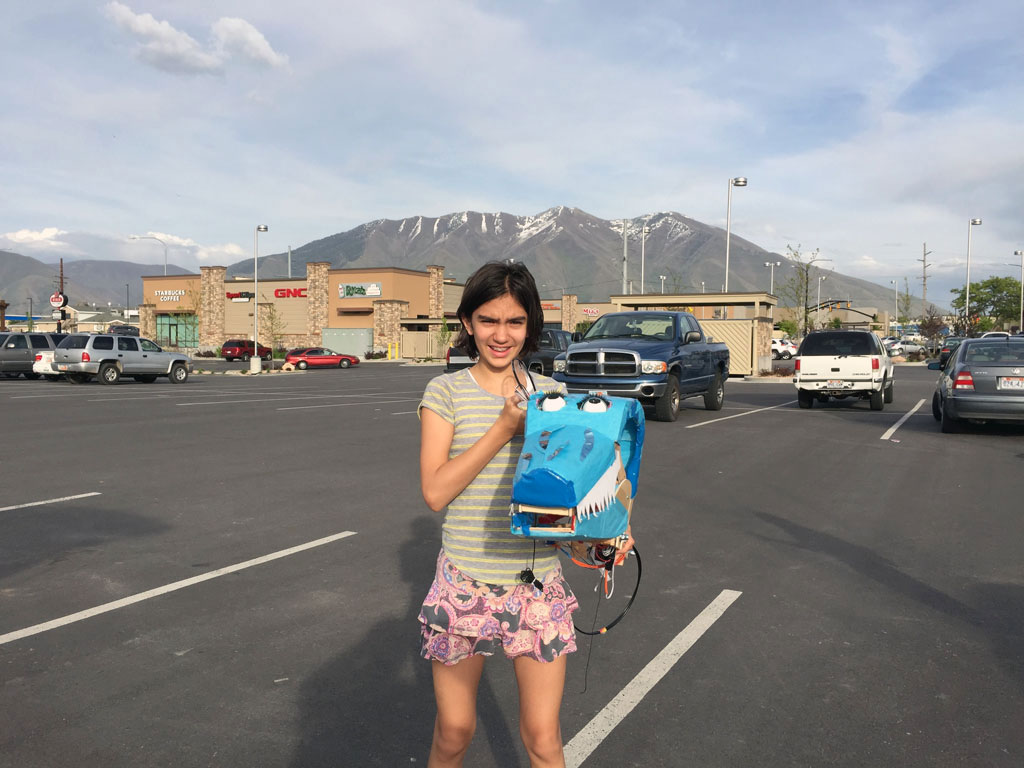
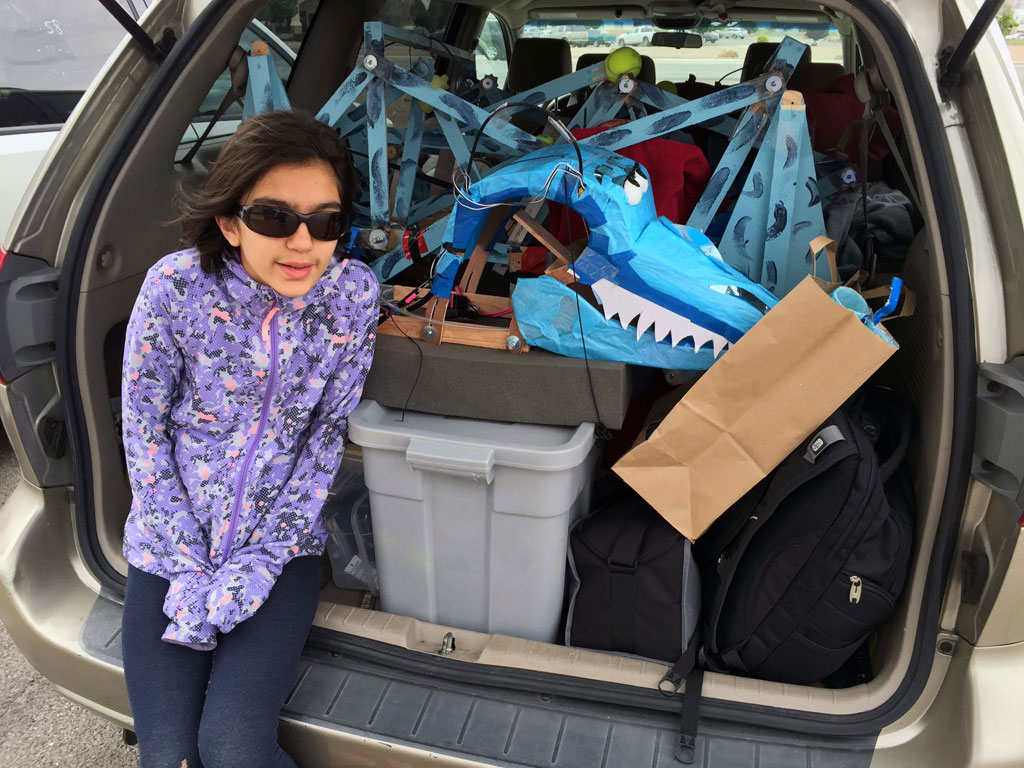
Over the mountains (and a leaking car tire that we didn't fix until after we got to Knoxville)
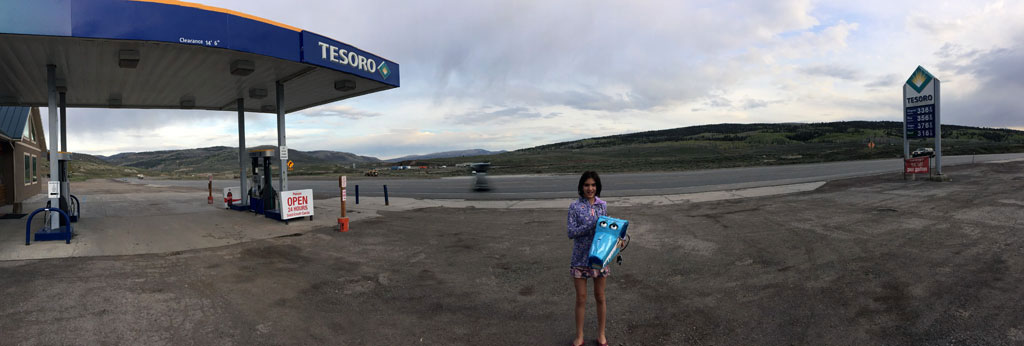
Into the rain.
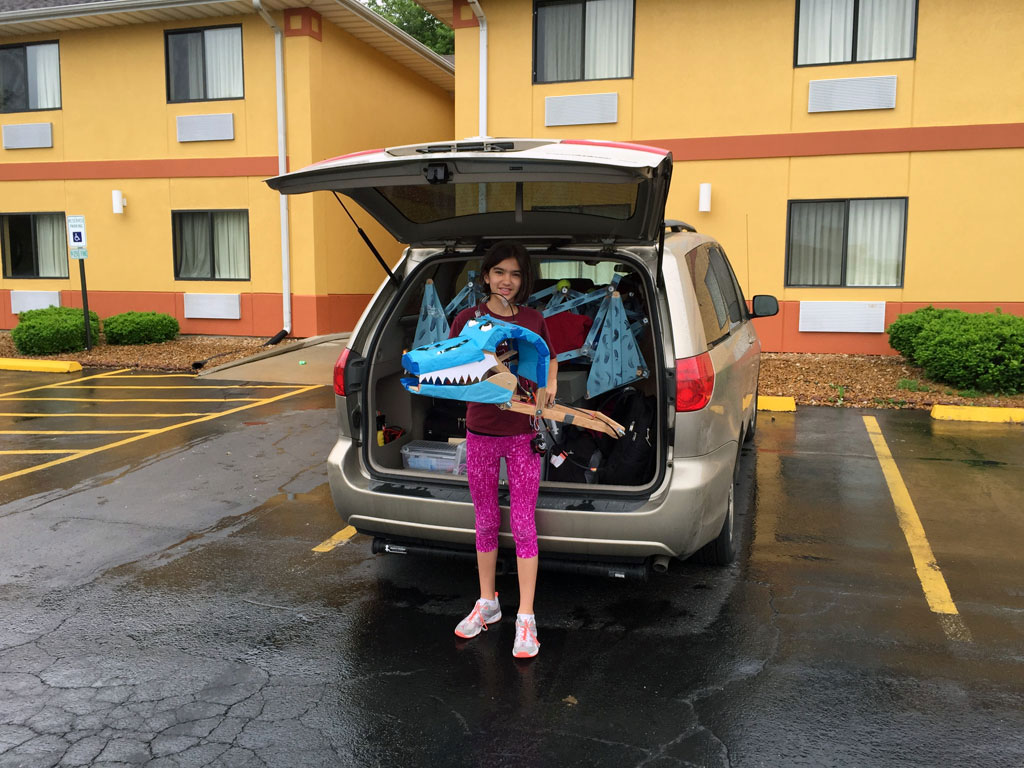
Into the cold.
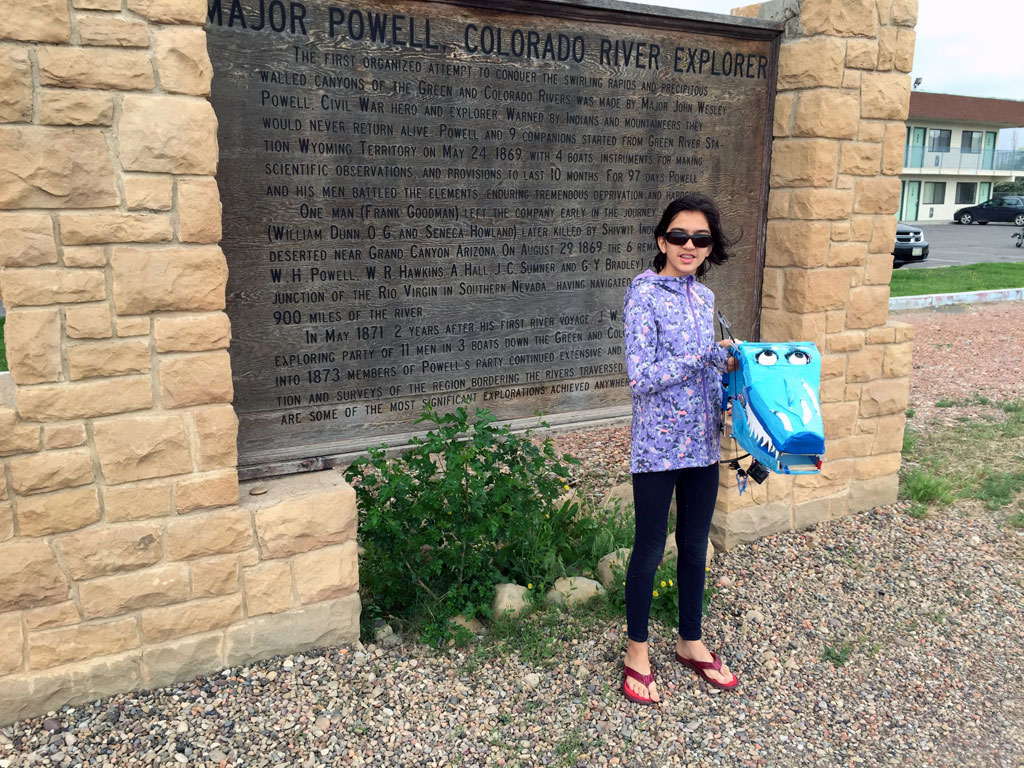
Colorado River
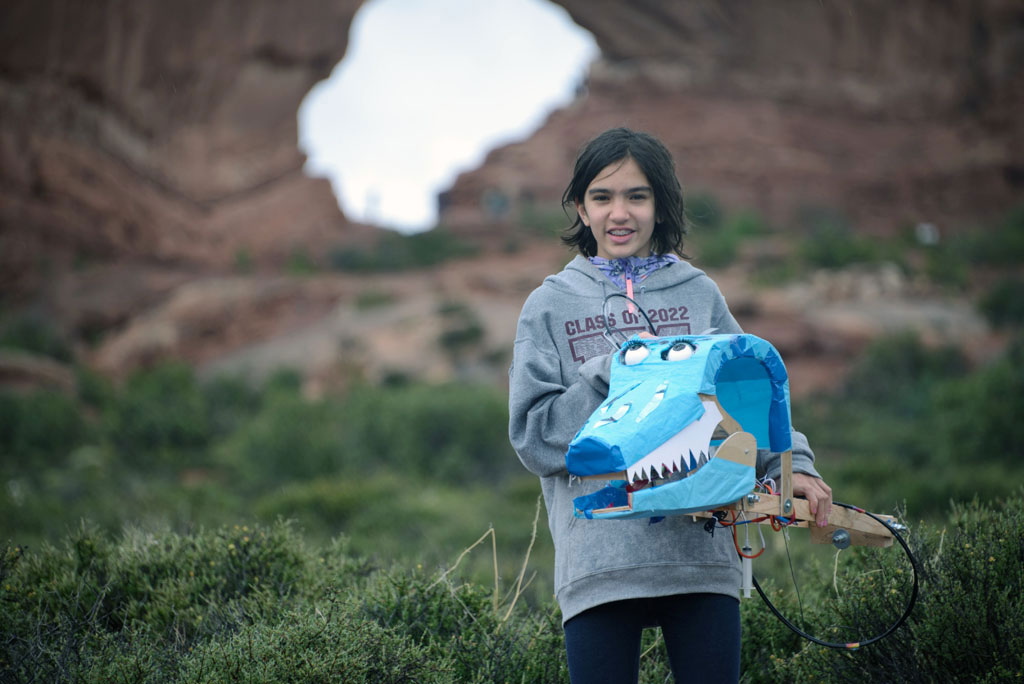
Arches
Snow!
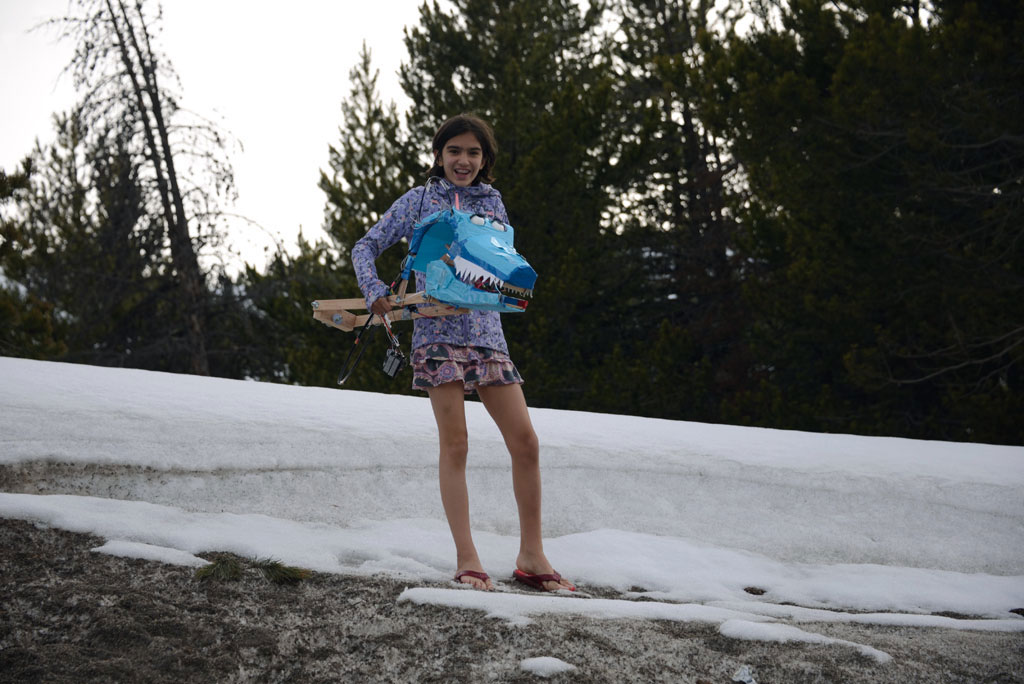
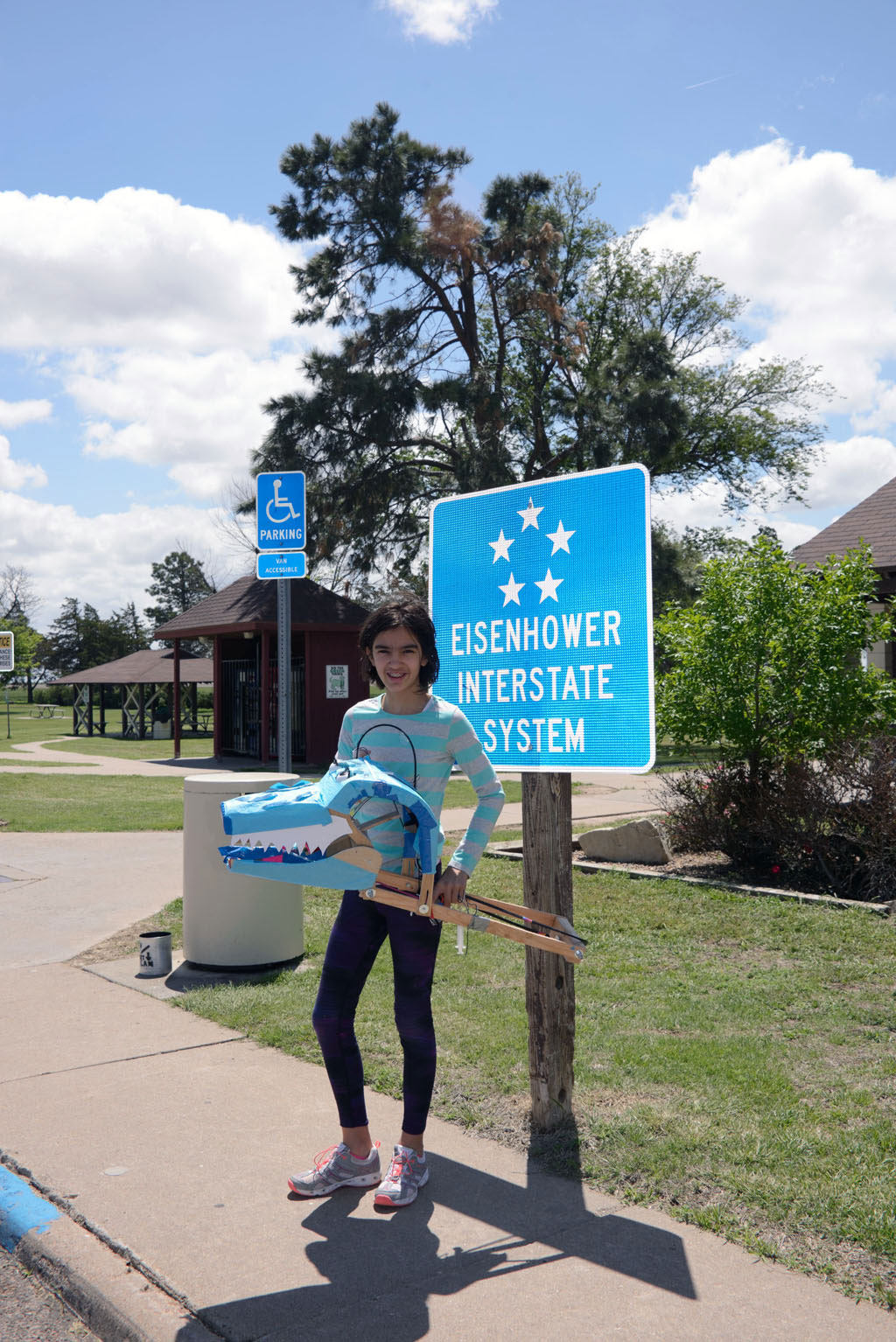
Endless rolling hills
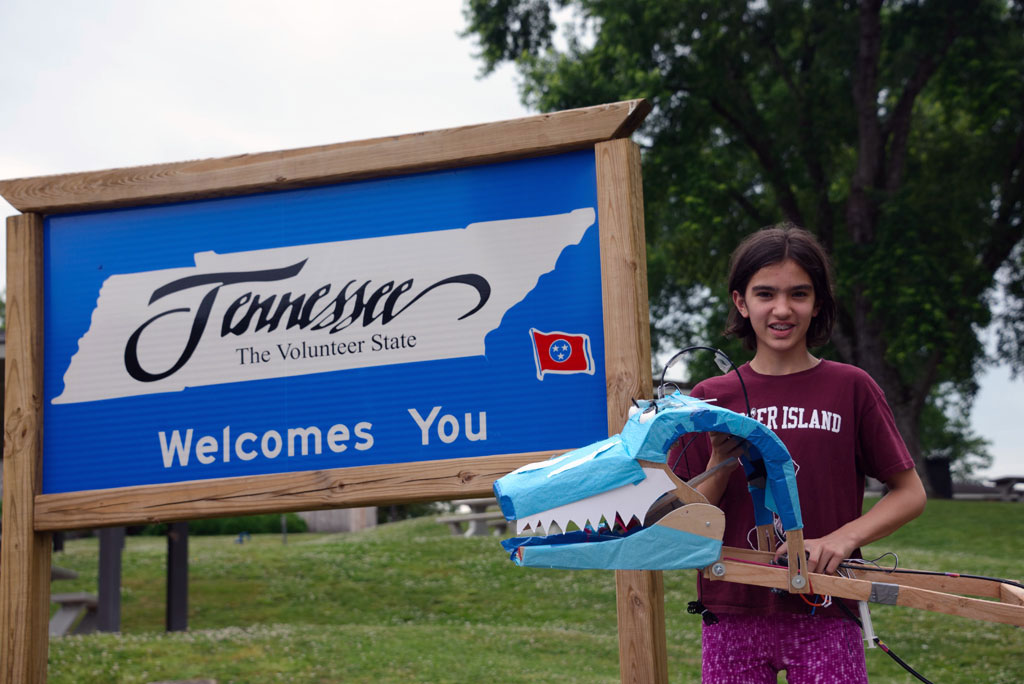
Tennessee!
Arrival at Global Finals
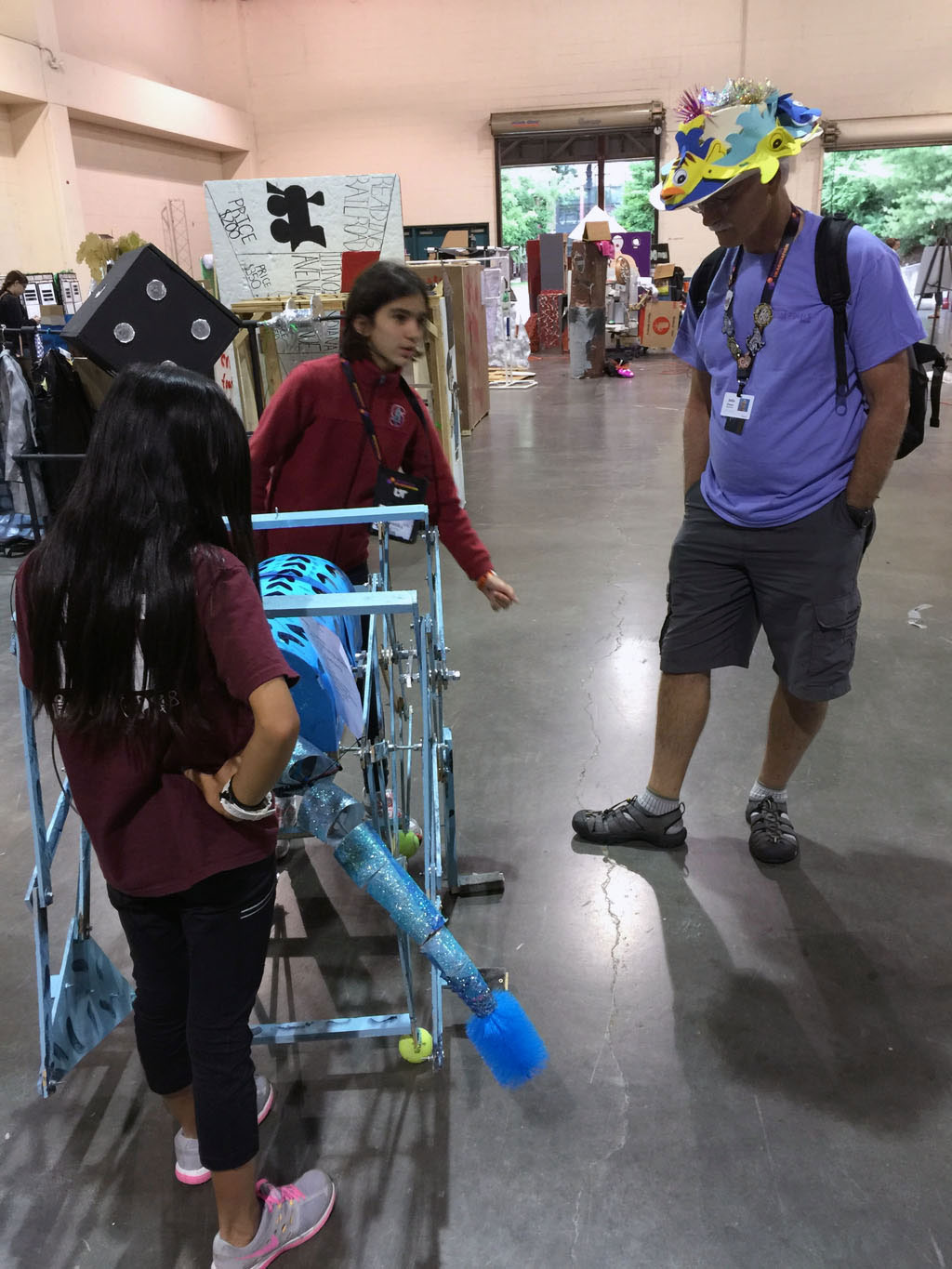
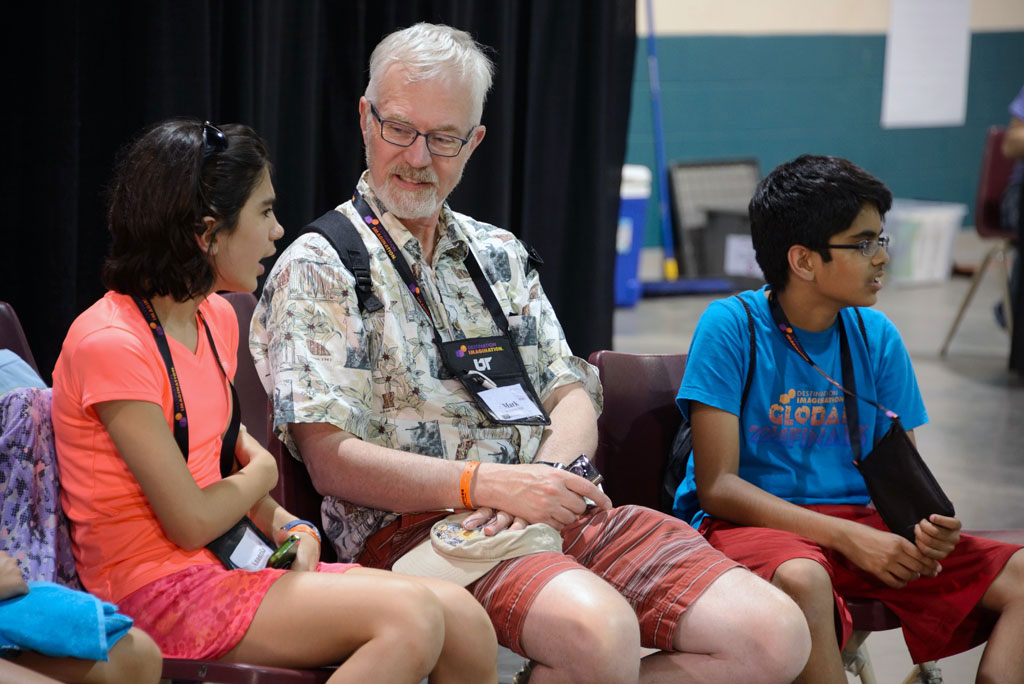
Talking to Mr. Headlee before the presentation
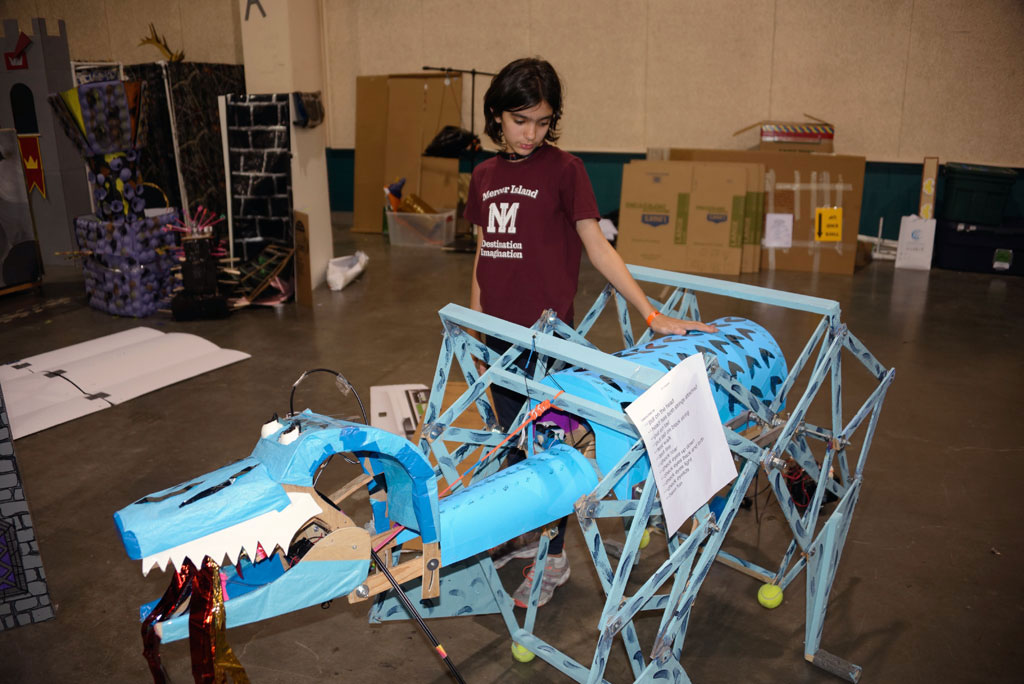
With Bluthe and the checklist before the presentation
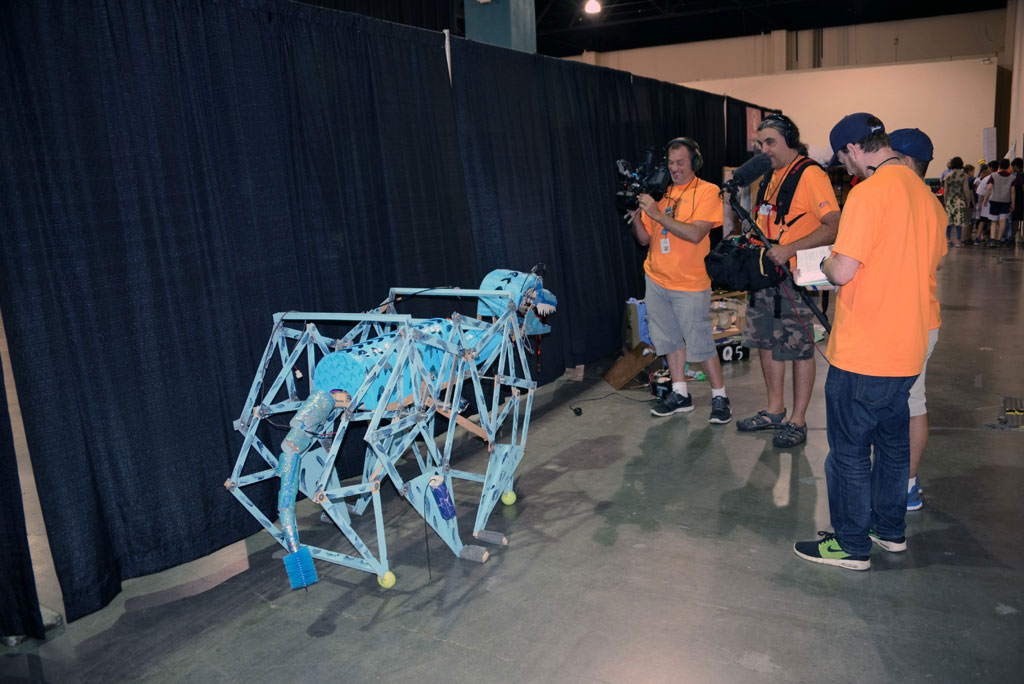
On-camera before the presentation
7 Sparks 2015 Global Finals from Fred Mannby on Vimeo.
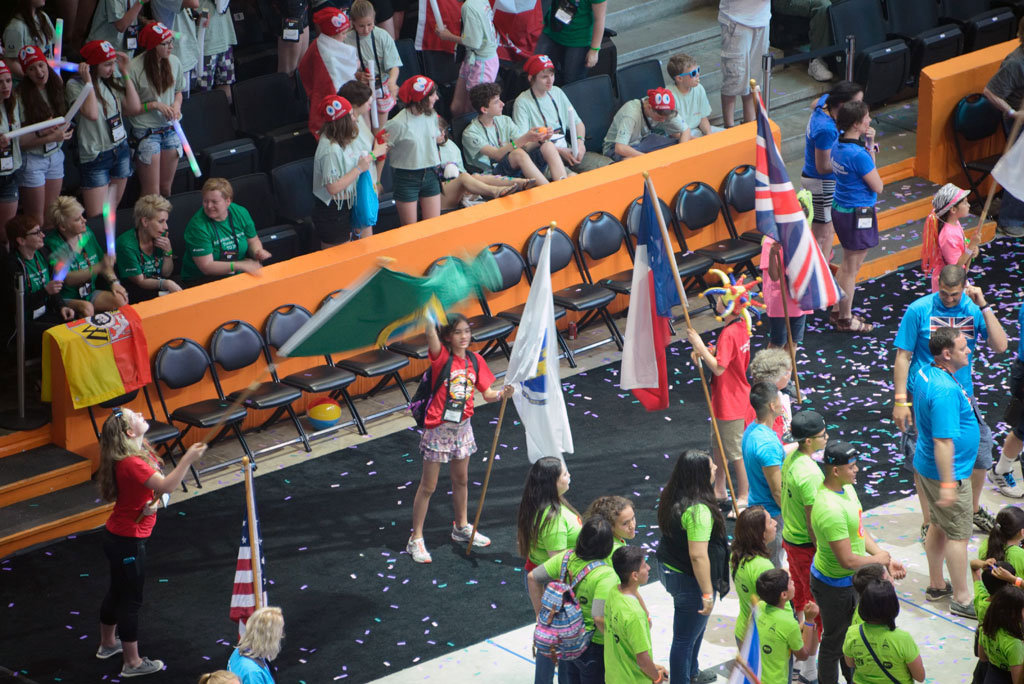
Bearing the Washington flag
Washington Flag from Fred Mannby on Vimeo.
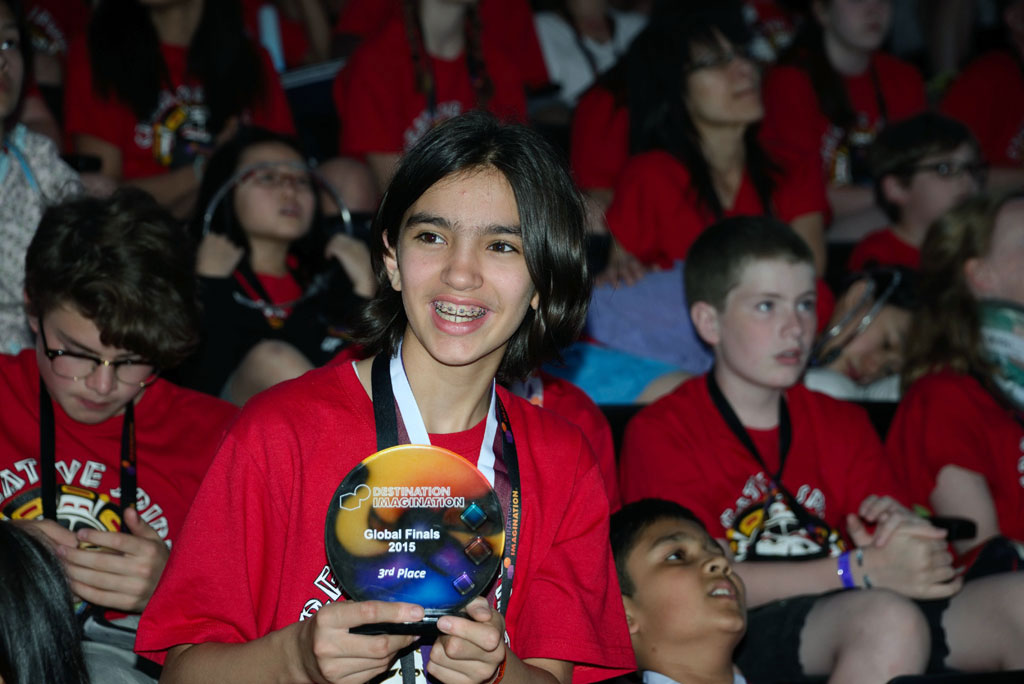
Global Renaissance Award (and 3rd place)!
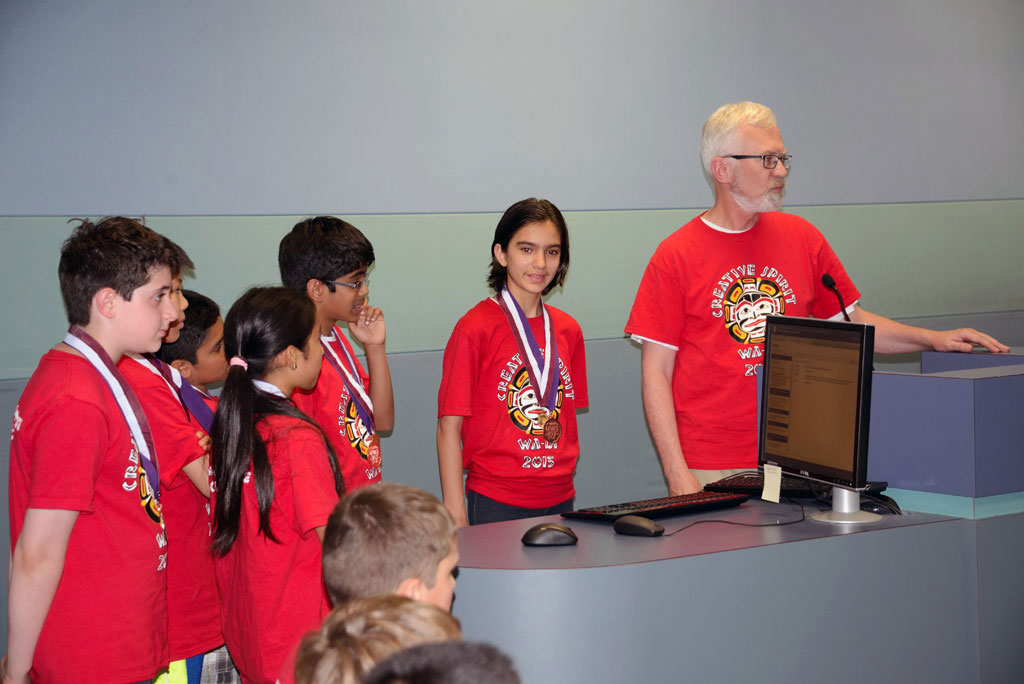
At city hall on TV
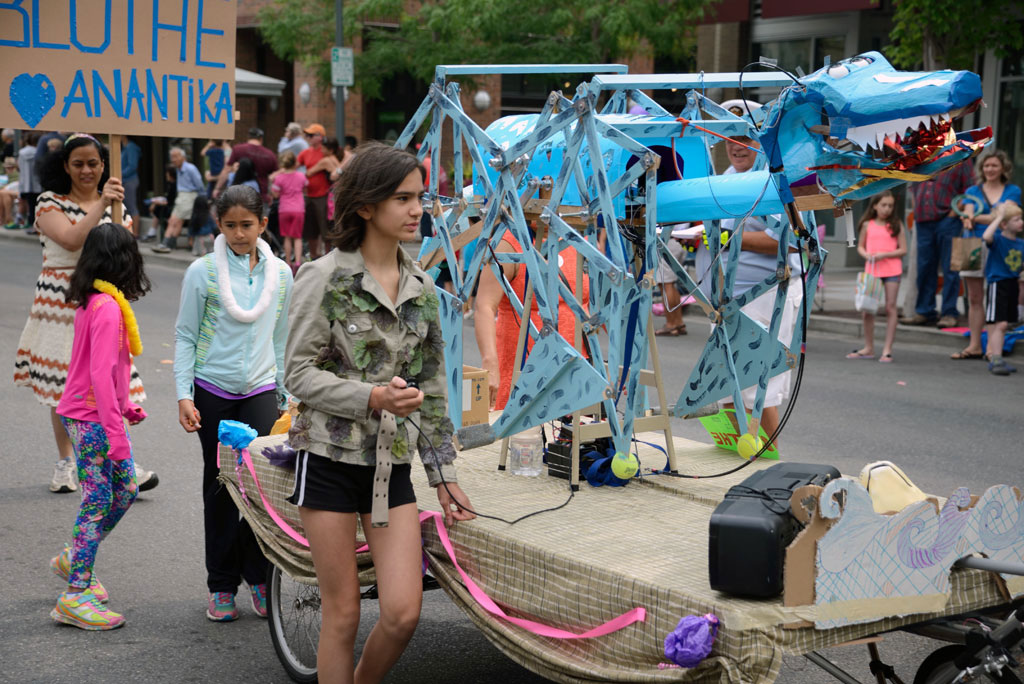
At the summer parade
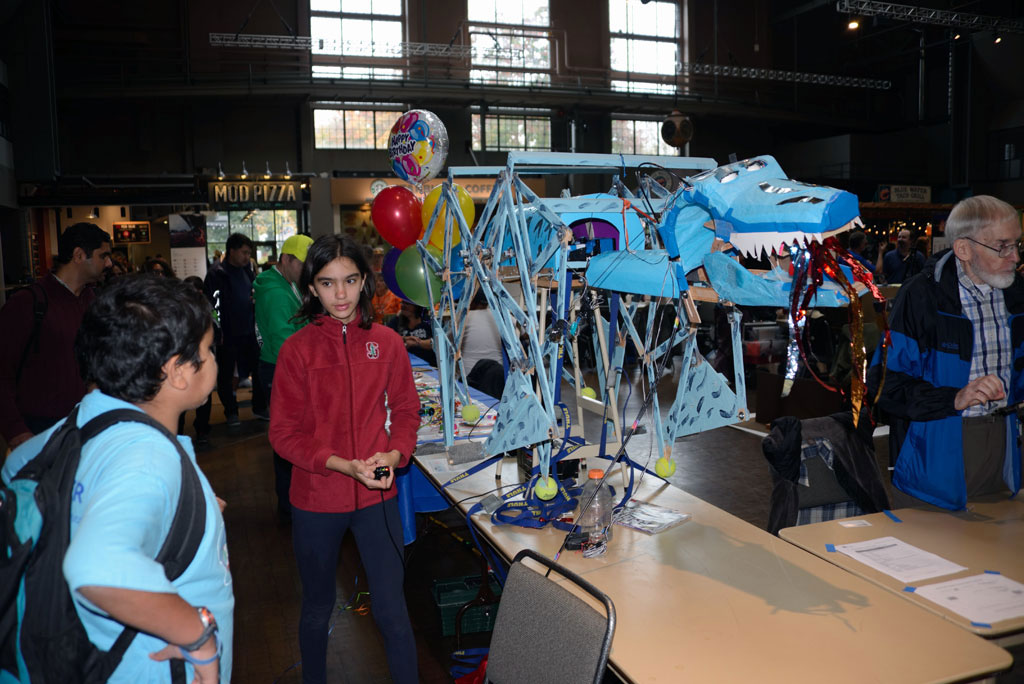
Robothon 2015
Bluthe Jungle Walk 1 from Fred Mannby on Vimeo.
Bluthe Preview from Fred Mannby on Vimeo.
7 Sparks 2015 from Fred Mannby on Vimeo.
Here is a presentation on Bluthe and the Rover that I gave at the Seattle Robotics Society in 2015:
Bluthe and the Rover part 1 from Fred Mannby on Vimeo.
Bluthe and the Rover part 2 from Fred Mannby on Vimeo.
Death Star 2000
For Destination Imagination 2016, I decided to do the Scientific challenge, which involved creating a camouflaging organism. After lots of brainstorming, and reading about boring octupuses, I decided to push the limits and make a camoflaging virus. I had heard about viruses with chimeric antigen receptors being used to treat cancer, and thought it would be really cool to make a virus-like ball with robotic tendrils to look like antigens.
I found a picture of a Spiromicrovirus online that looked really interesting, and looked into various ball-like structures. Buckyballs seemed like a good way to start, and I found a template online, that I copied, and scaled up. I learned two years ago that it's really important to make big structures in DI to really impress the audience, and then I learned last year that it's really important for them to fit through doors (see Bluthe). So, this time, I made sure that the ball would come about to be just a bit less than 3 feet in diameter, by using a "truncated icosahedron calculator" online.
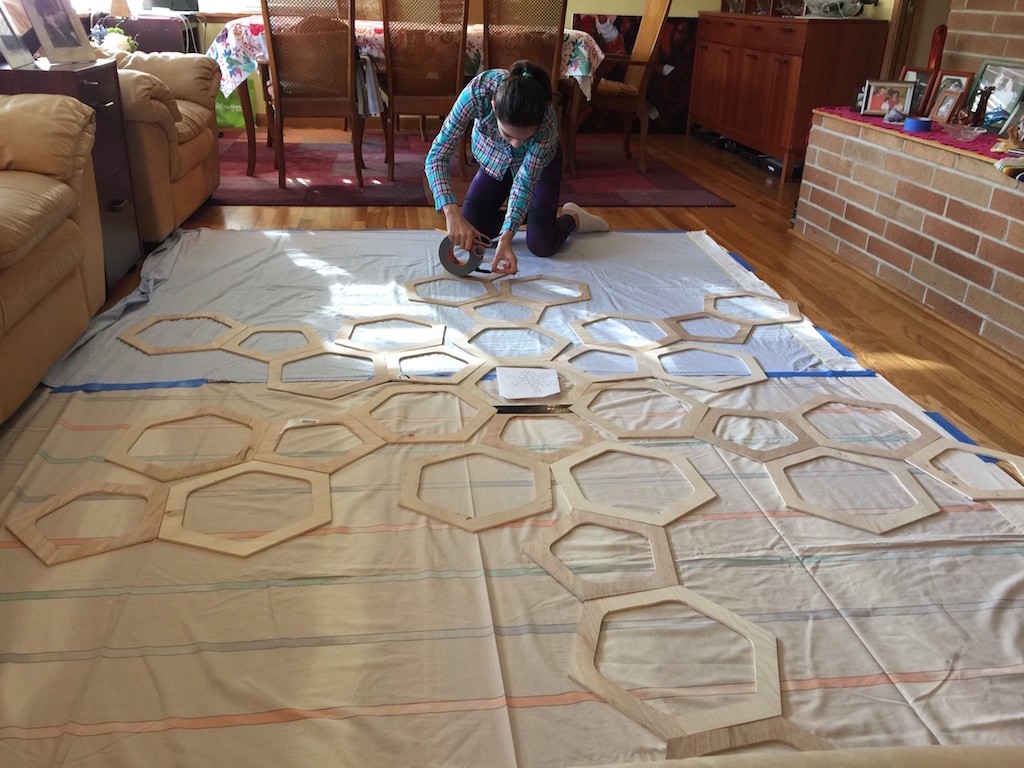
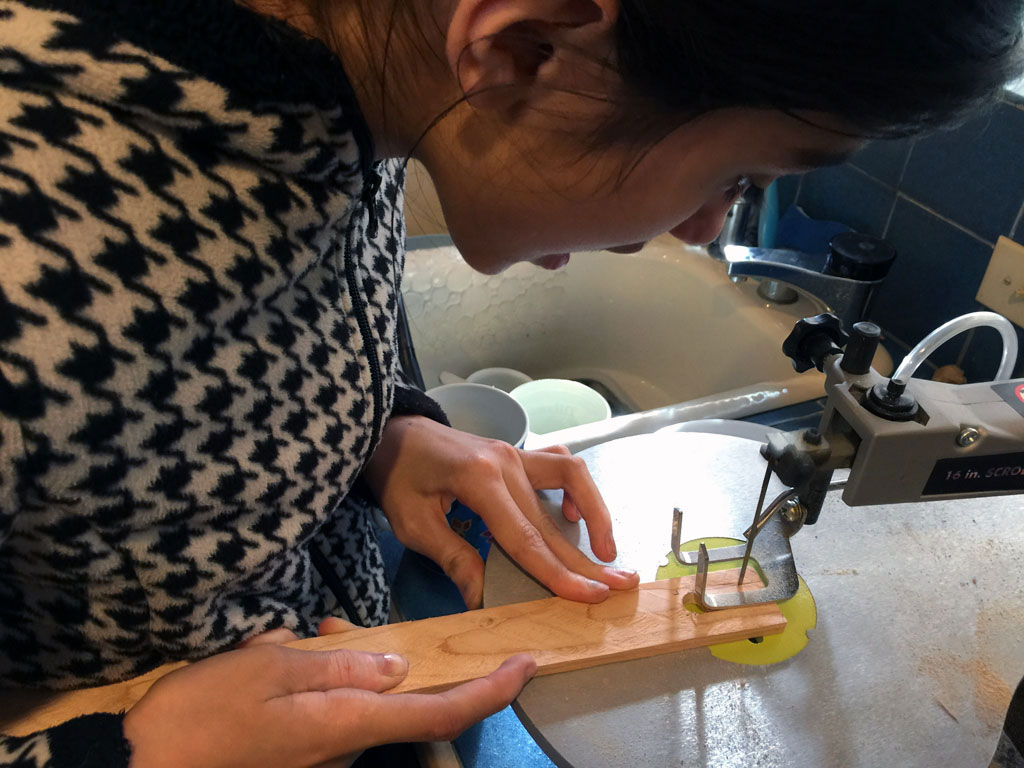
For the buckyball's pentagons and octagons to be truly symmetrical and all fit together, I made a number of templates using cardboard, a ruler and compass. It was very hard to get all the edges to be the same length. Luckily, once the templates were good, it wasn't so bad to cut out the pieces from plywood using a scroll saw. But, it took a lot of time.
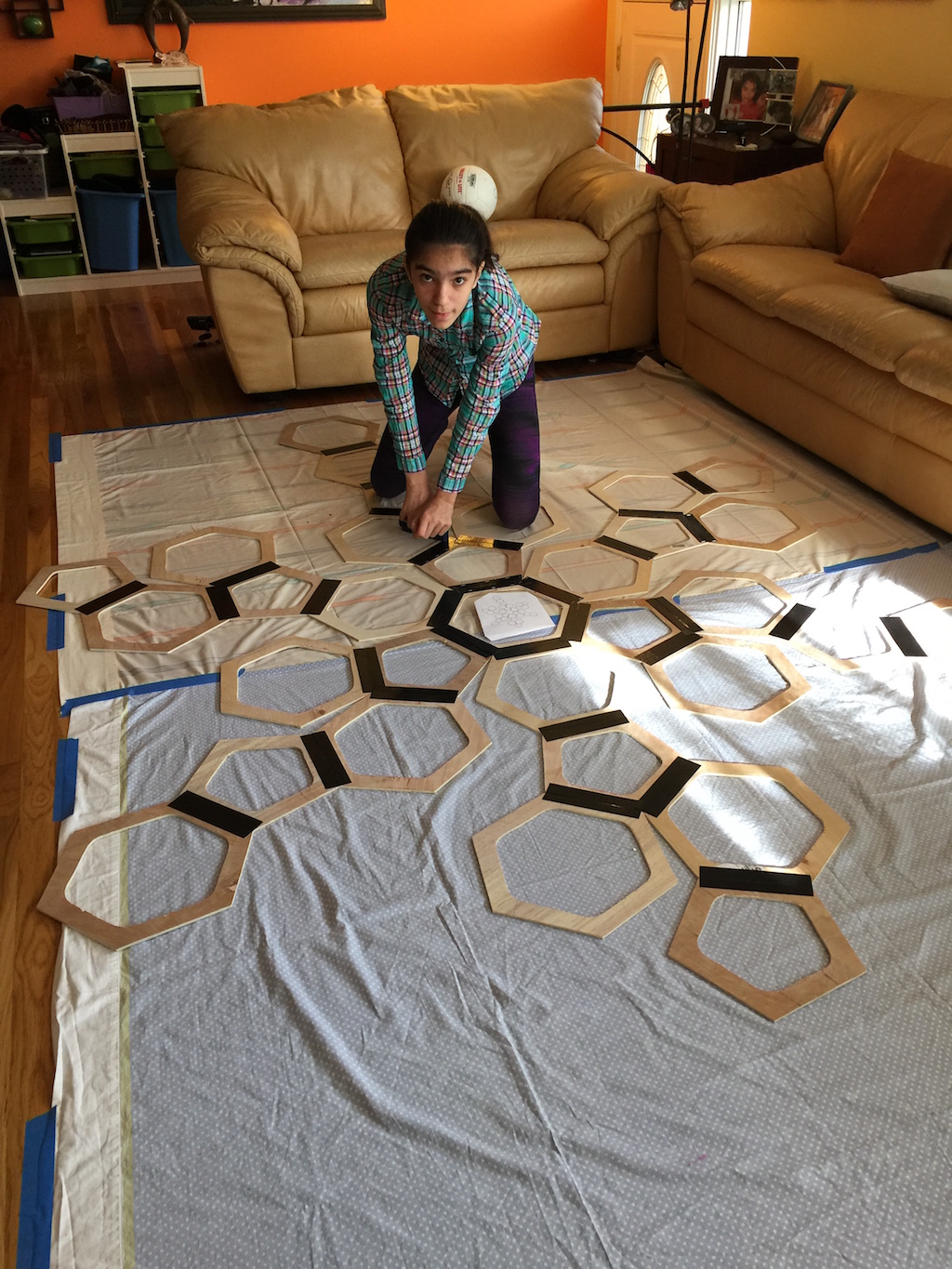
To put the pieces together, I used Gorilla tape and staples. Lots of staples.
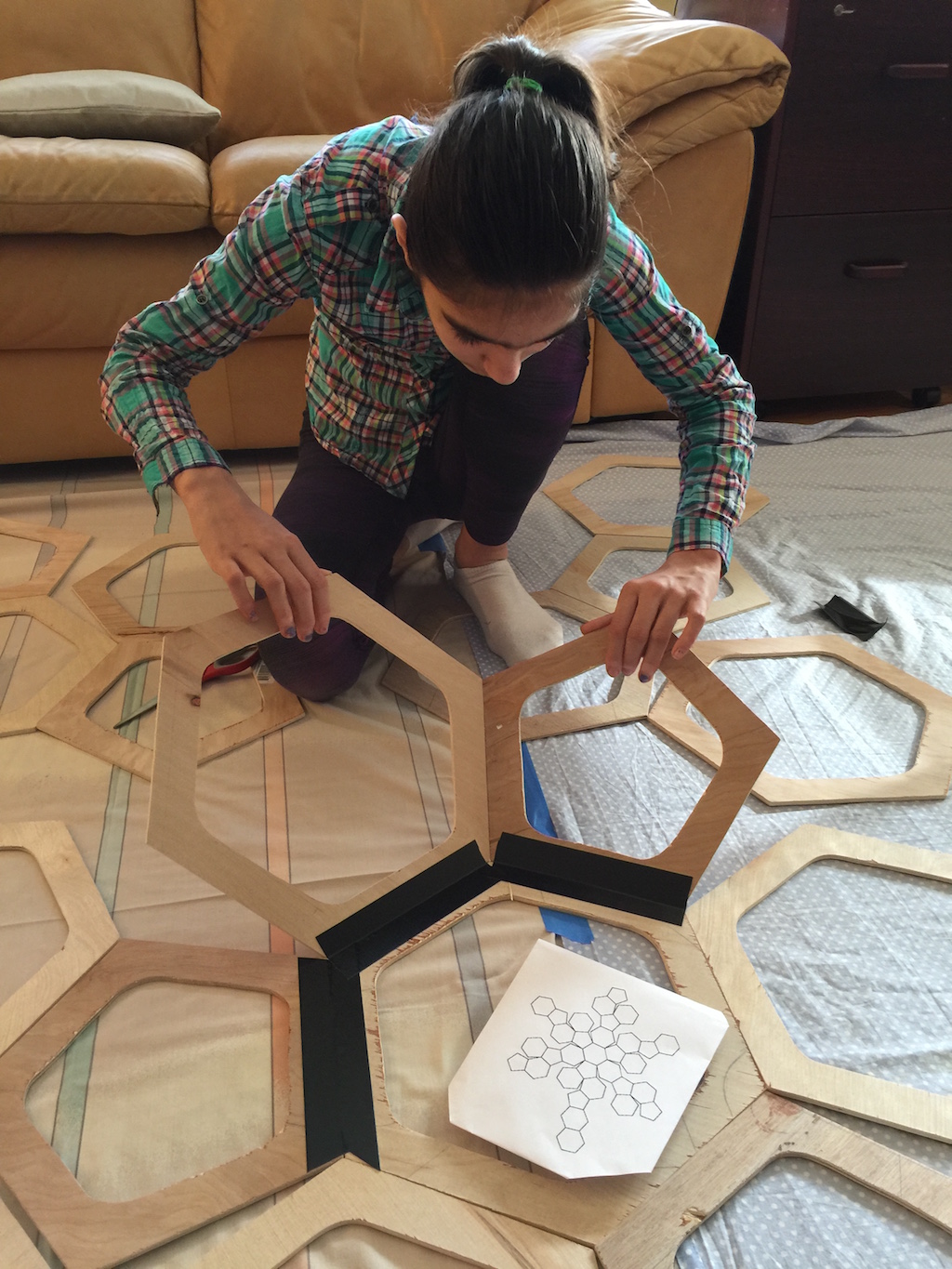
Building them up in three dimensions was a bit of a challenge, but one step at a time, supports, duct tape, staples and patience worked.
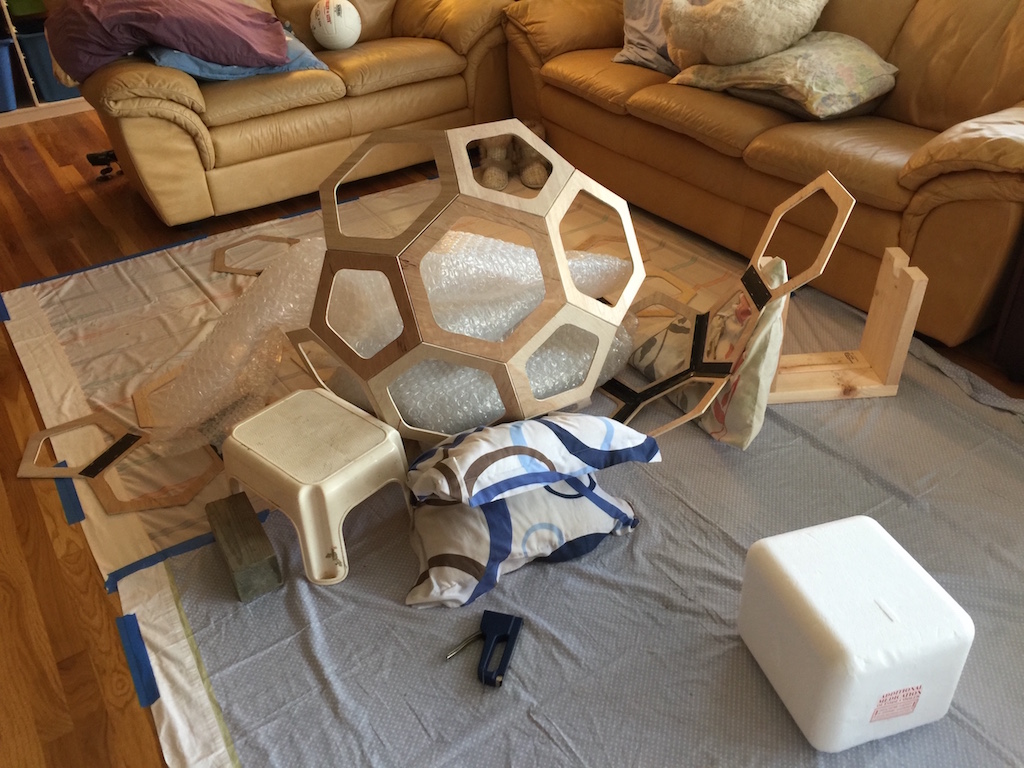
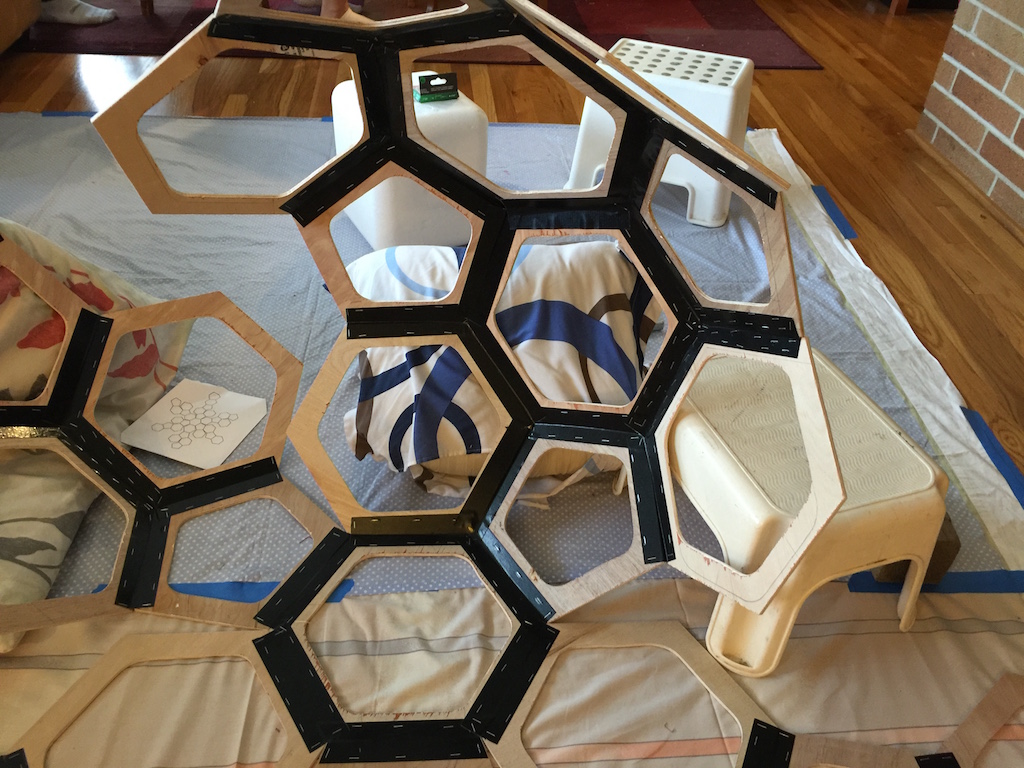
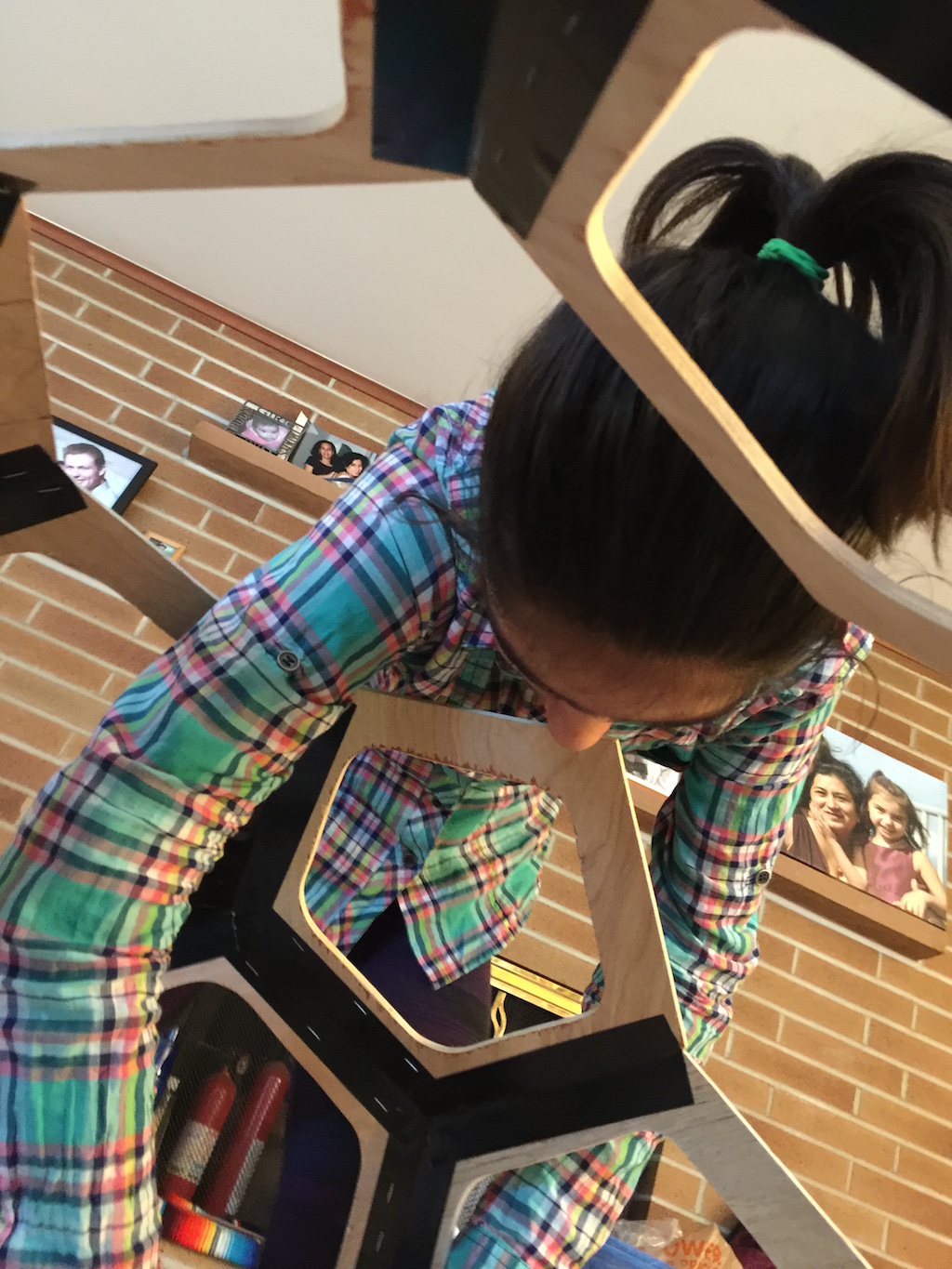
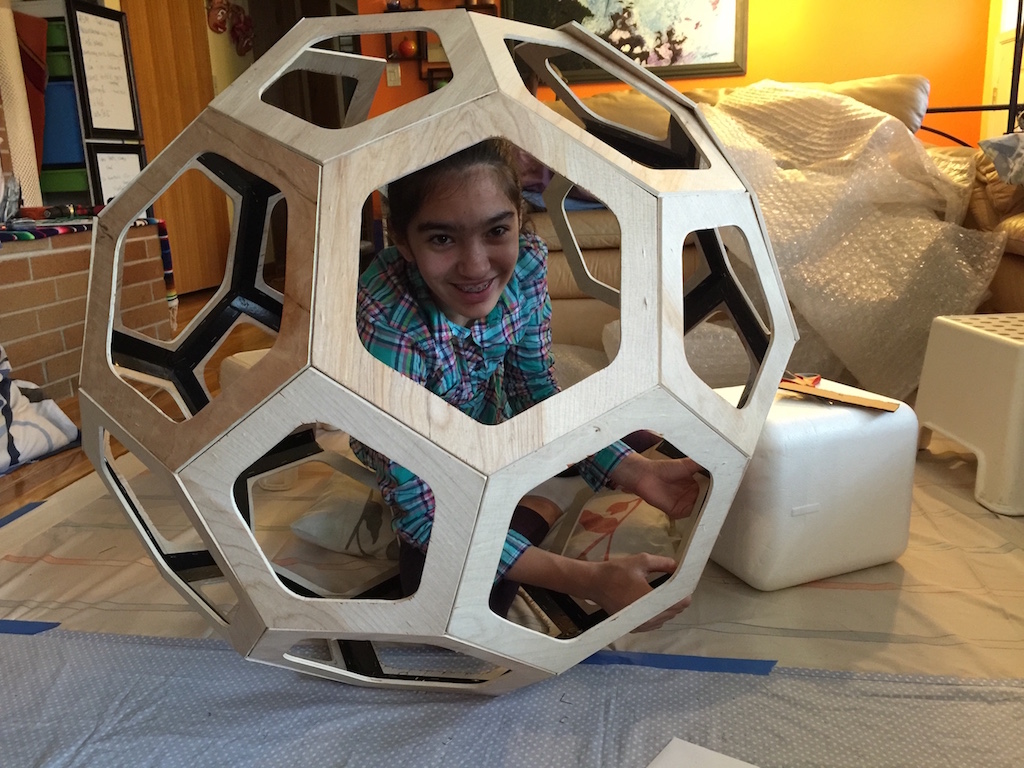
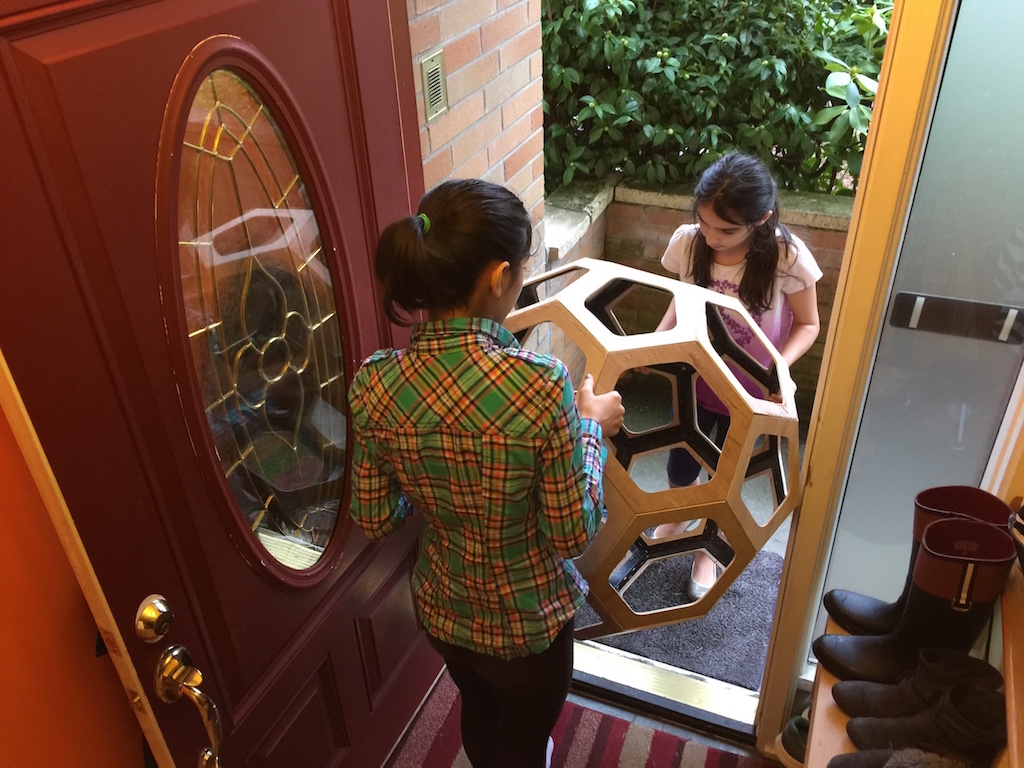
And, it fit through the door, at least if you tilted it just so, so that there is a flat face to each side against the door frame.
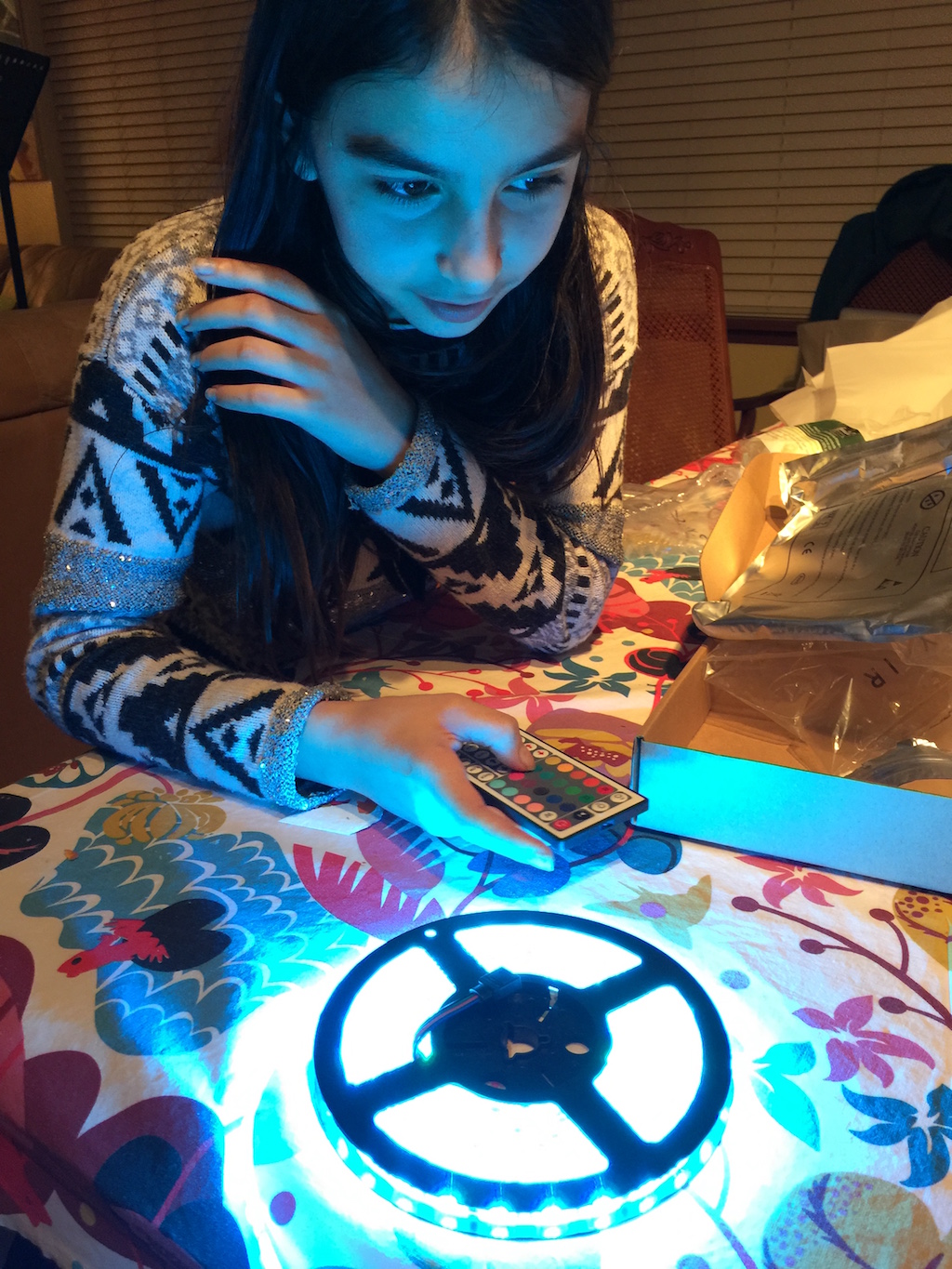
I wanted the virus to light up in different colors, and I found some amazing and cheap LED lights online. I bought LEDs in squares, and movie reels. The squares were really cool, but they would require tons of soldering, and some Arduino programming. The movie reels were perfect, though, because they came with a remote control that you could use to set the color and brightness with.
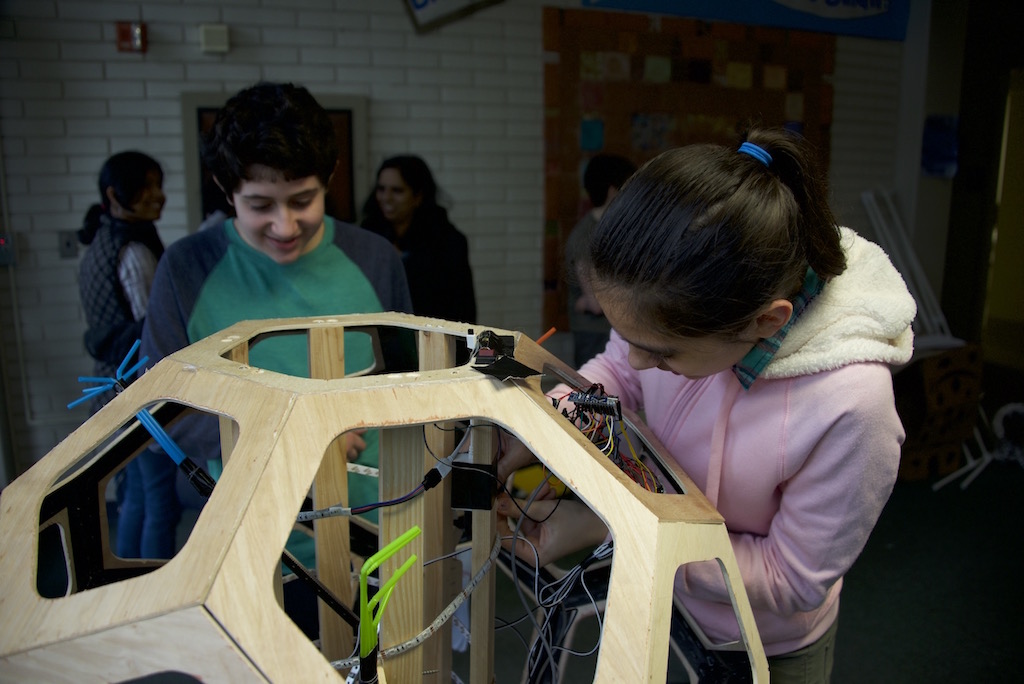
I also found a great project online, where a guy had taken ENT conduit and made a buckyball Had to try!
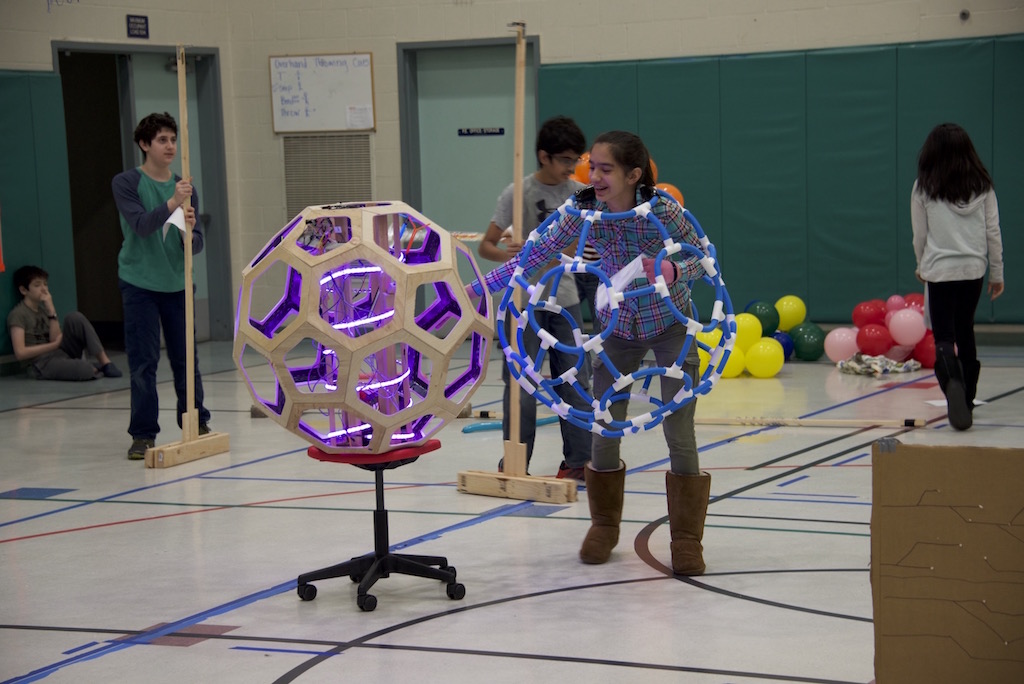
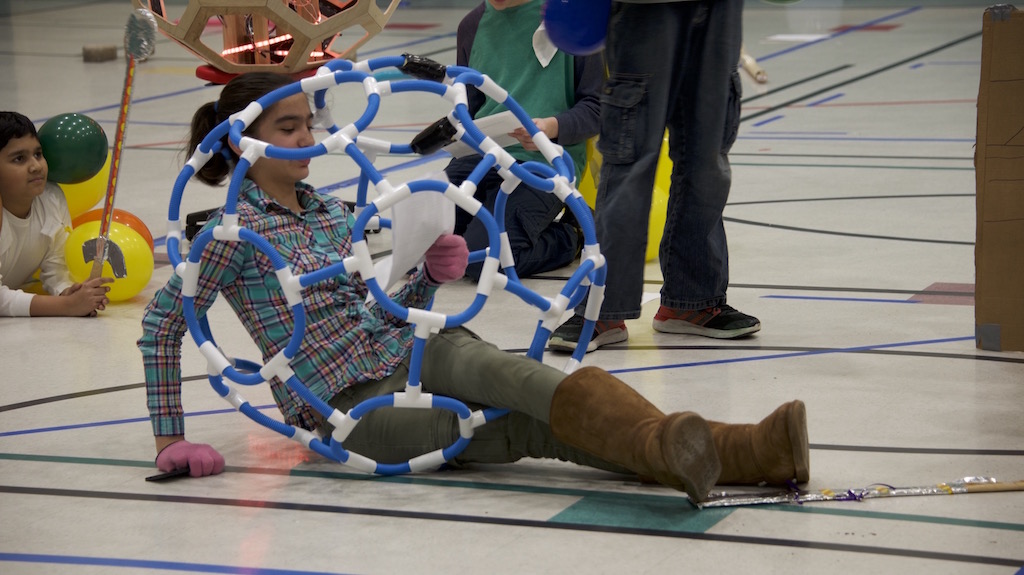
I wanted the virus to shoot out tentacle-like antigens from the holes of the buckyball, but I knew linear actuators are really expensive, way too expensive for the DI budget. So, I decided to try to make something out of hobby motors. I found some linear gears and matching gears to put on the motors.
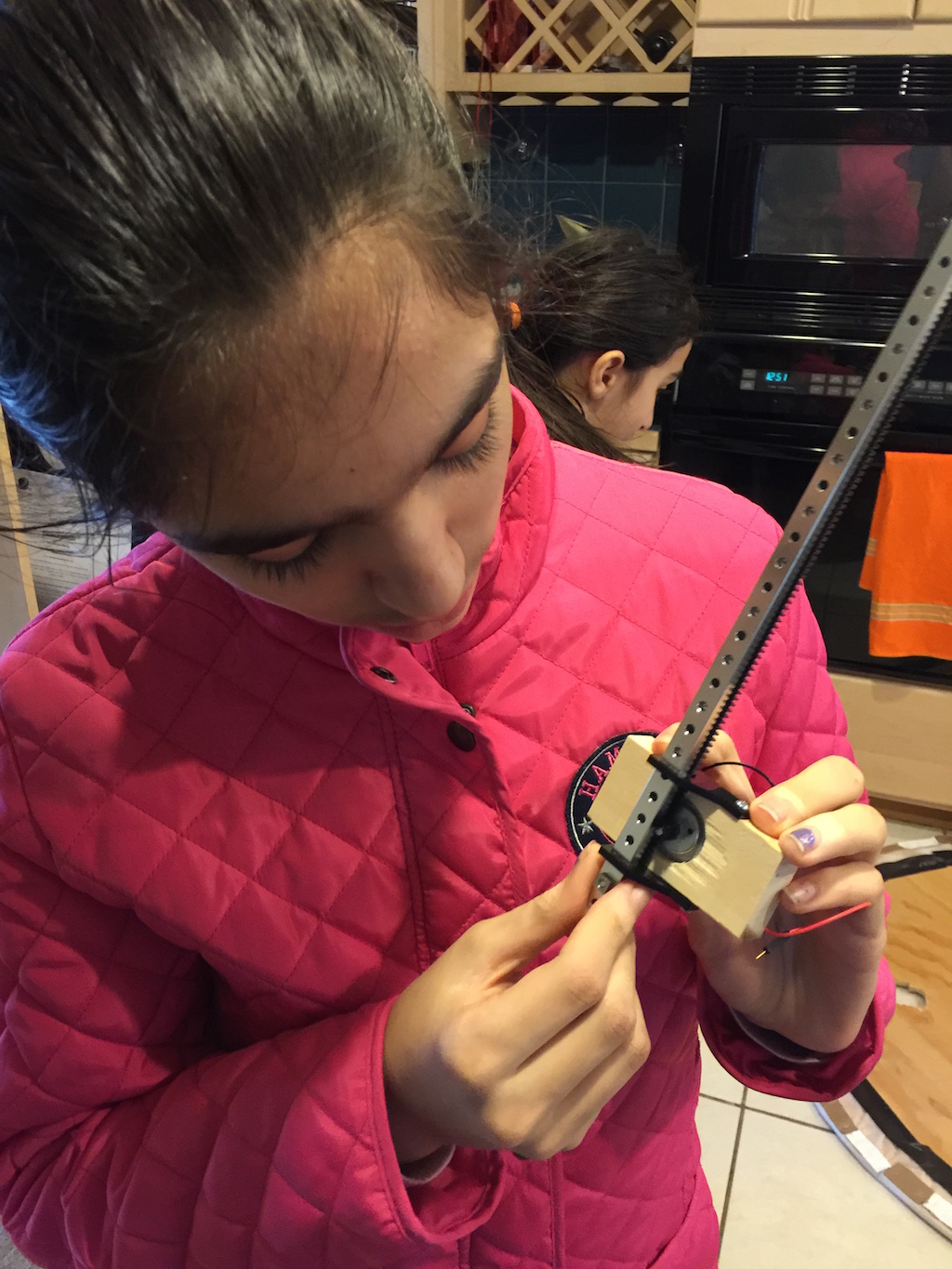
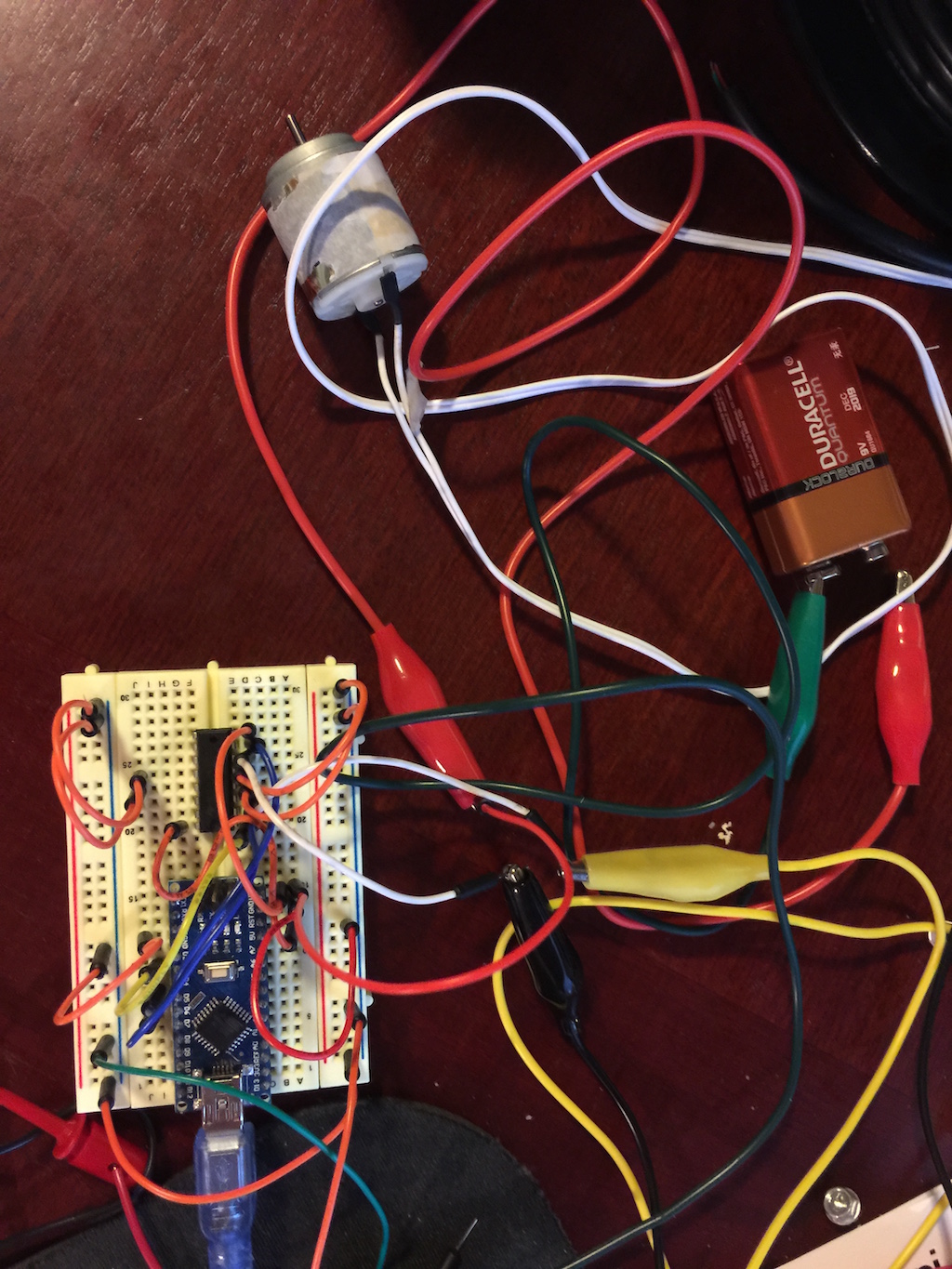
At first, these actuators didn't work at all, but if I cranked up the voltage really high, I could make them work. I also put a big capacitor across the battery, in case that would help. It seemed to help, a little.
It turned out to be really difficult to attach the gears to the motors, because the openings in them weren't all the same size, and it was hard to make them fit tightly. I tried lots of things to stick in the hole, and glues, and the best I found was an epoxy glue, but it's not great. The gears still come loose sometimes.
I also put silicone treadmill lubricant on the linear gear to try to make it move smoothly. The motors can move the actuator most of the time, but sometimes it's hard for the motion to get started.
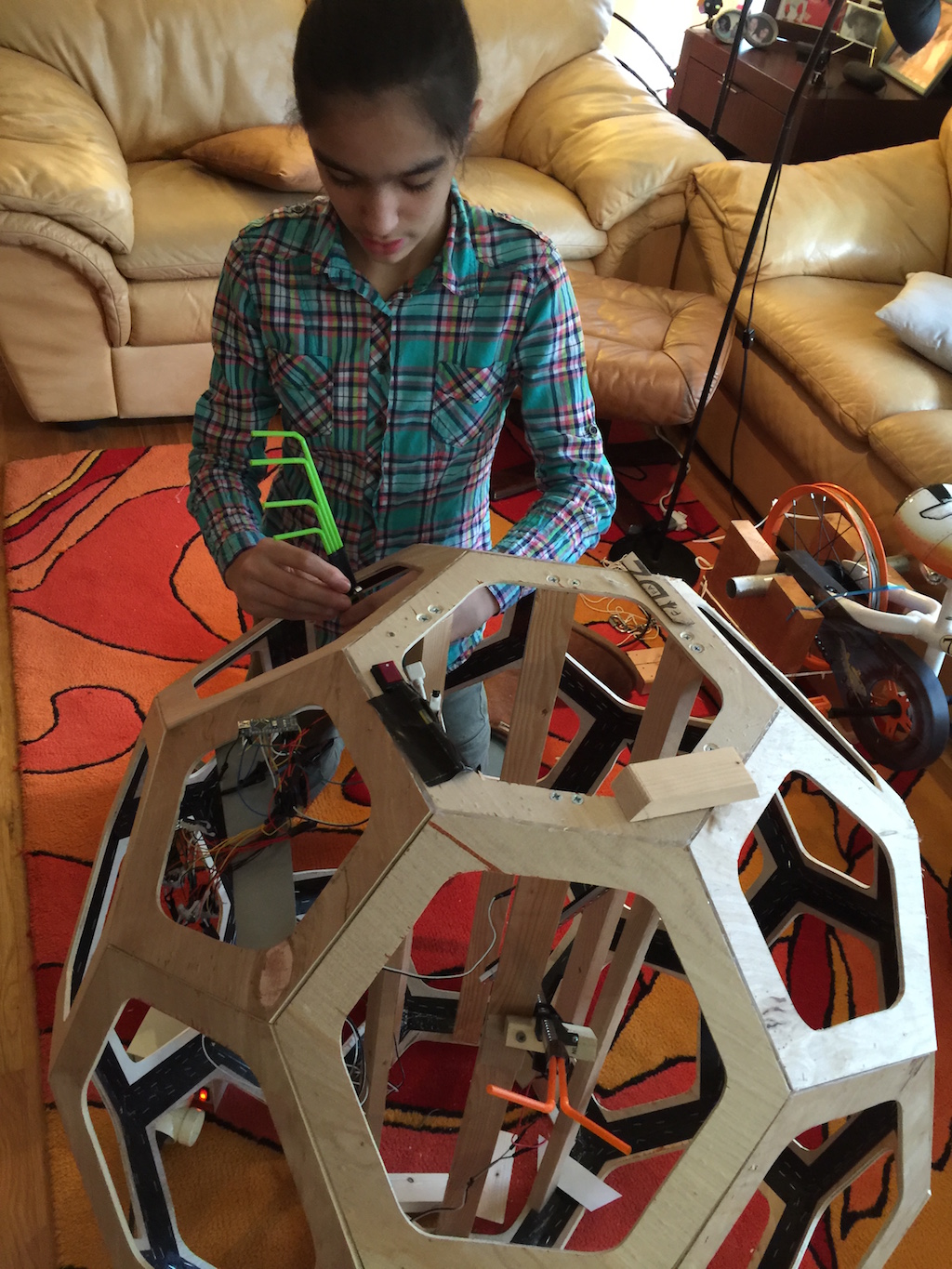
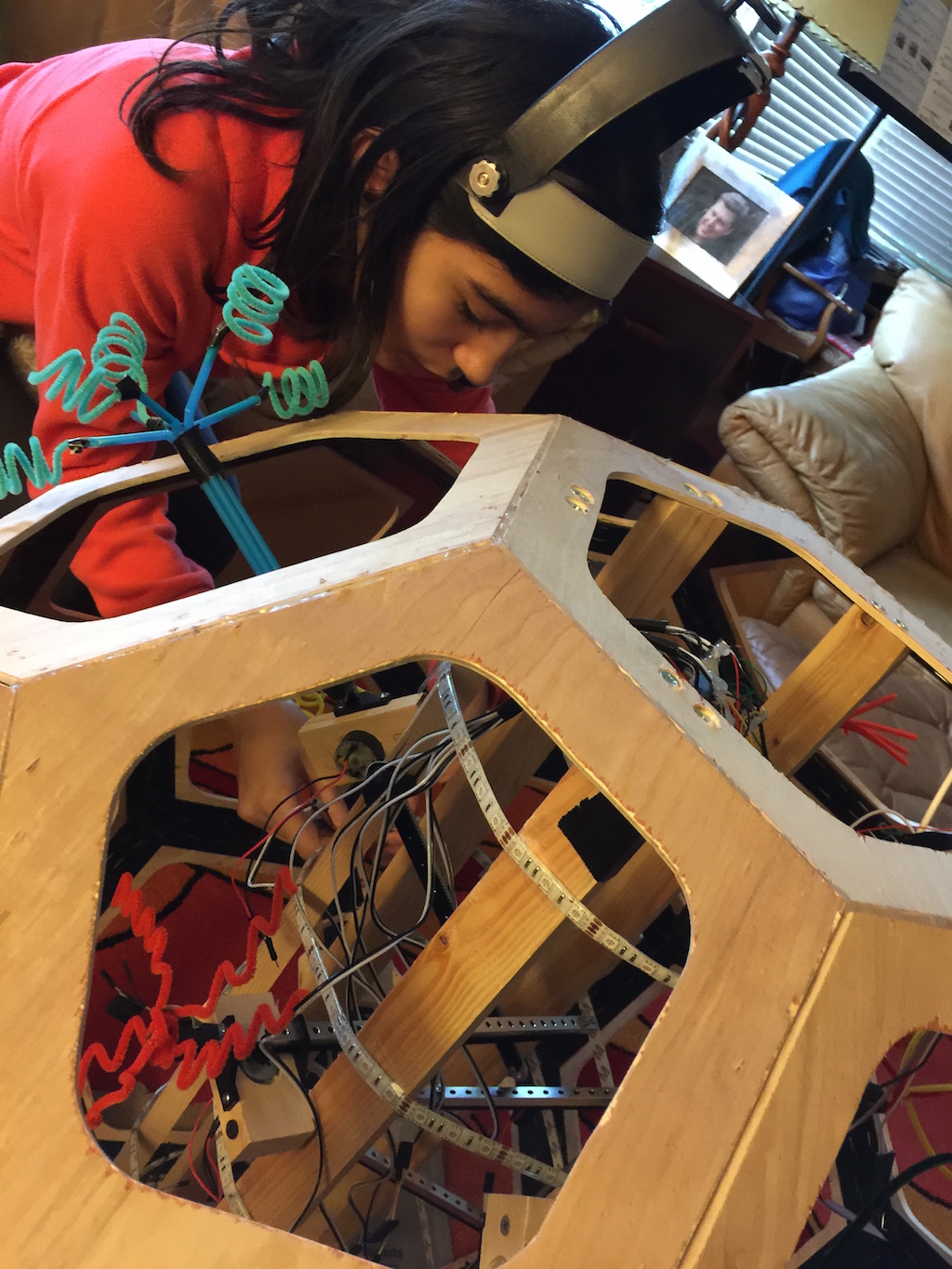
Once the actuators were in place, they needed to be made to look like antigens. I used straws, screws, tape and pipe cleaners for that. It was a blast.
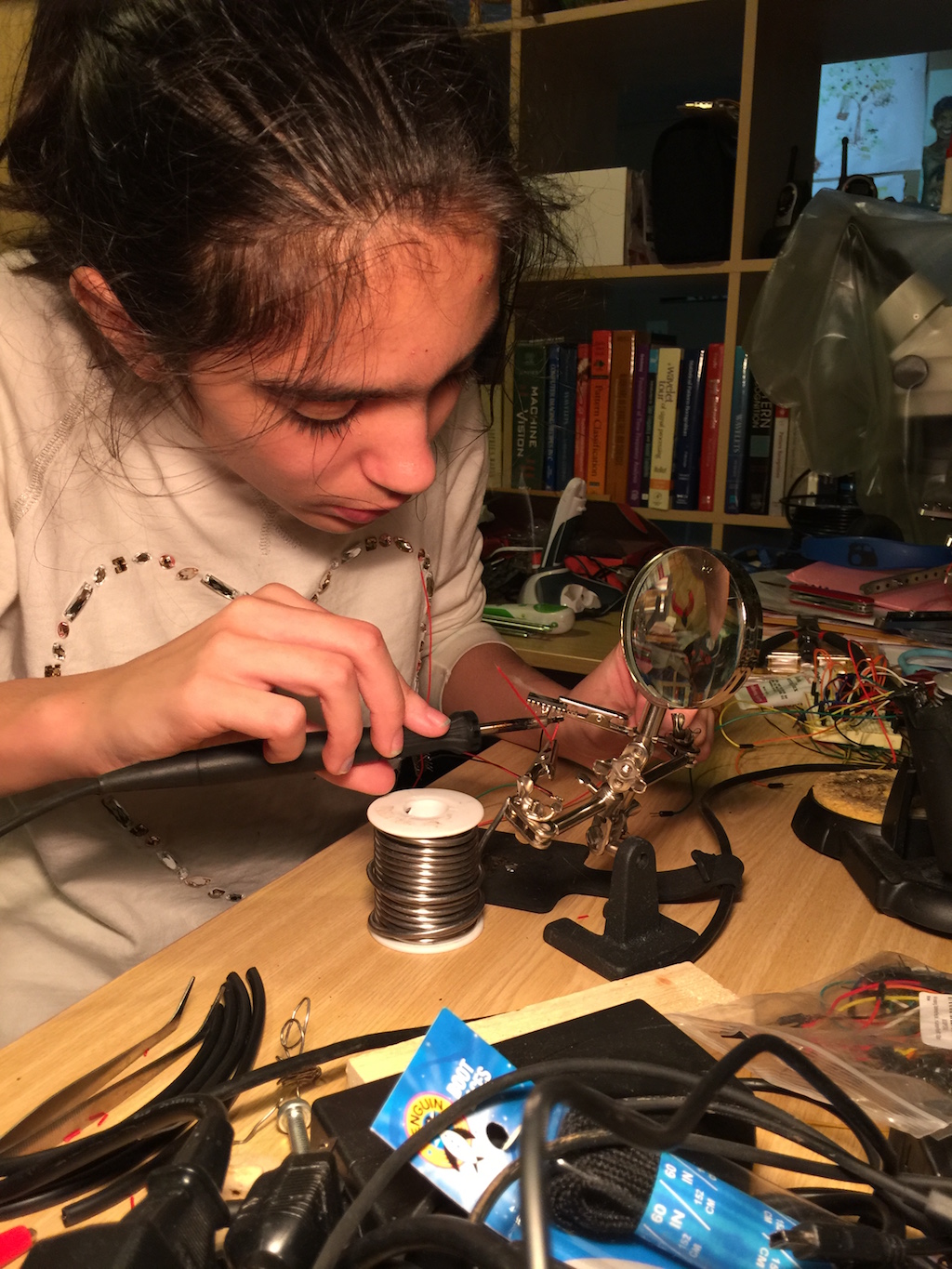
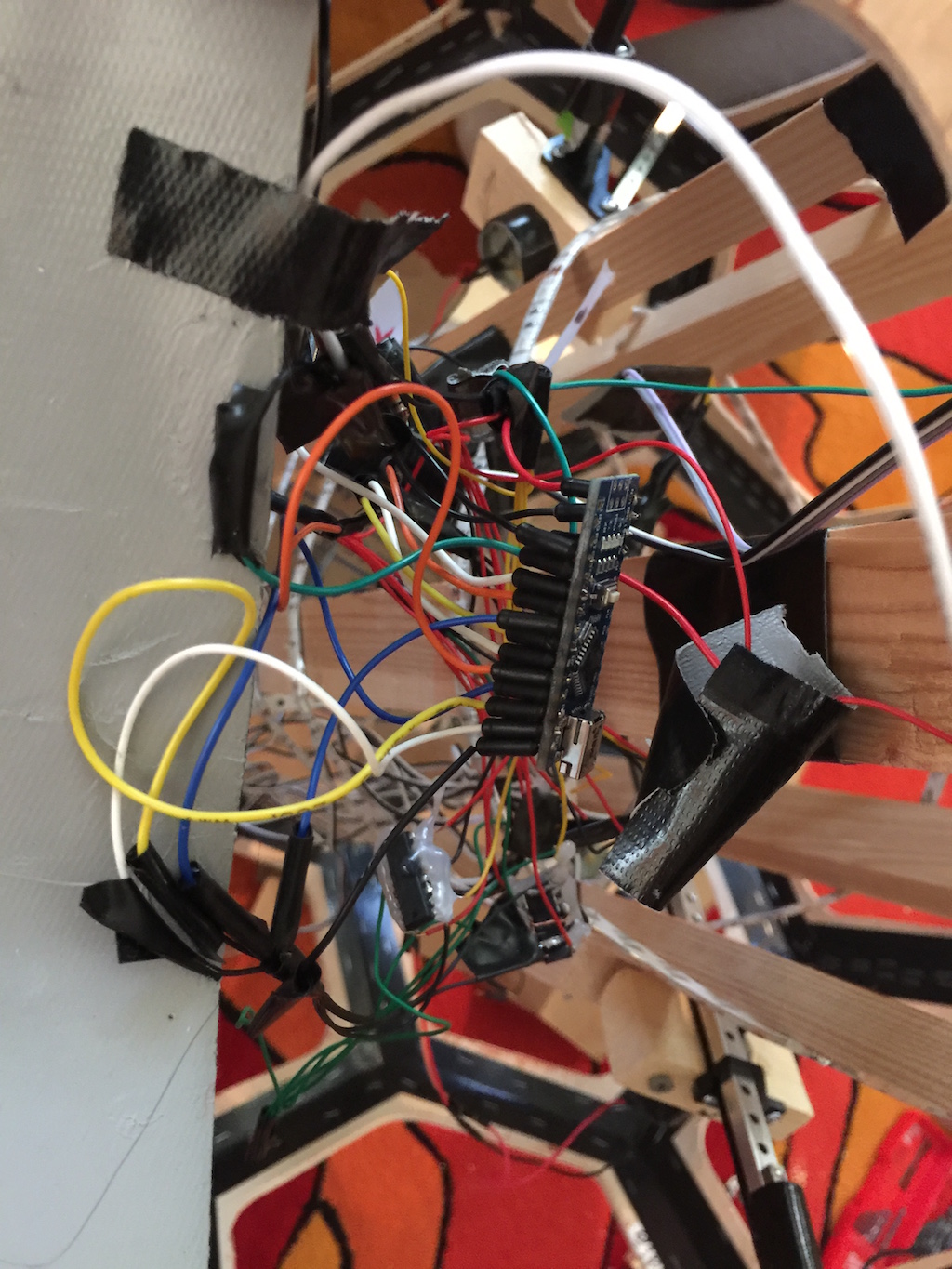
Now, to make the actuators move when I wanted them to, I hooked them up to chips with H-bridges, that convert the low voltage from the Arduino outputs to the full voltage and power from the big 12-volt batteries. These were the same ones I used for Bluthe last year, but now separately, one for the actuators, and one for the lights. I tried to use 24 volts for the actuators, but the Arduino burnt up pretty fast when I tried that. (In all, I burned through 3 Arduino Nanos). The wiring of 8 actuators was a true rat's nest!
Here is a diagram of the Arduino, H-bridges and reed switch:
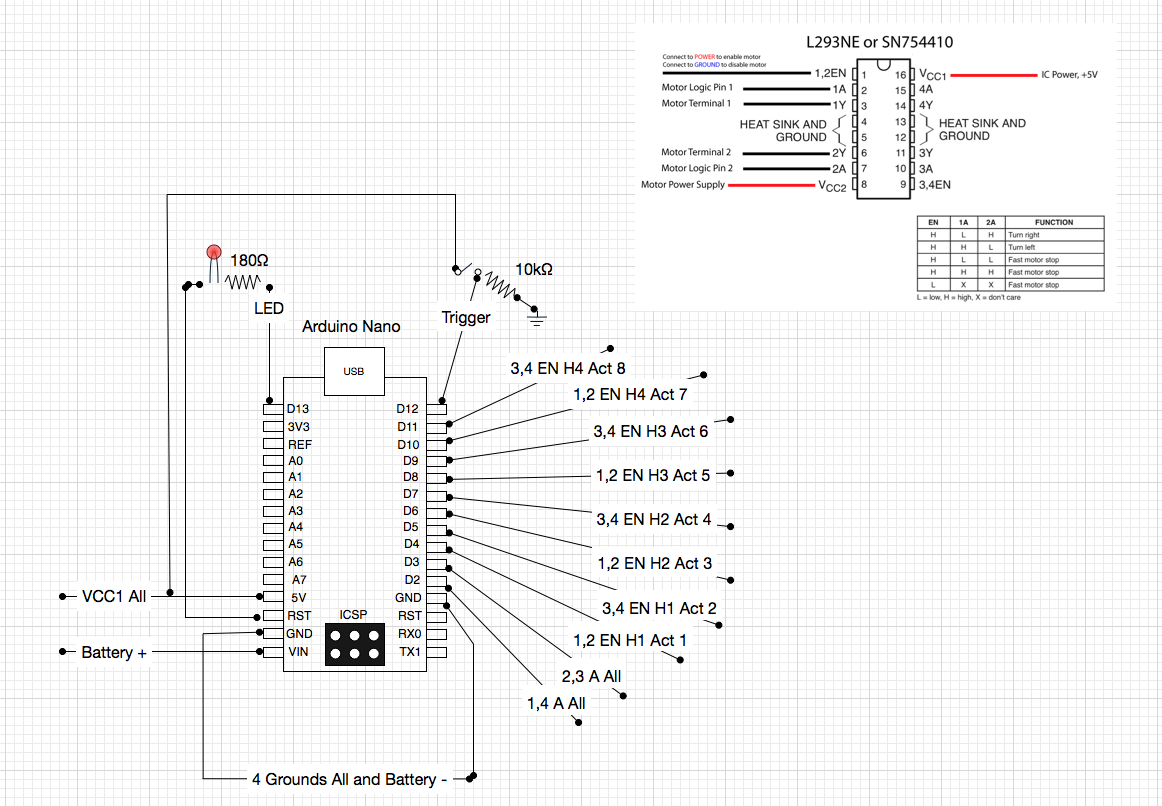
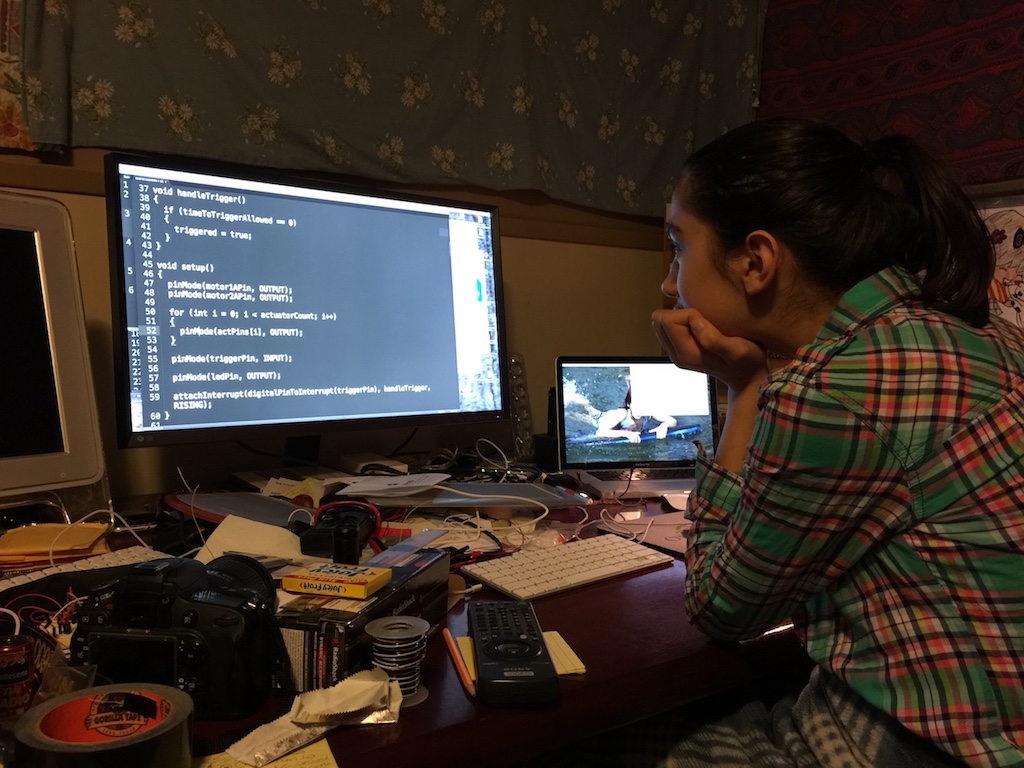
I mounted a reed switch on the virus to tell the Arduino to run my program. The program randomly shoots out the actuators, one at a time, to get the full power of the battery, and then when all actuators are out, some come donw, and then some come out again, so between 4 and 8 are out, and then they all come back in when the reed switch is tripped again. This was pretty complicated, for such a simple set of actions.
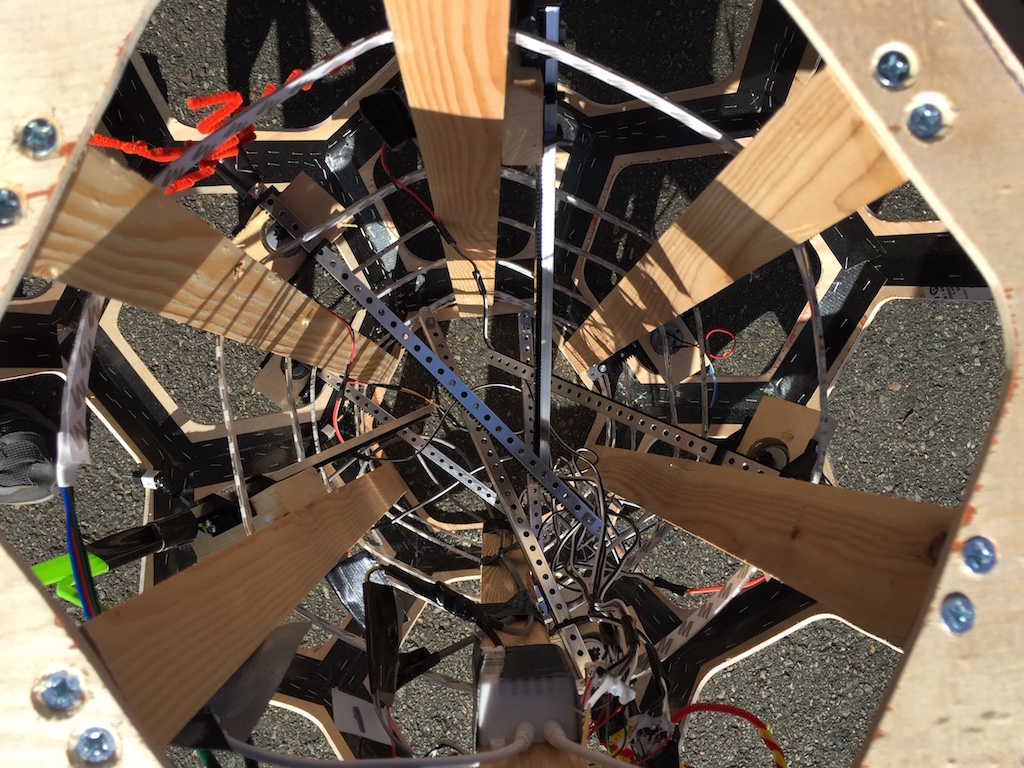
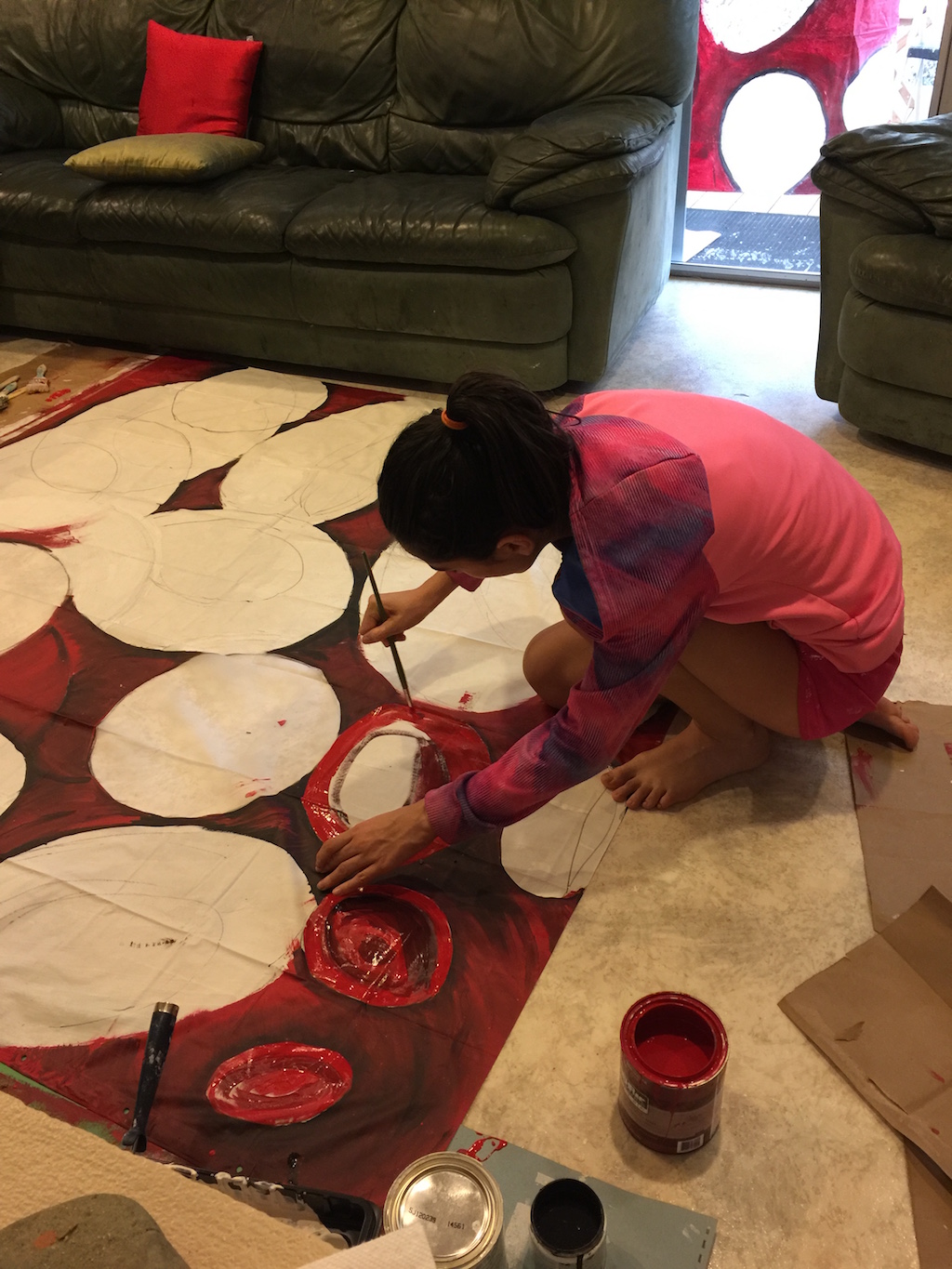
I also made a matching backdrop, to look like a blood vessel, with colored lights to match the virus colors. The idea was to make the camouflage more visual, in case the judges didn't like the idea of non-visual camouflage, and to make it look more impressive.
Then came the day of the regional competition. There were a few mishaps, but we all thought it went really well. We still don't know why we got last place this year.
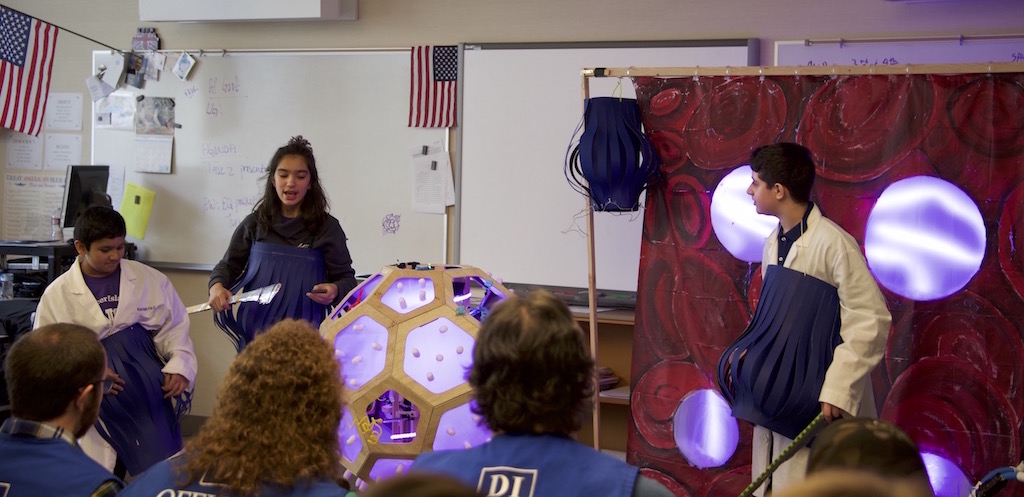
Here is our full presentation:
Camouflaging Virus from Fred Mannby on Vimeo.
Light Dress
For this year's Destination Imagination project, the challenge involved creating impressive stagecraft, and after watching lots of YouTube videos of impressive performances, I decided to make a dress that lights up, and another one with fluttering butterflies. It's hard to make time, what with volleyball, school, and everything else going on. But, I'm getting ahead of myself.
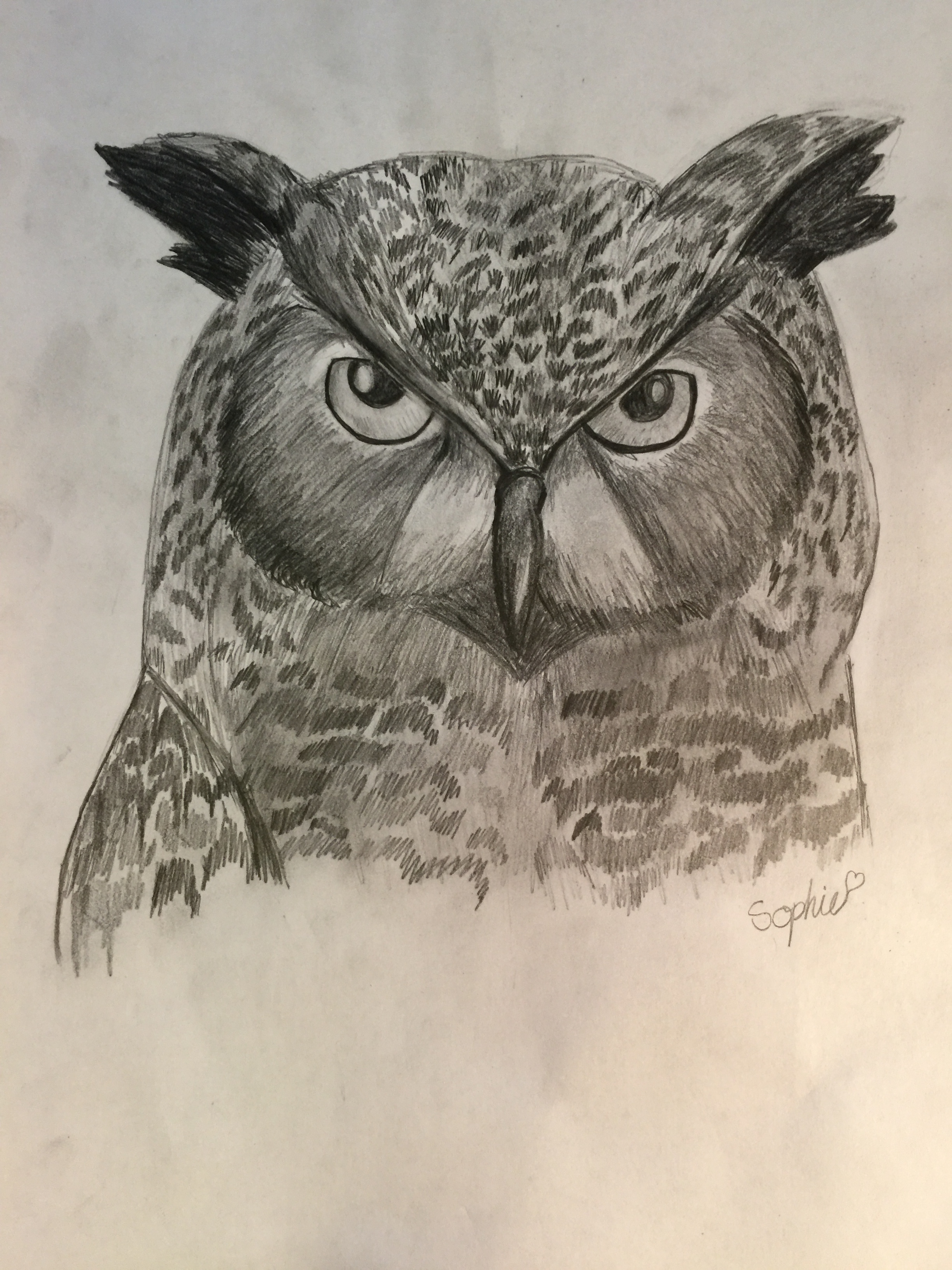
First I consulted the wisest of owls. (Yes, Sophie's my middle name.)
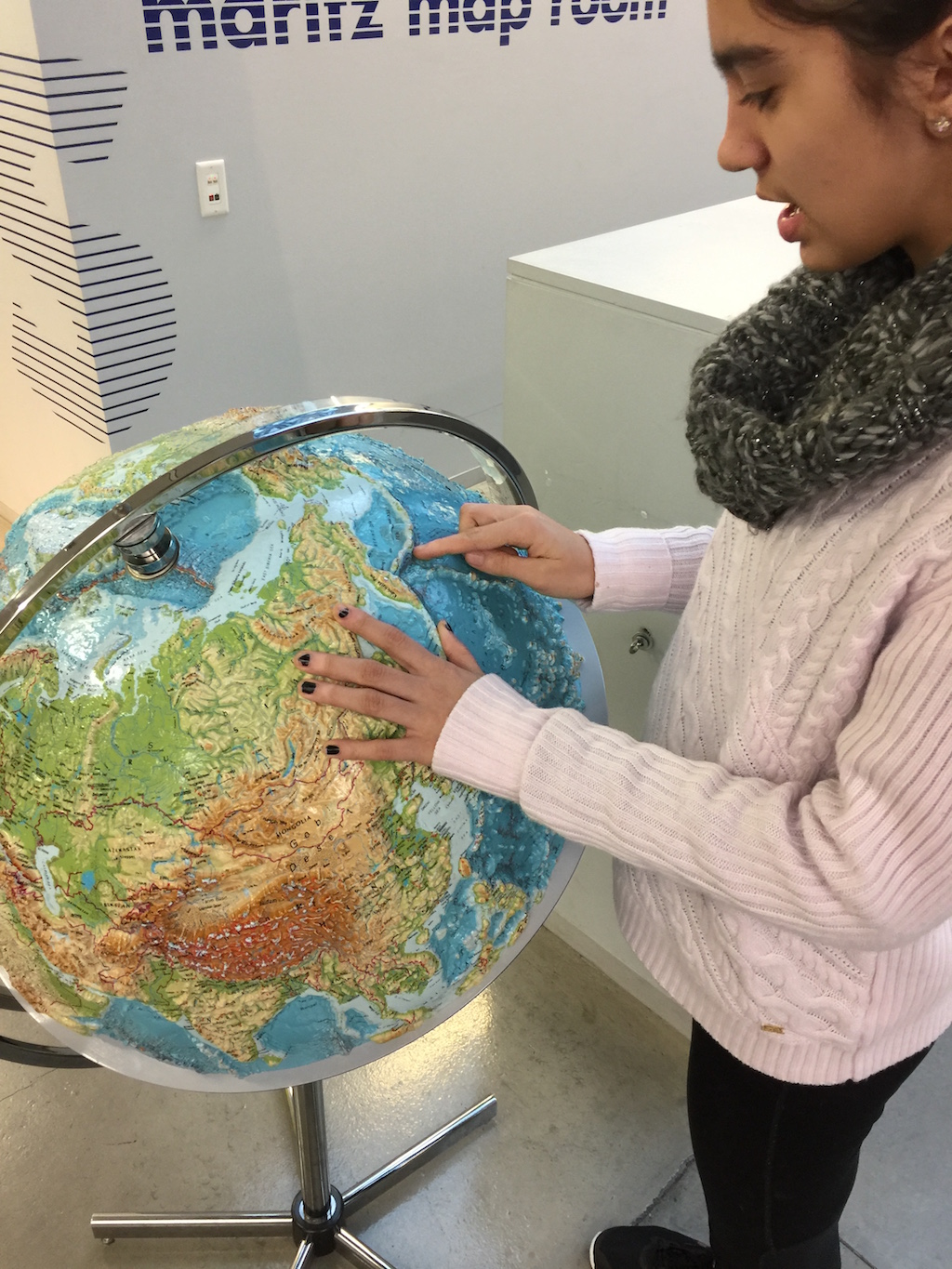
Then I picked a place for my quest.
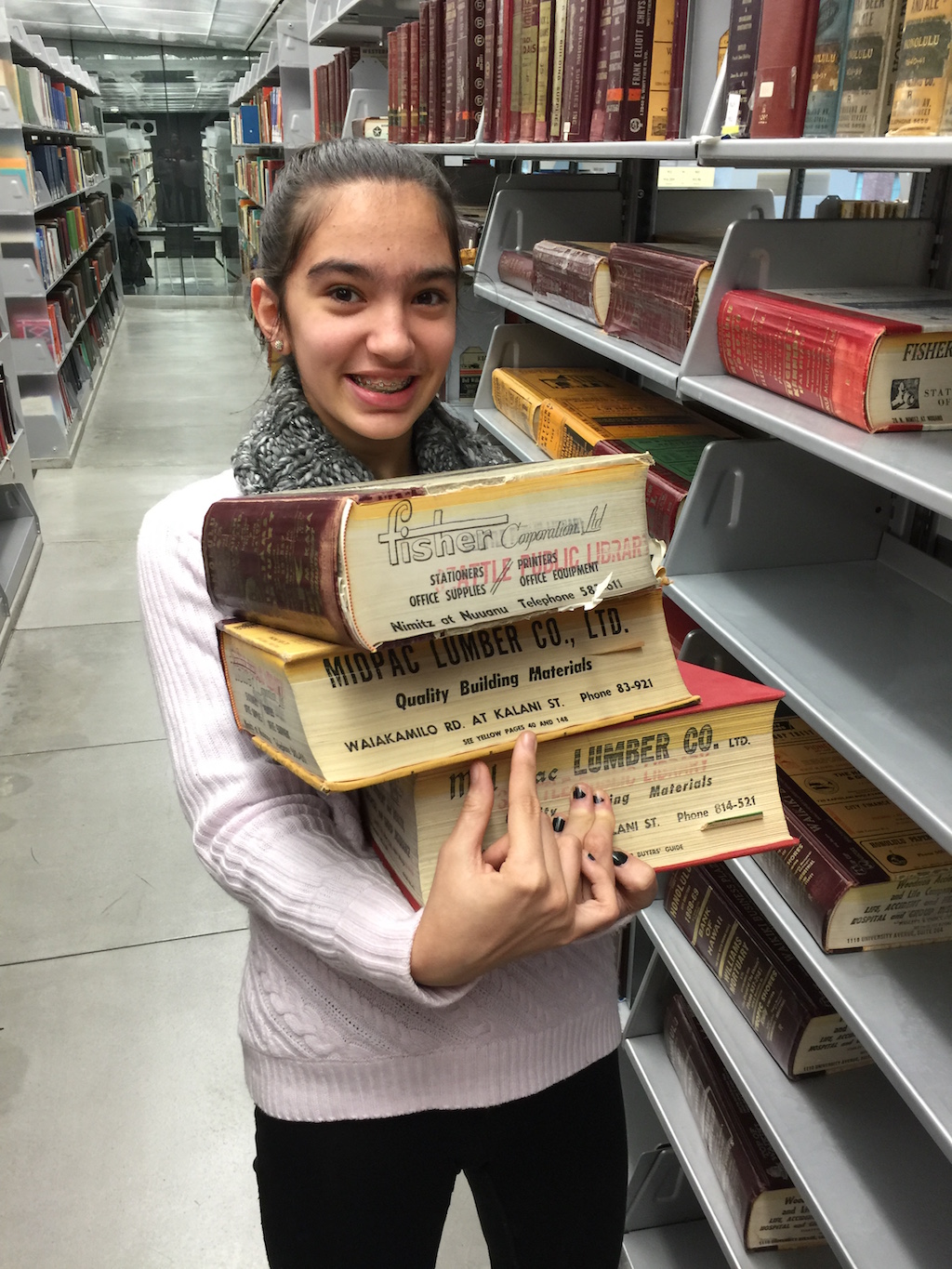
And read everything I could on the subject.
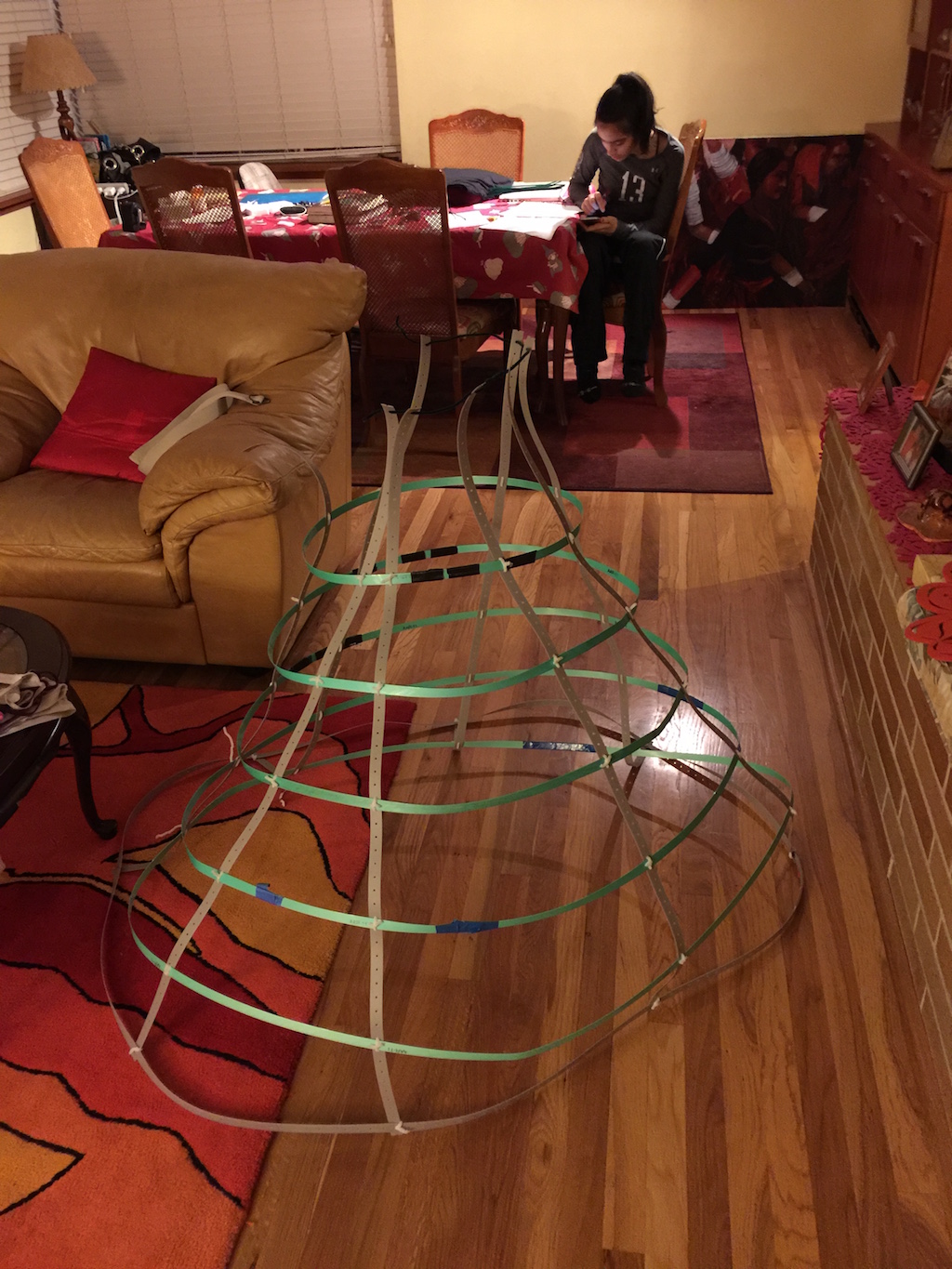
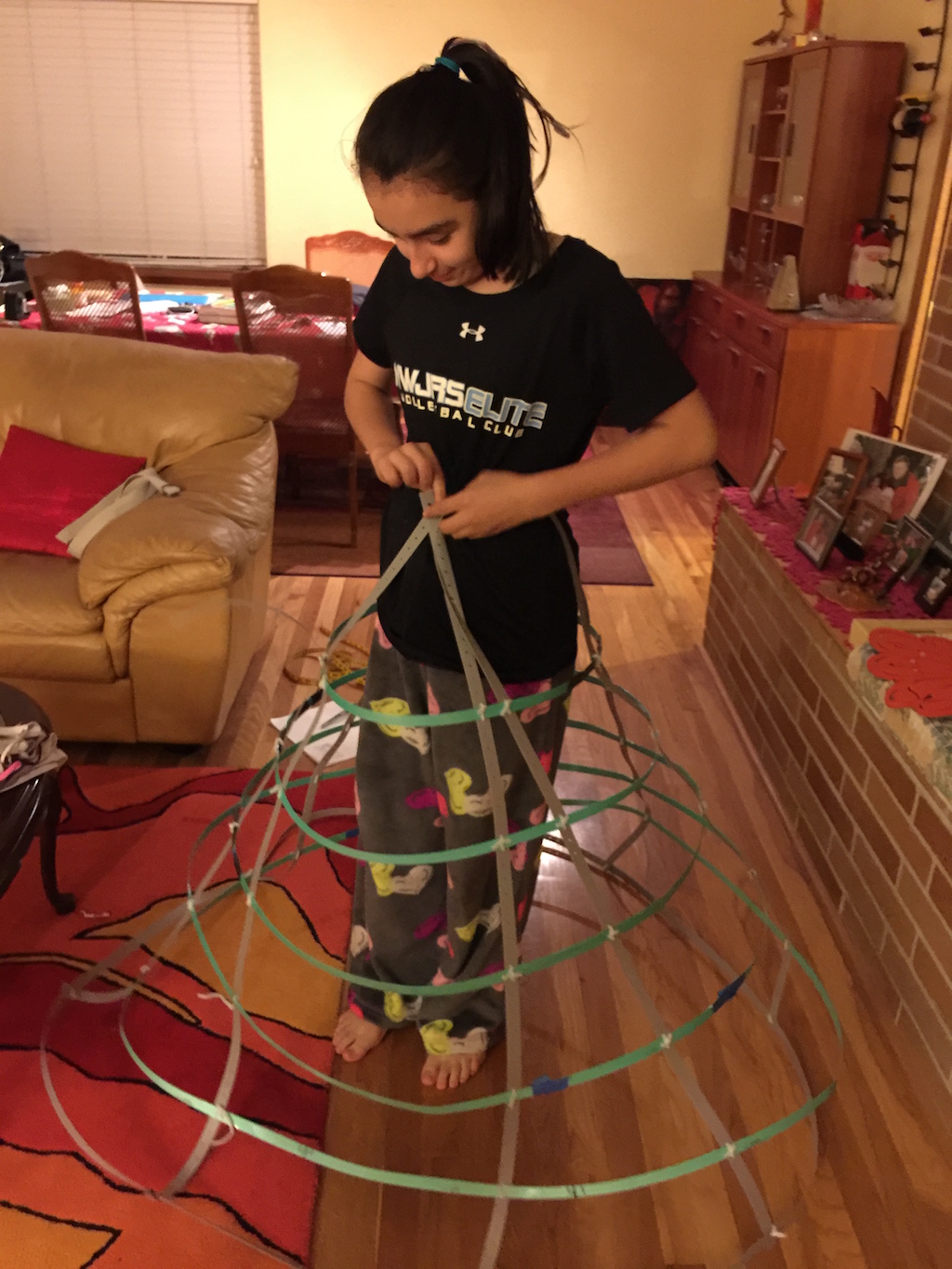
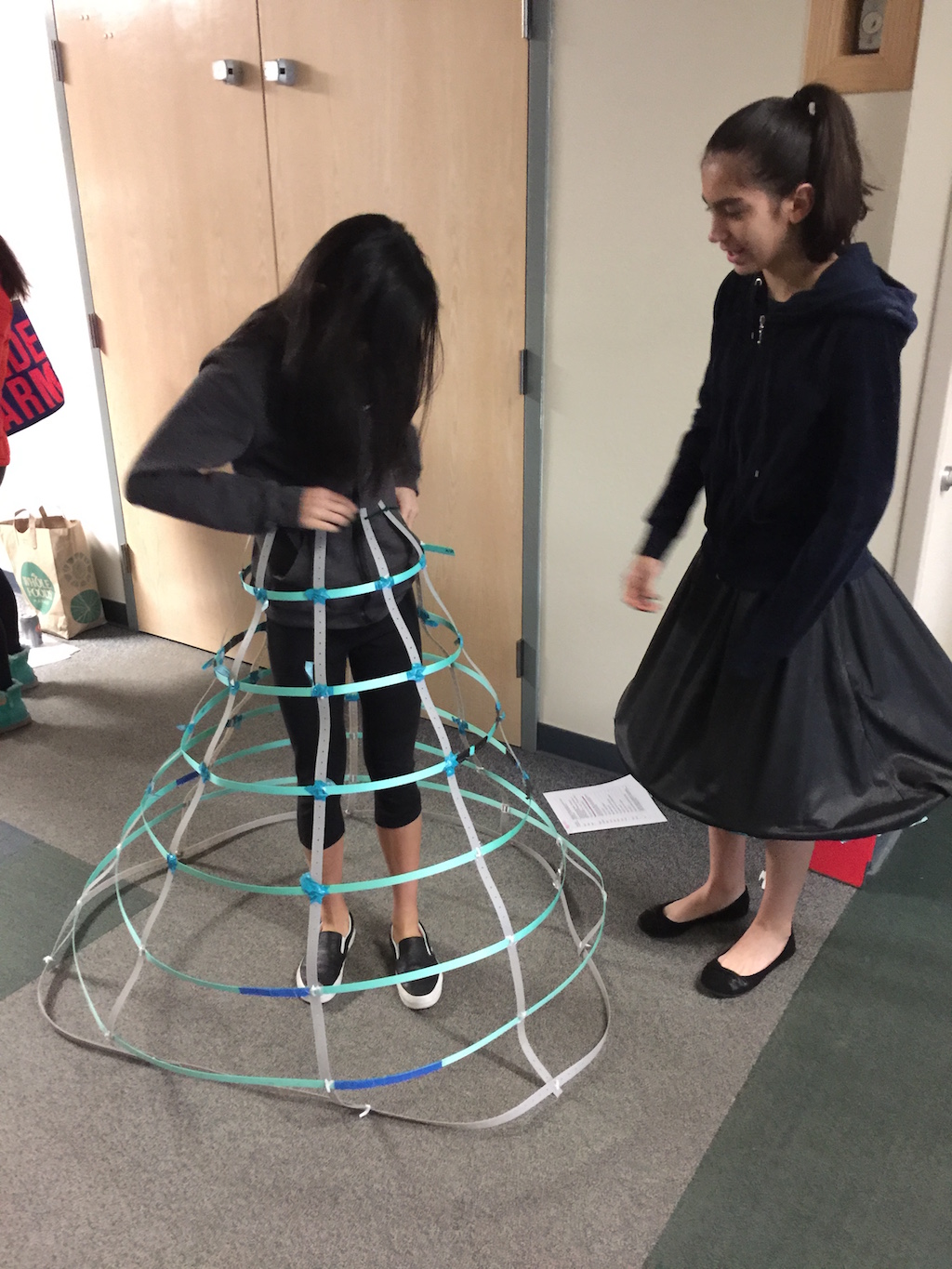
I wanted to make something really cool, and came up with the idea of creating a dress that would light up in waterfall patterns based on music I played. In the DI story, this would be used to put creatures to sleep. This year, my budget was very constrained, so I had to find a good way to make the dress cheaply. I got free packing straps from Home Depot, which I connected with tape and pipe cleaners to make the skirt hoops. Then I used cheap shower curtains to provide a light diffuser around the dress.
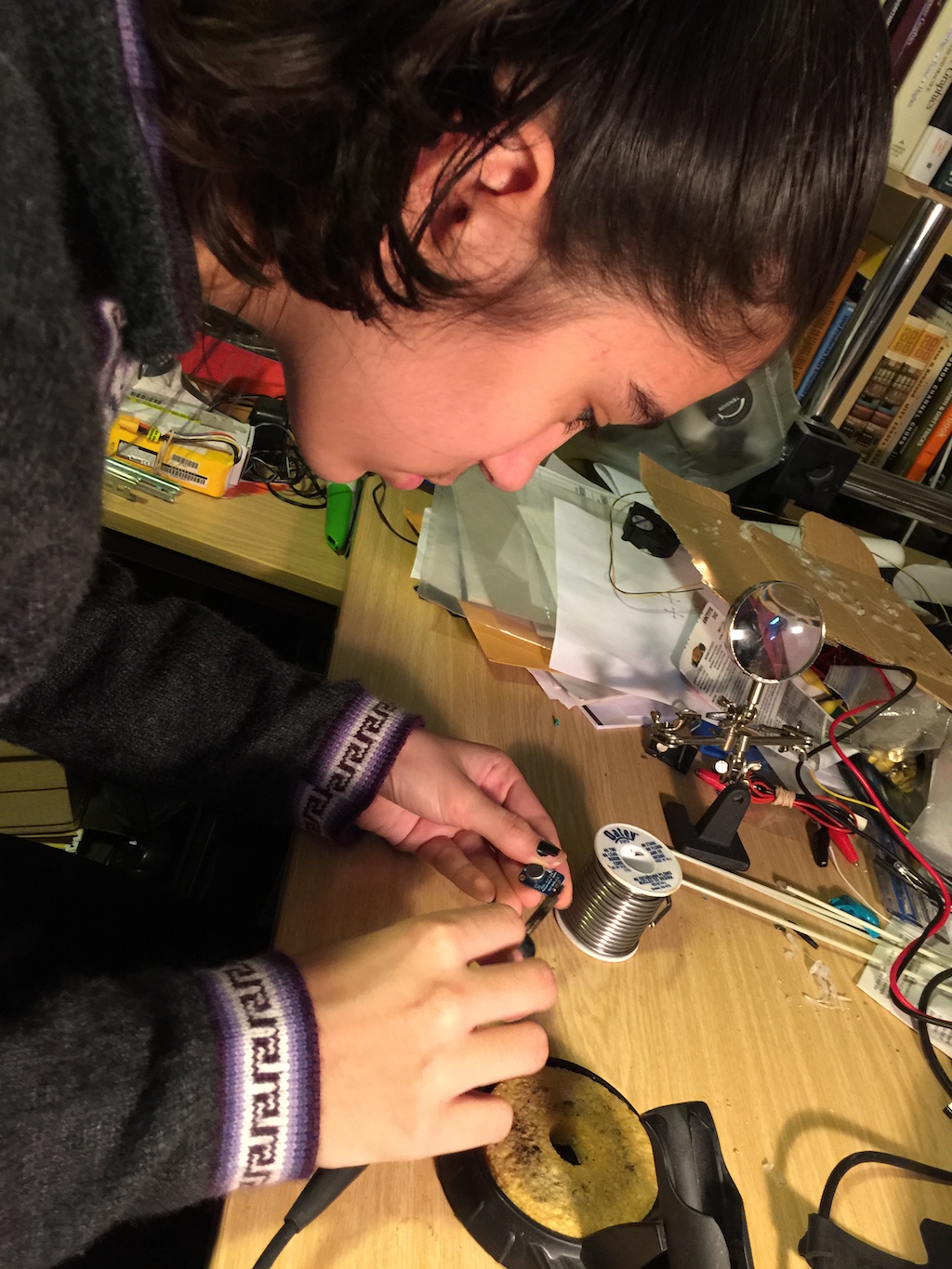
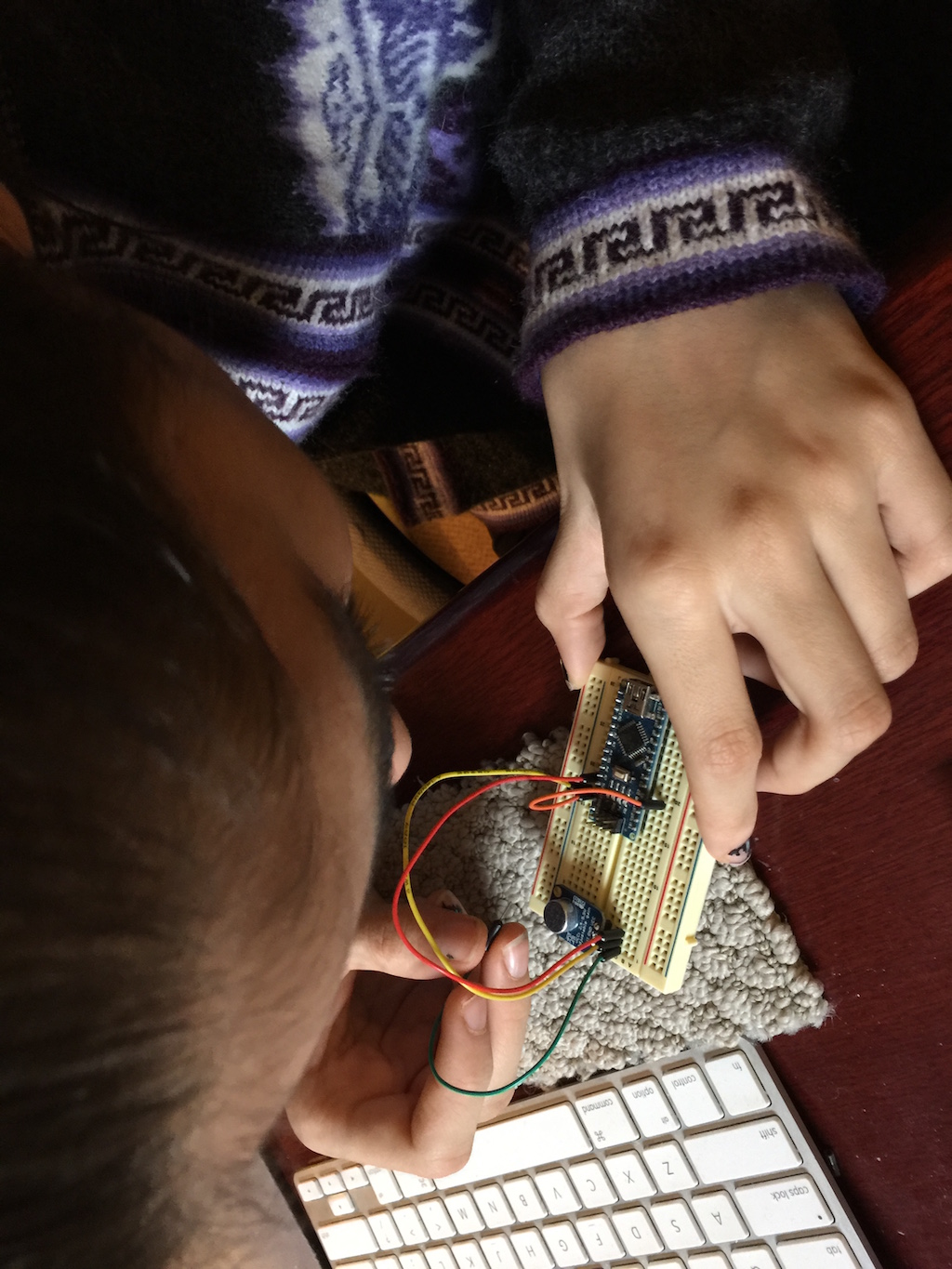
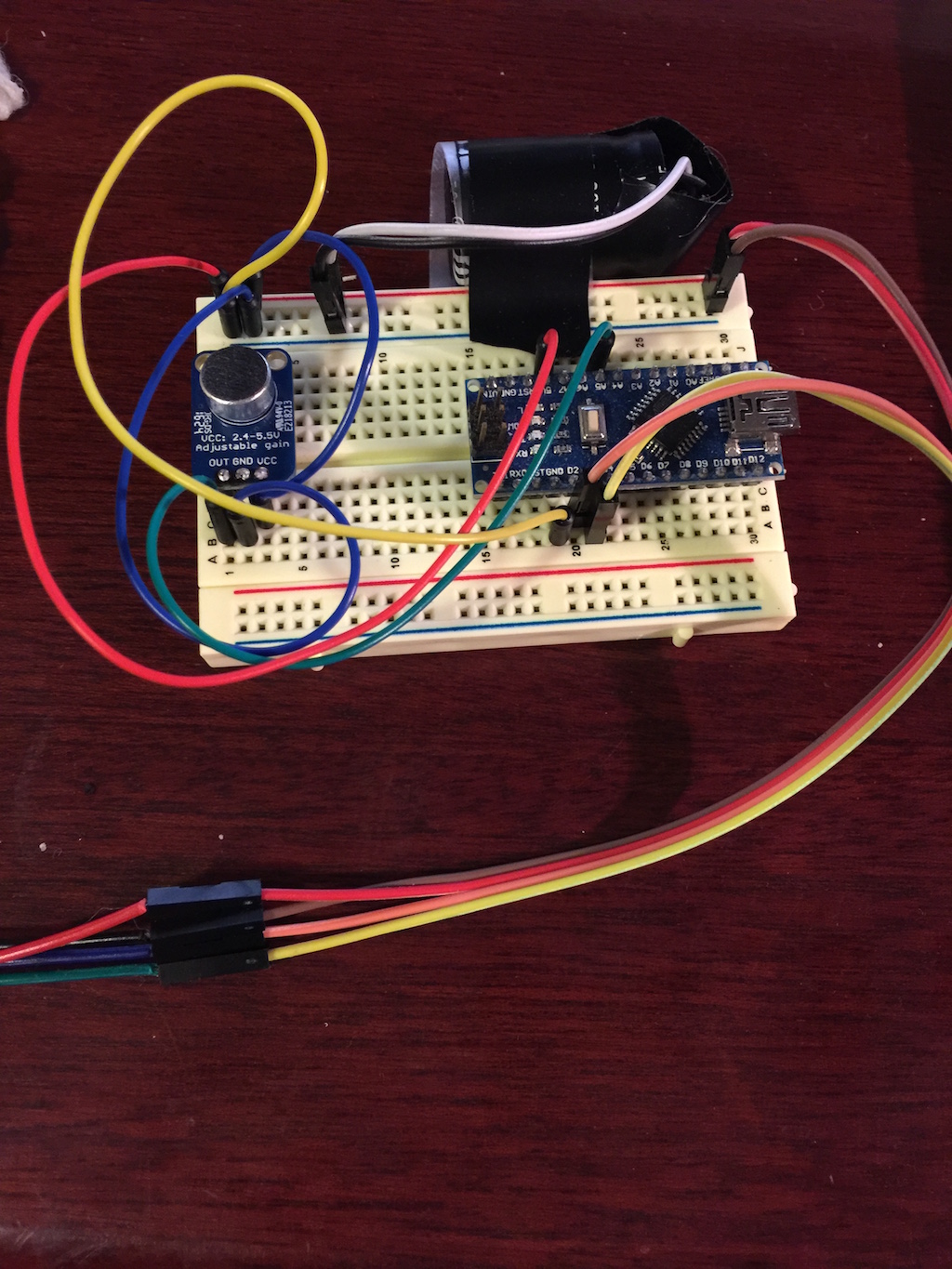
To make the dress change color based on musical notes, I bought a microphone and used it on an Arduino Nano to count so-called “zero crossings.”
If you think of sound like a wave, you can get an estimate of its frequency by counting how many times it crosses between being above or below the middle in a given time period. Or, you can use a running average of the duration between zero crossings by taking, for example, 95% of the previous running average, and 5% of the latest duration, so it changes a little each time, but takes a while to change, so it smoothes out durations that are too short or too long.
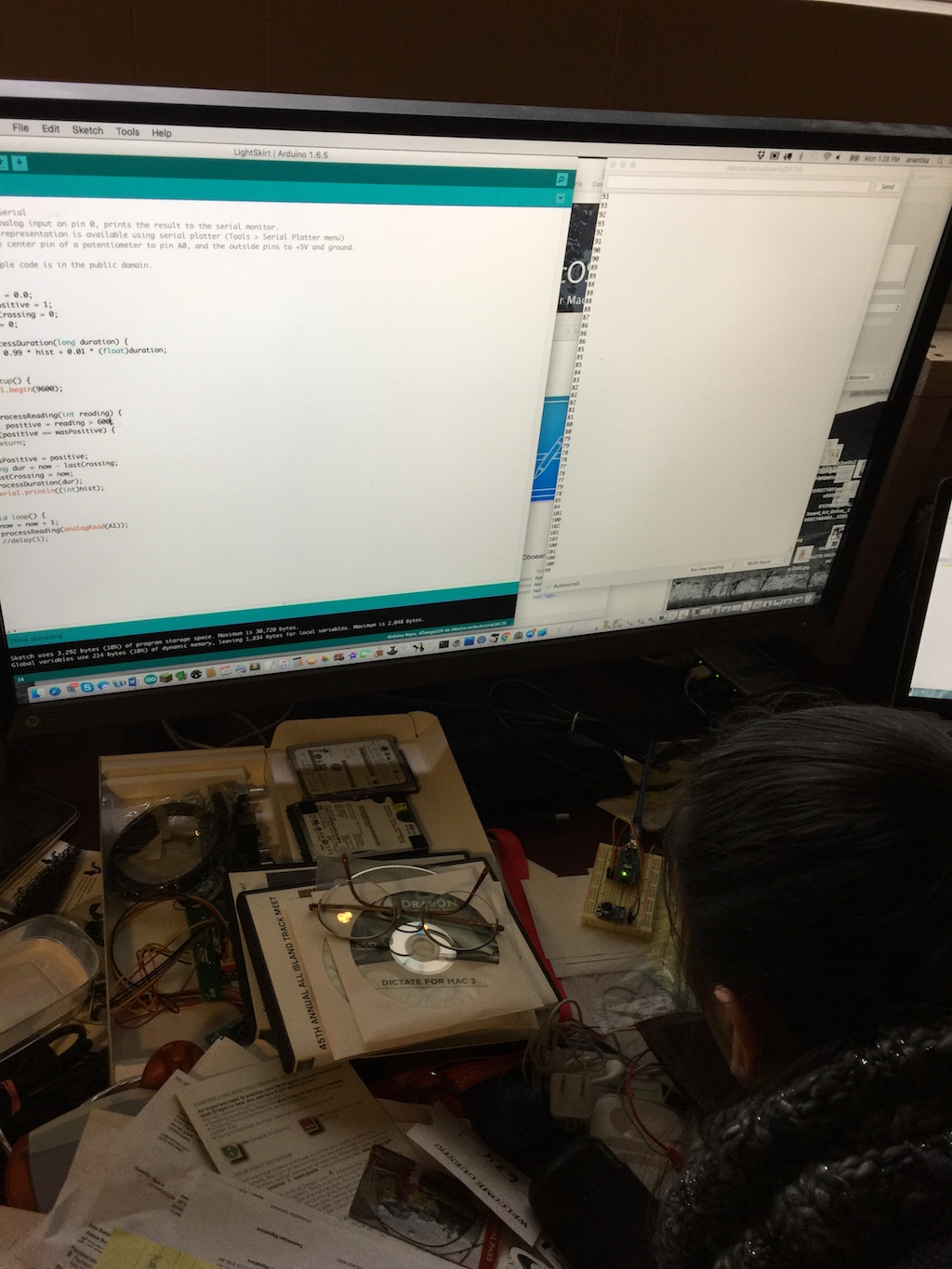
The zero crossings approach actually worked pretty well, until I hooked up the lights and started setting the colors on the lights. I tried fixing it by putting a large capacitor in the circuit, in case power drain from the lights was causing the microphone reading to be inaccurate. But, I now think the problem was because of the type of lights I was using at first. I think they require the Arduino's processor to work hard all the time, and not have enough time to process the sound. I switched to a different type of lights that has little processors between the LEDs to remember what color they're supposed to show, so the Arduino doesn't have to work as hard. But, by the time I switched lights, I had also found a much better way to get the sound frequency. I found a library called FHT (Fast Hartley Transform) for the Arduino, which is a simple and faster version of the FFT (Fast Fourier Transform), which is what is usually used to measure frequencies in sound waves.
Here is the final circuit:
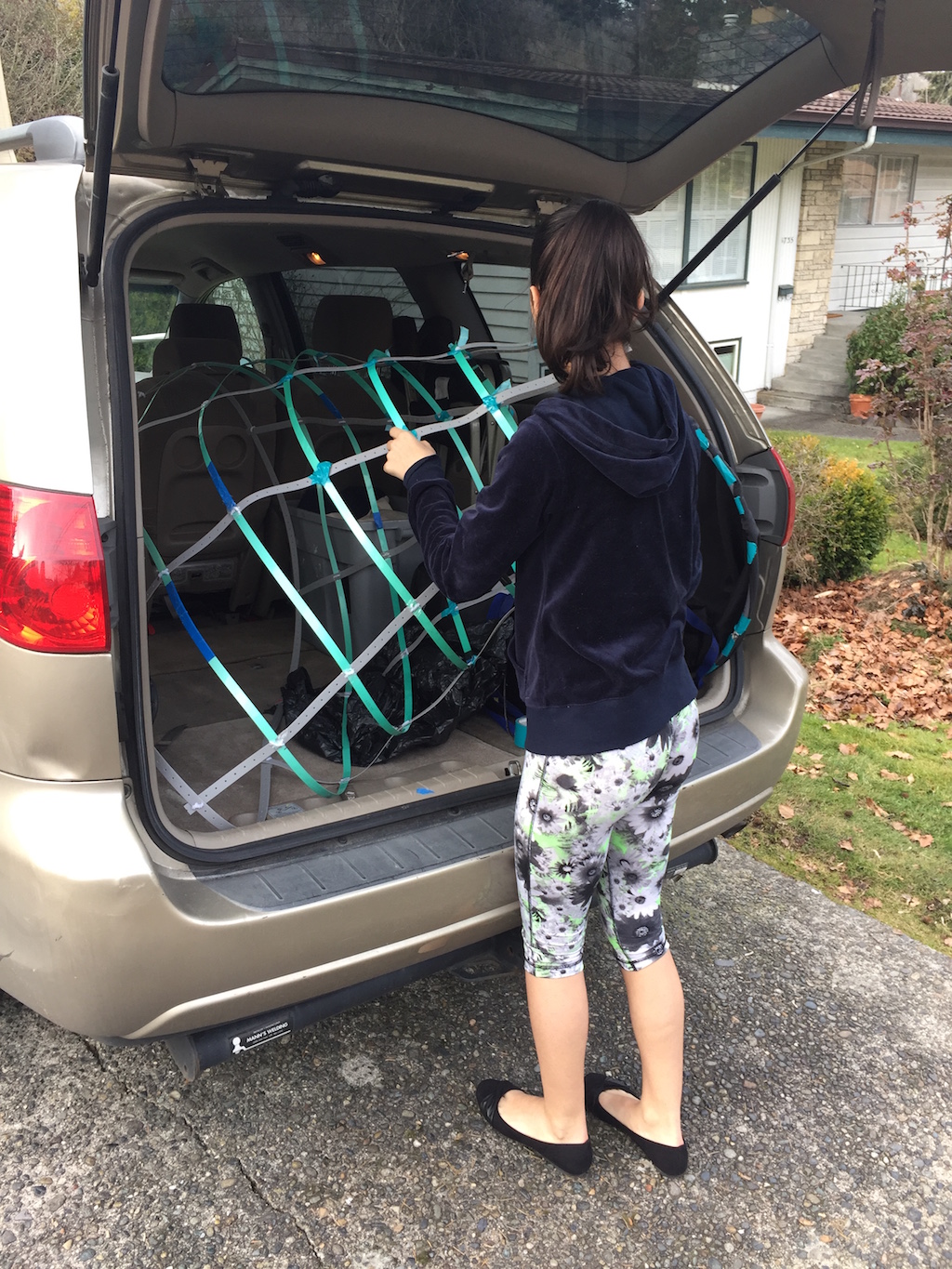
To do well in DI, you need big props. But, I'd learned my lesson with Bluthe. You need things to fit through doors, including car doors.
At first, the plan was that my friend would be in the light-up dress, and I would be in the butterfly dress.
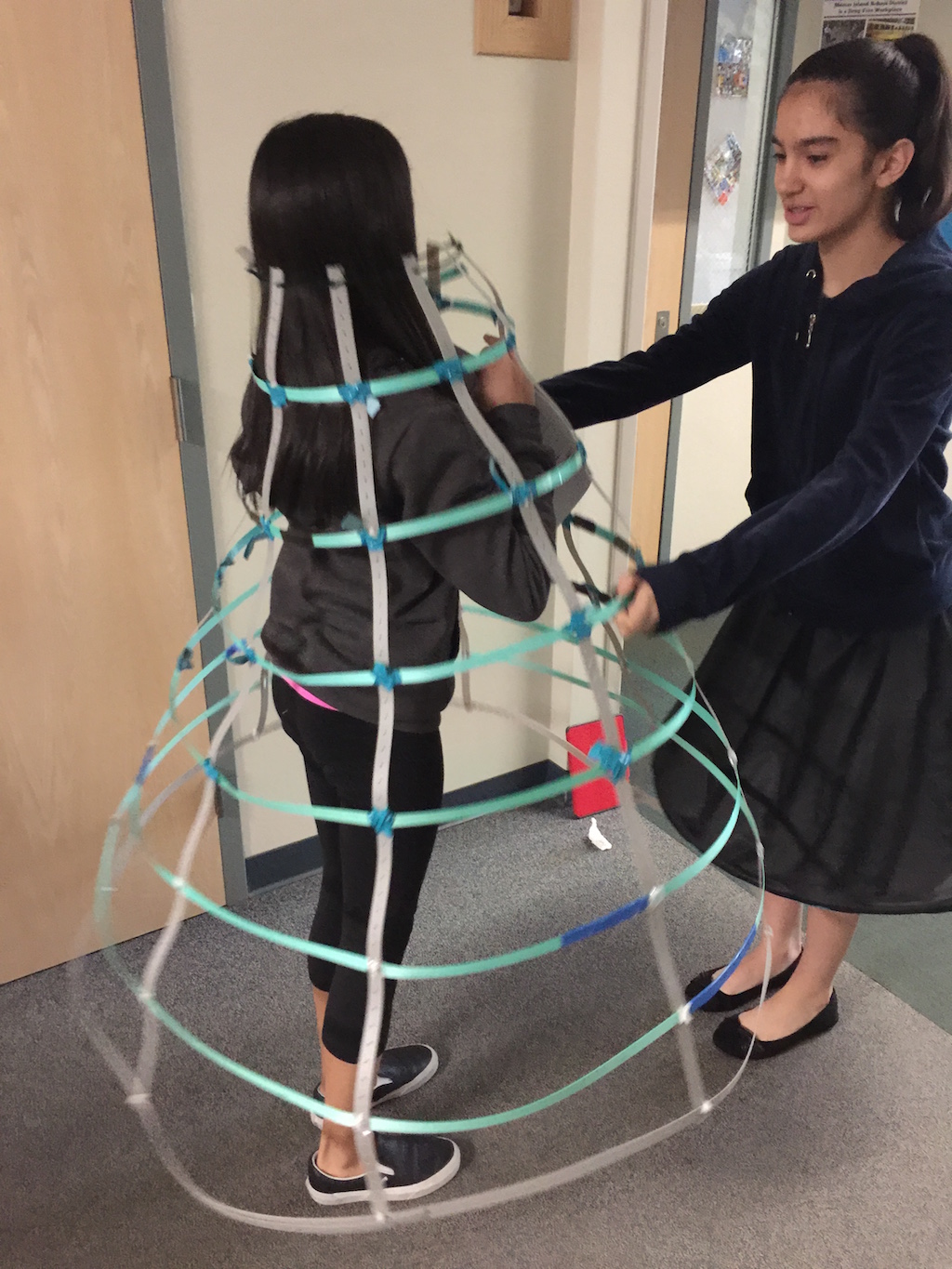
But, I'd made the dress too tall, and it looked good tall, so we swapped.
I had originally planned for the butterfly dress to have little motors or air tubes, but we were running out of time, so I made a flapping butterfly staff for the butterfly dress instead.
Then it was time for regionals.
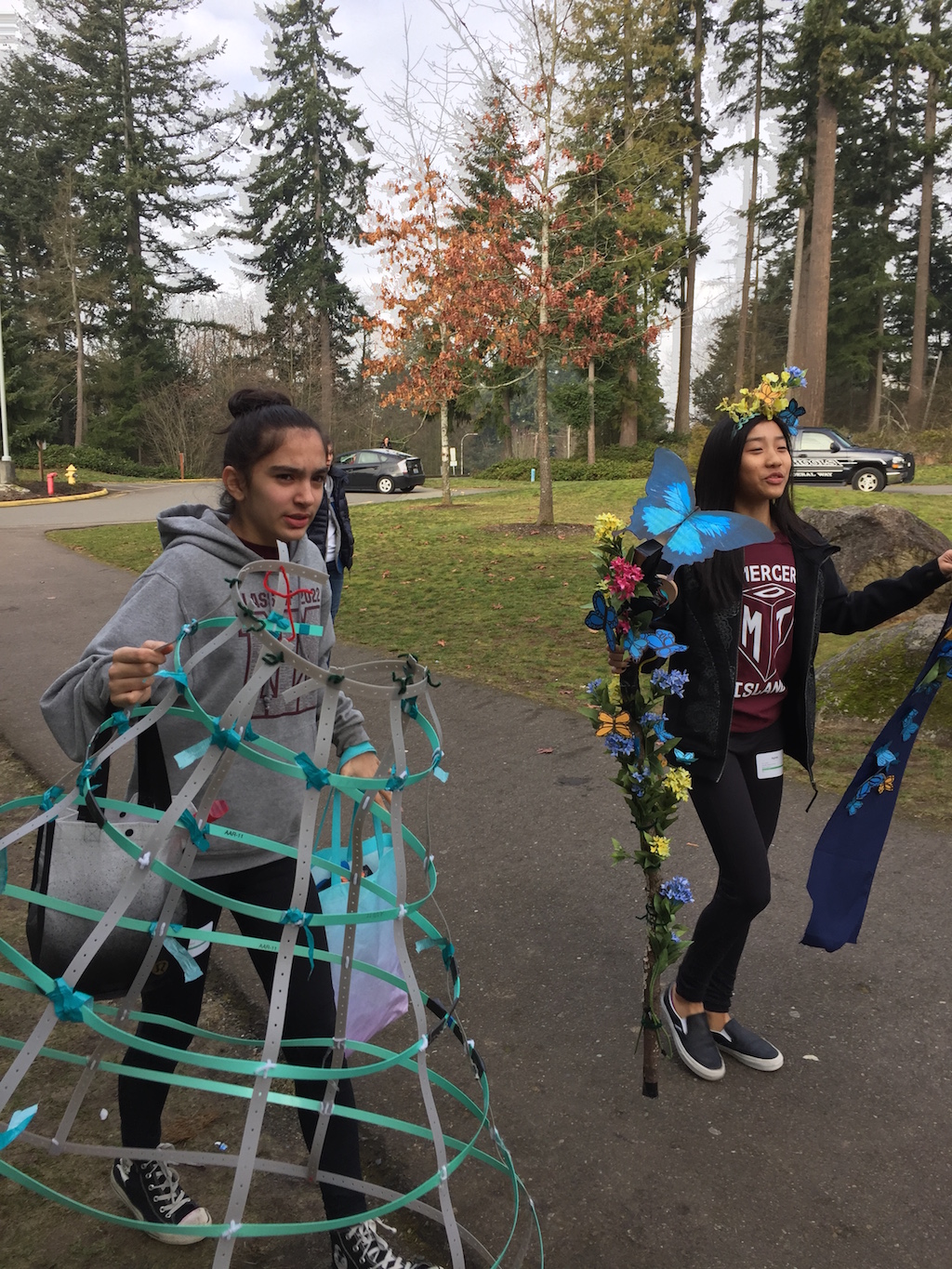
This year's Regionals were in the South Sound for us. The room was crazily cramped, and had carpeting, rather than the usual gym floor for technical challenges. But, we managed.
Do you like my bib?
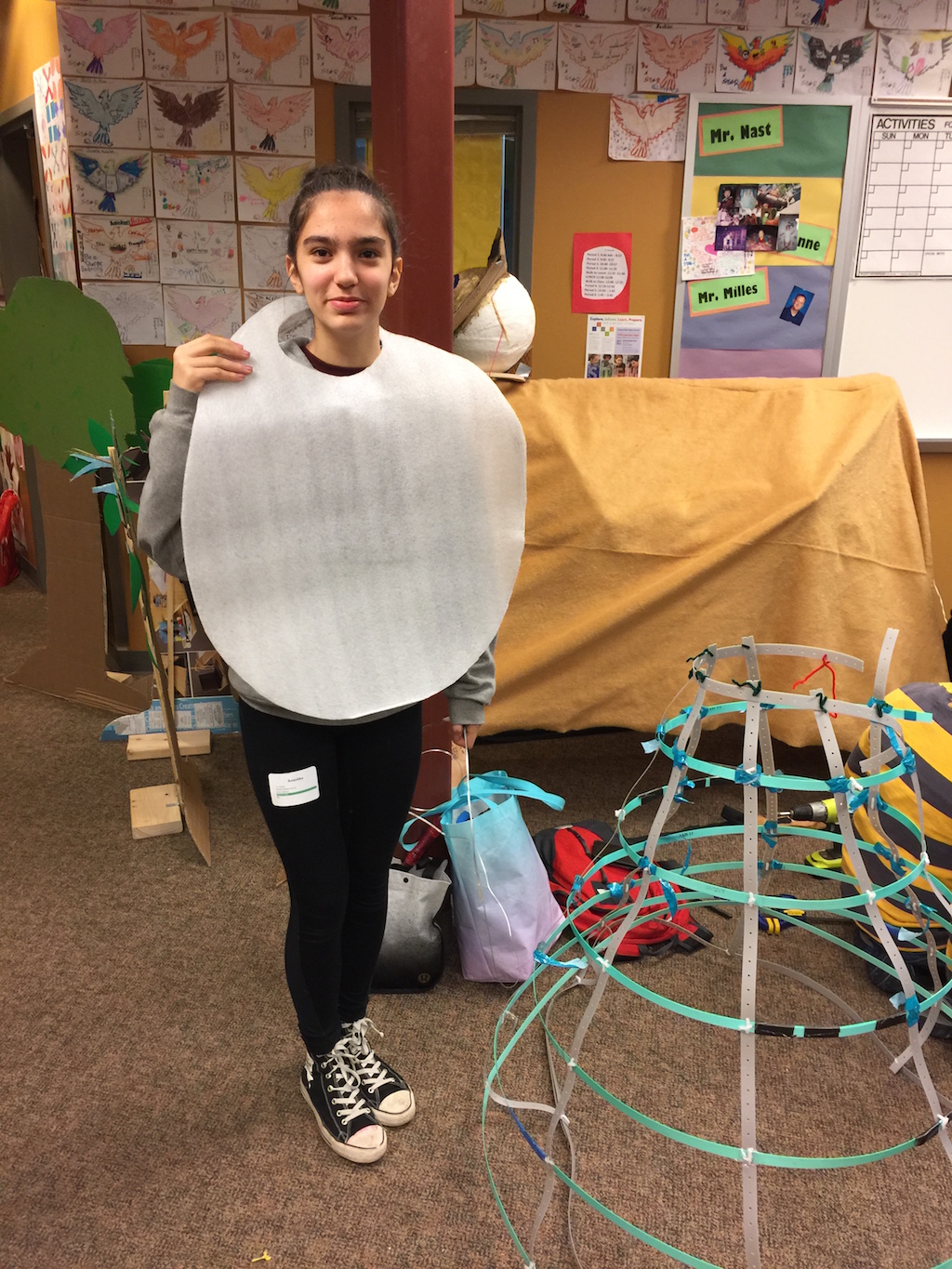
We only got second place at Regionals, but the point difference to first place was small enough that we got to go to State anyway.
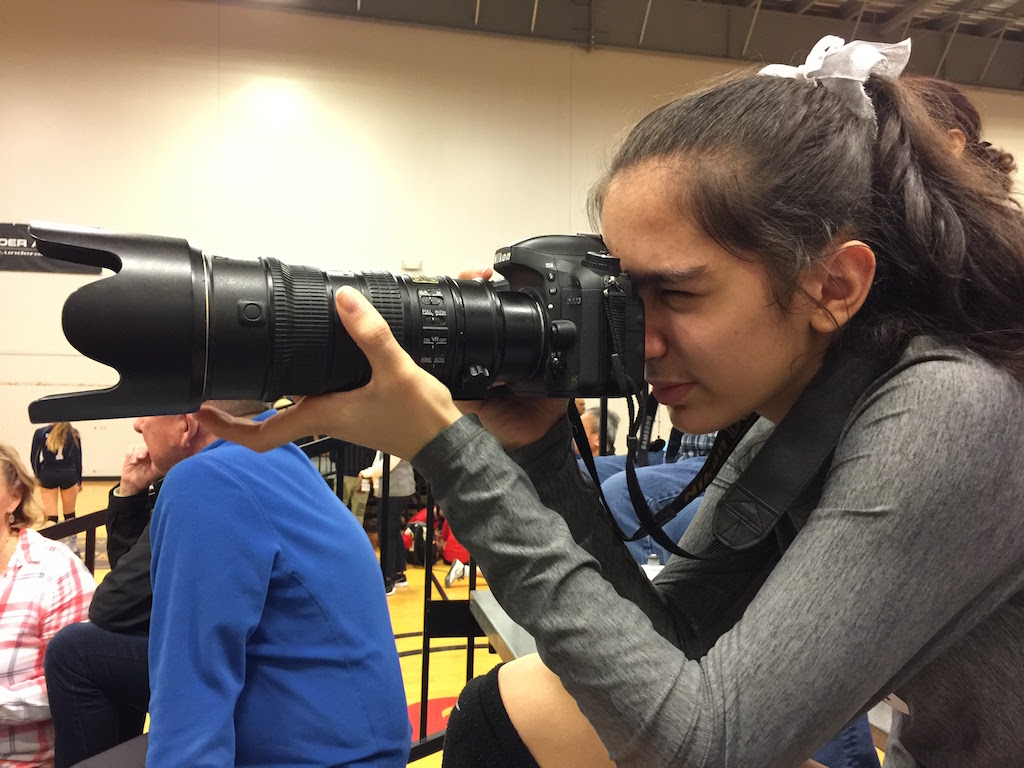
State was at the same time as a three-day volleyball tournament in Spokane, so we did a lot of driving, and I had to skip one of the volleyball days.
For State, I upgraded the dress a bit, and used my viola instead of the recorder.
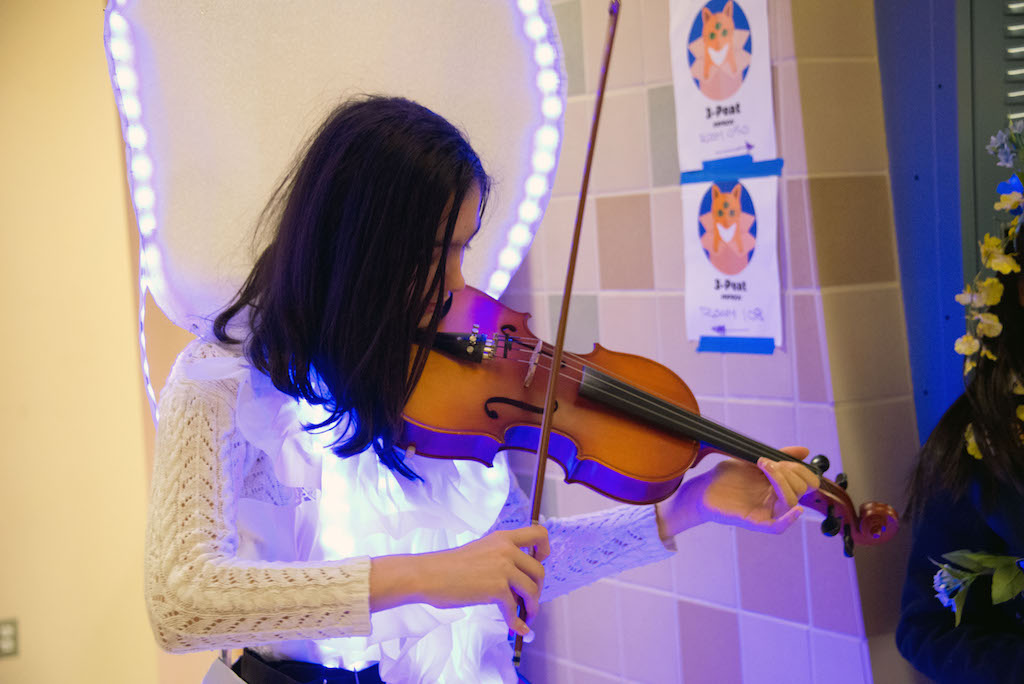
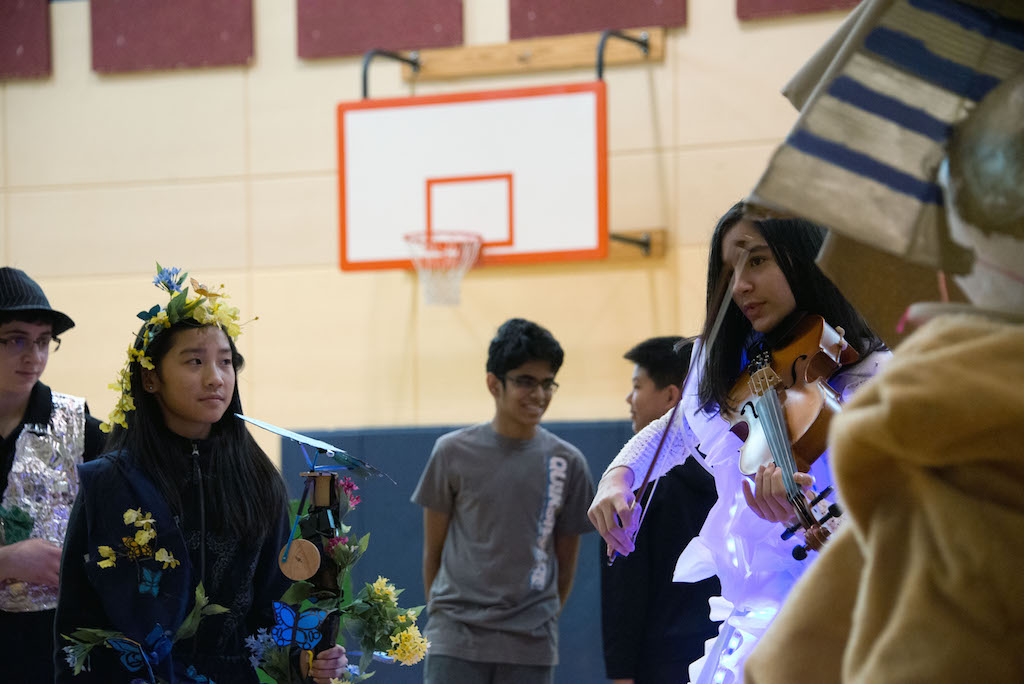
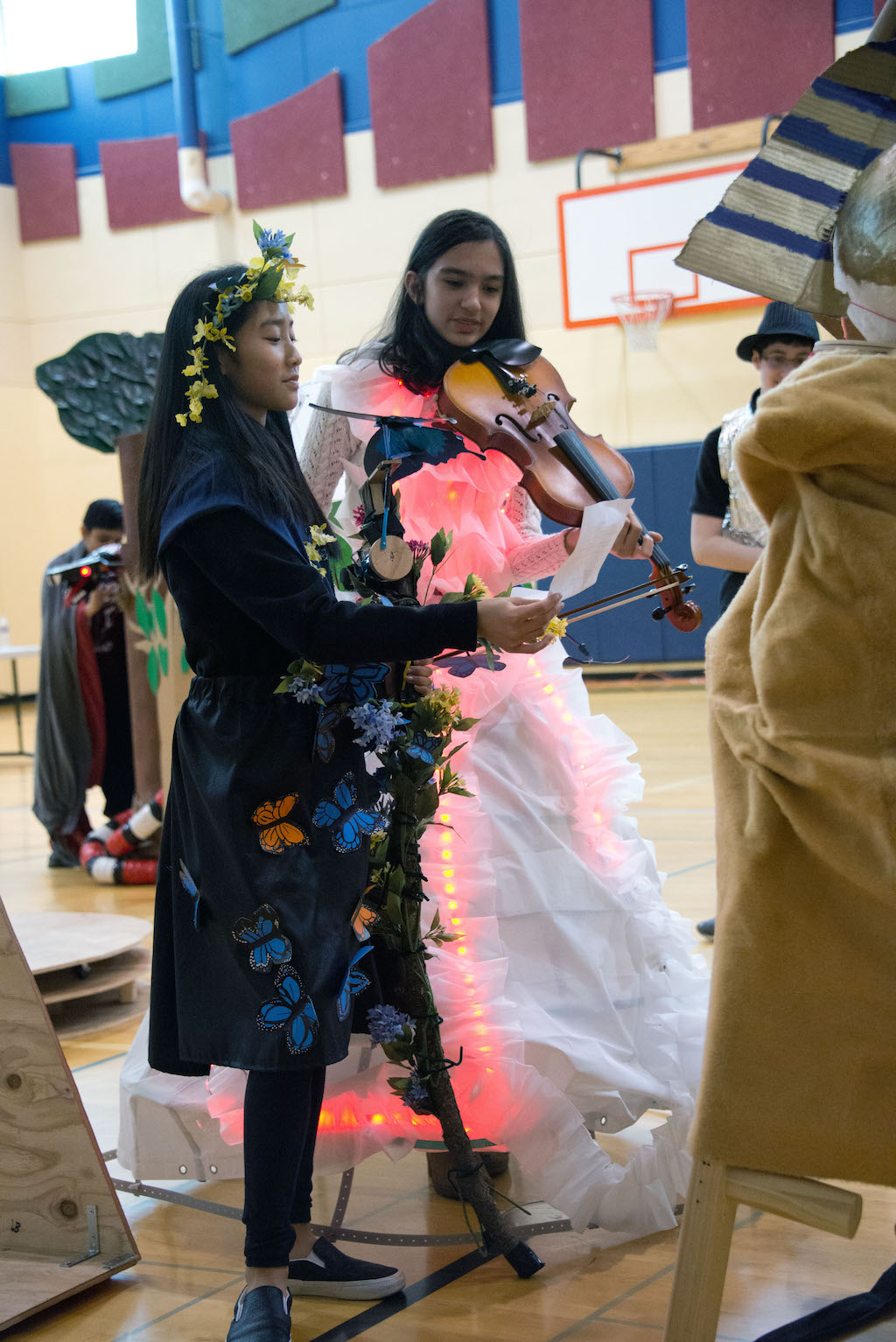
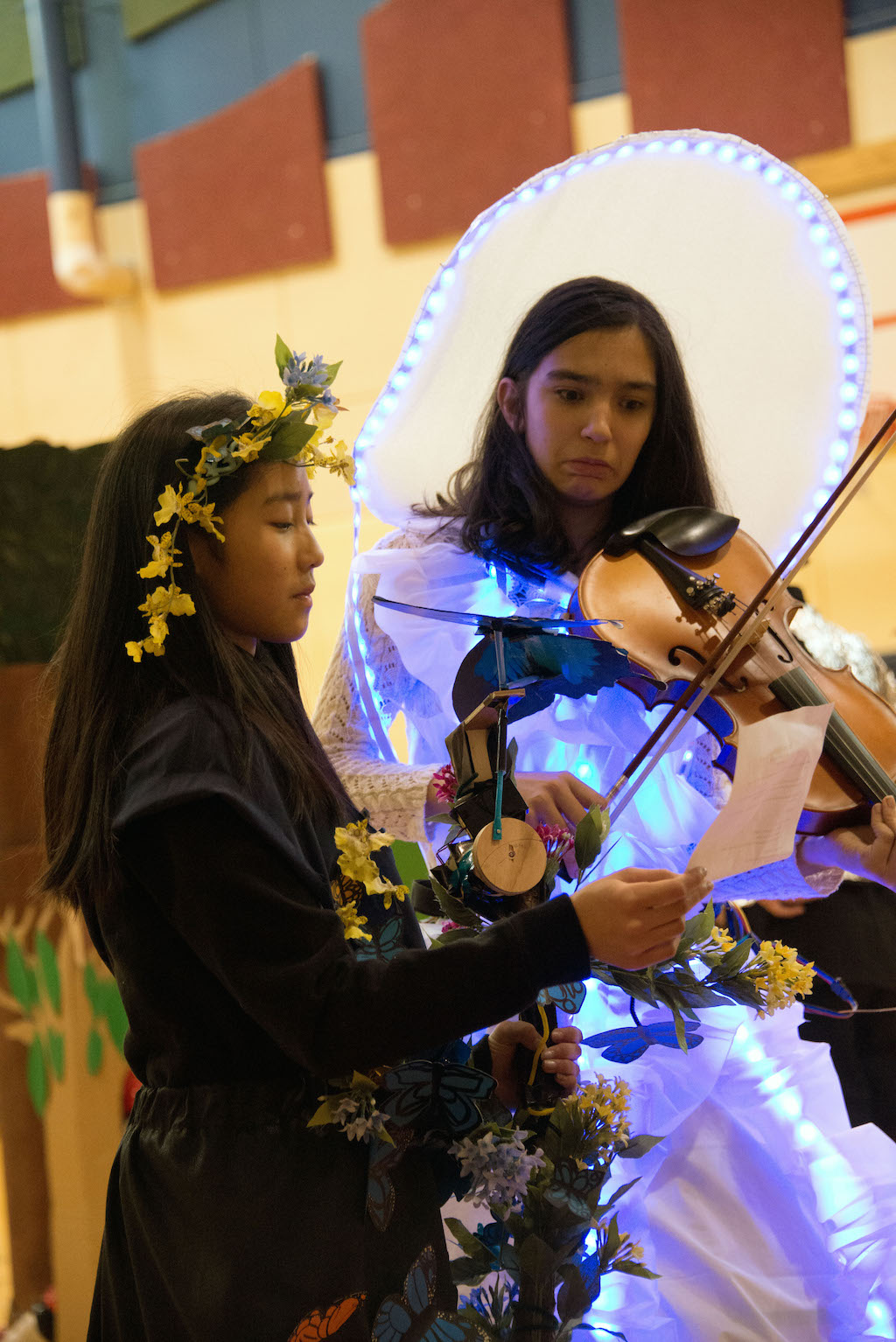
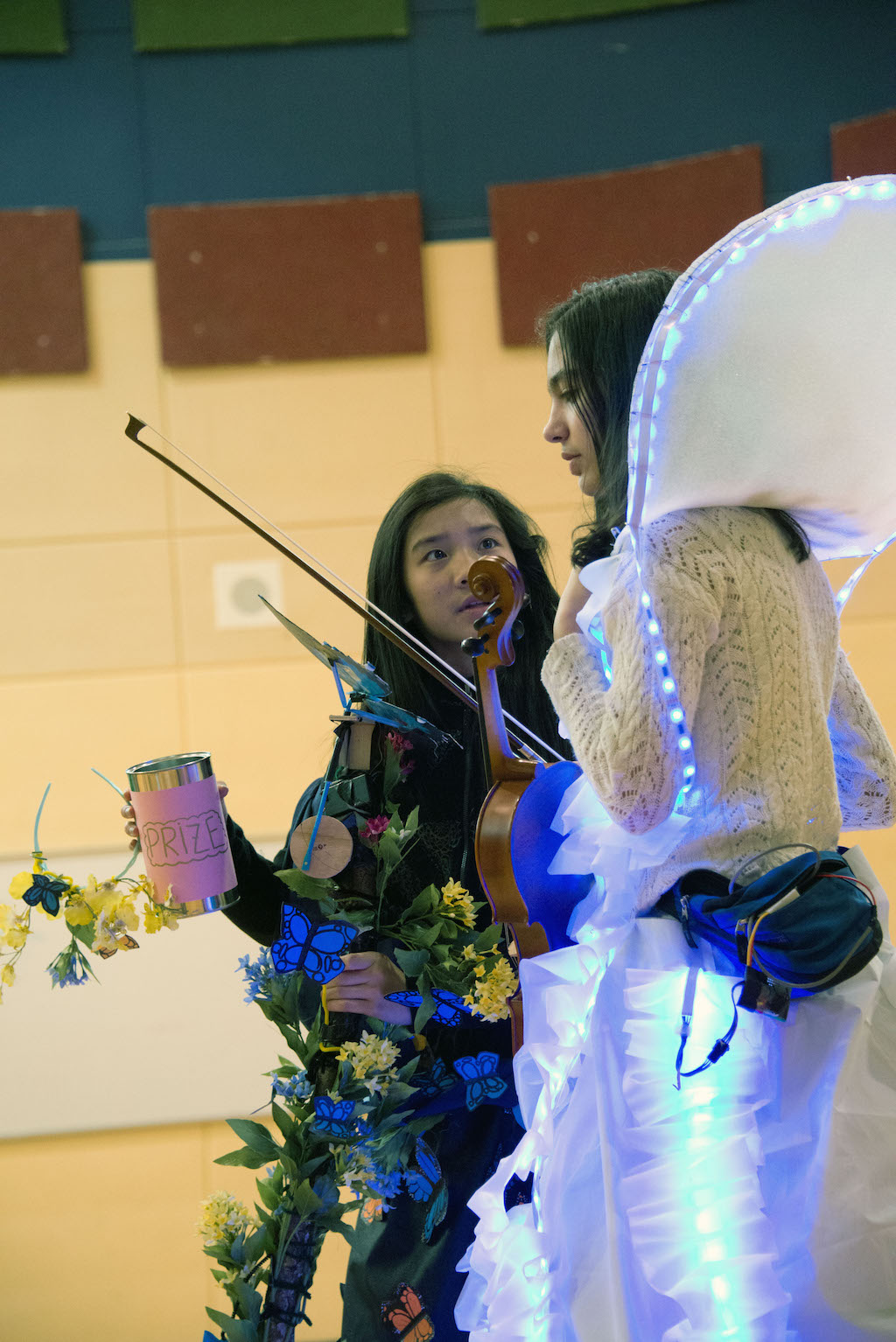
My dress got a lot of attention and praise, but we didn't manage to go to Globals this year.
If you work at it enough, eventually you land a spike.